October 14, 2025
Celebrating 45 Years of Manufacturing Excellence
Built on Trust This month marks a milestone at The Federal Group. Since TFG was founded in October 1980, we’ve...
Read More

Industries that operate under pressure—literally and figuratively—depend on custom metal components that perform with precision and endure extreme conditions. From the oil & gas industries to marine, and construction, the demand is clear: strength under stress, no exceptions.
When performance is non-negotiable, open die forging delivers.
Table of Contents

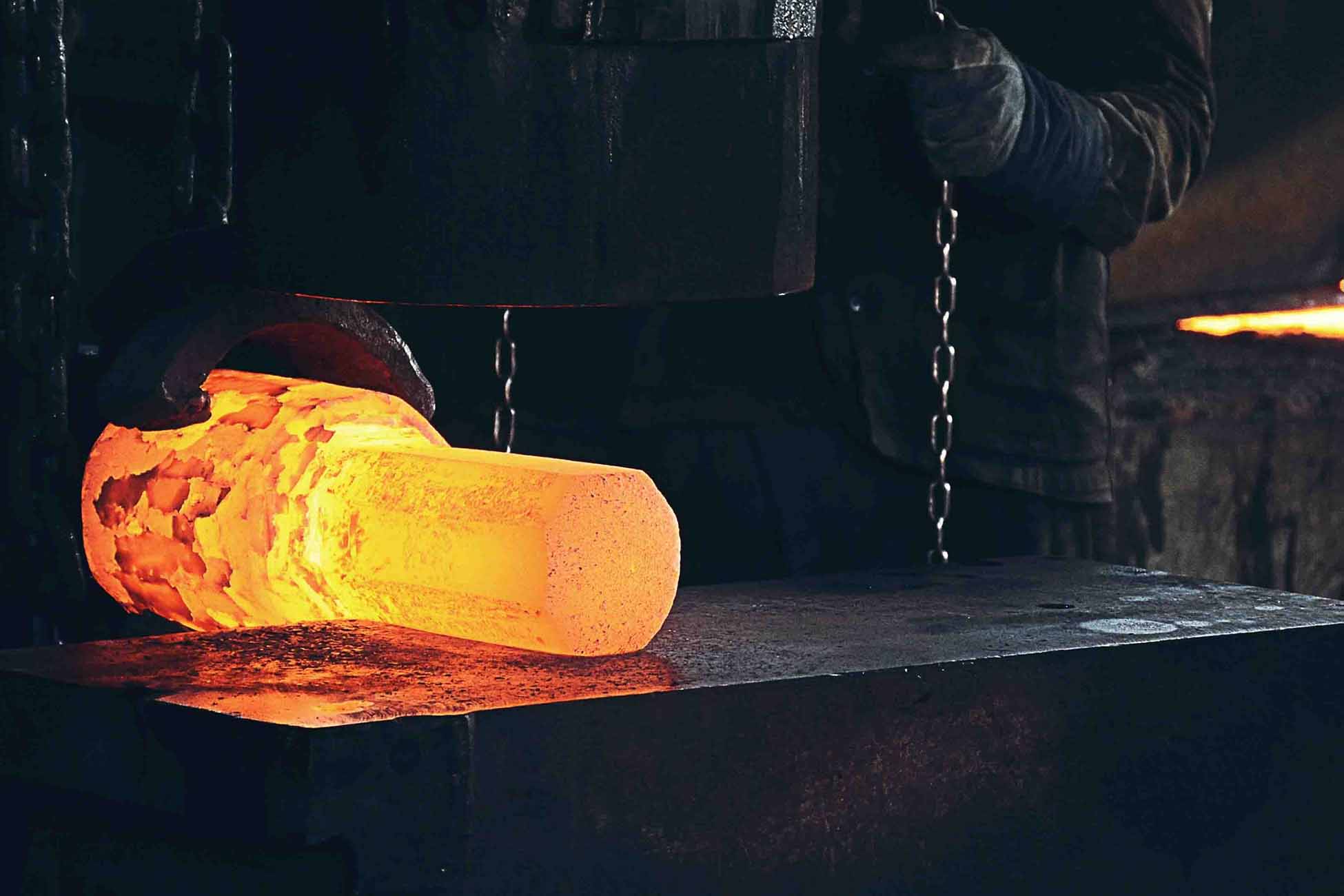
By shaping heated metal with flat or contoured dies through repeated strikes or compressive force, open die forging has evolved the art of traditional blacksmithing.
Now, instead of an apron-clad blacksmith hammering out horseshoes, massive dies—think of them as industrial anvils and hammers—forcing the flow of metal into custom geometries with refined grain structures and exceptional mechanical properties. This process scales the philosophy of blacksmithing—metal transformed through heat, pressure, and skill—into massive components built to withstand extreme stress, from turbine shafts and drill collars to aerospace-grade parts.
Think of open die forging as a choreographed dance between heat, precision, and finesse, where raw metal becomes strength and scalability you can count on.
Unlike casting or machining, open die forging shapes metal under extreme pressure to align the grain flow with the geometry of the part, improving fatigue resistance, strength, and overall performance. The result is a dense, sound structure with exceptional mechanical integrity—built for components that must endure pressure, stress, and time (or all of the above).
Because it uses open dies rather than custom molds, open die forging offers flexibility and scalability that other processes can’t match.
However, open die forging isn’t a one-size-fits-all process. It’s typically best for larger parts that can be shaped through repeated hammer or press operations—not for small, intricate components requiring tight tolerances or complex internal geometries.
Because the process relies on manual or semi-automated deformation rather than fully enclosed molds, achieving fine details or exact repeatability can be more challenging. In those cases, closed die casting or precision aluminum die casting services may offer better dimensional control and consistency.
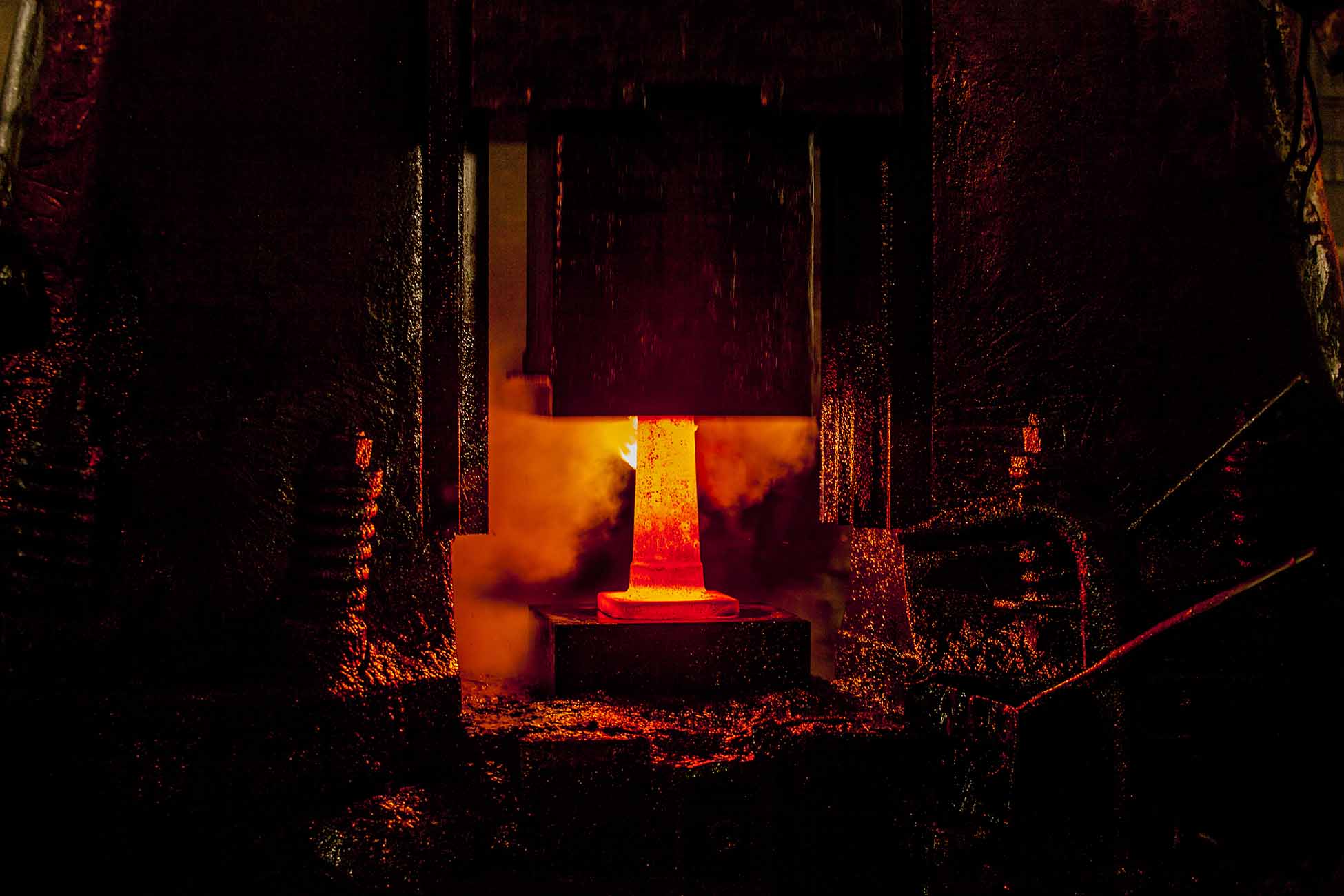
Open die forging gets its name from the dies—the tool surfaces that shape the workpiece—which don’t fully enclose it. Because the metal remains exposed, operators can manipulate it through multiple strikes or compressions to achieve a wide variety of forms.
This flexibility allows manufacturers to shape everything from simple stock to complex, one-of-a-kind components that perform under extreme conditions.
Open die forging is a hot forging process, typically heating metal between 1,800°F and 2,300°F—depending on the material—until it becomes malleable without compromising its internal structure.
Every step of the open die forging process is a balance of force and finesse—where precision engineering meets practiced intuition. It’s not just about shaping metal, but shaping performance. And whether the goal is a one-off prototype or a full production run, open die forging ensures consistency, reliability, and strength at every scale.
As an ISO 9001-certified company, quality isn’t just a box we check—it’s built into every phase of production. At TFG, we implement rigorous control measures throughout the open die forging process to ensure each component meets the highest standards of strength, precision, and reliability.
Our quality assurance process includes:
This commitment to quality ensures that every forged part leaving our floor performs as designed—no matter the application, environment, or demand.
We explore this commitment in depth in our blog, What is Design for Manufacturing (DFM)?, where we highlight how strategic design choices enhance manufacturability without compromising quality.
When evaluating open die forging companies, it’s critical to consider material selection, process control, and quality standards to ensure consistent performance and long-term reliability.
Material Selection
The process begins with selecting the right material for the job—because performance starts at the molecular level. Common choices include carbon steels, alloy steels, stainless steels, tool steels, and nickel- or titanium-based alloys. Each material offers unique advantages depending on the end-use environment, from corrosion resistance in marine applications to heat tolerance in aerospace and energy components.
Preheating
Before forging begins, the selected metal is heated to a precise temperature—typically between 1,800°F and 2,300°F—to enhance plasticity and reduce the risk of cracking during deformation. Proper preheating ensures consistent flow and uniform grain structure throughout the workpiece.
Deformation
During deformation, controlled pressure and temperature are critical. The operator—or automated press—applies repeated compressive force to shape the workpiece without introducing defects. This stage defines the part’s geometry and helps refine its grain alignment for superior strength and fatigue resistance.
Heat Treatment
After forging, the part undergoes heat treatment to relieve internal stresses, refine grain size, and achieve the required mechanical properties such as hardness, ductility, and toughness. Depending on the alloy and application, this may include quenching, tempering, or annealing.
Machining
For components requiring tighter tolerances or finished surfaces, machining is often the final step. After forging and heat treatment, the part may be precision-machined to achieve specific dimensions, surface finishes, or assembly requirements—ensuring it integrates seamlessly into its intended system.
Each step is more than a checkpoint—it’s a commitment to control, precision, and performance. And when every variable is monitored and measured, the result isn’t just a forged part—it’s a forged advantage.
When it comes to open die forging, cost considerations often center on raw materials, energy consumption, and labor. That’s why partnering with a seasoned metal forging company makes all the difference. Through careful planning and strategic decision-making, it is critical to understand how to optimize material usage, streamline the forging process, and minimize waste—delivering efficiency without compromising performance.
With decades of experience and a commitment to precision, we turn forging challenges into strategic advantages. From custom hot forging services to cold forging, TFG USA can assist with your next manufacturing project.
Our open die forging process isn’t just cost-effective—it’s engineered for strength, flexibility, and sustainability. At The Federal Group, we make metal work harder, last longer, and perform better.
Ready to forge ahead? Let’s shape your next parts project together.

