

Custom Cold Forming Manufacturer
At The Federal Group USA, our cold-forming technology powers the production of high-strength metal components – from custom cold forming fasteners and threaded studs to precision pins and rivets. Designed for volume, accuracy, and cost savings, the cold forming process is one that delivers the quality and consistency your applications demand.
Request a QuoteWhy Choose Our Cold Forming Solutions
TFG USA provides precision cold forming solutions that reduce cost, improve performance, and scale reliably.
Material Options
Brass, copper, steel, stainless steel, specialty blends, and more.
Engineering Support
TFG engineers will help optimize part design, manufacturability, and performance.
Inventory Programs
Our warehousing and stock-and-release programs support on-demand delivery.
Secondary Operations
Threading, heat treatment, machining, and plating.

Cold Forming Case Study
See how our expertise as a leading cold forming company solved recurring stud failures for a large snow and ice control equipment manufacturer. Read the case study to learn how TFG manufactured custom cold-formed plow studs with improved strength, fatigue resistance, and service life.
Industries We Serve
We provide precision cold forming solutions for diverse industries such as medical, electronics, industrial machinery, agriculture, oil & gas, and energy applications.

Industrial Machinery
TFG USA specializes in advanced cold forming processes for making pins, shafts, fasteners, bushings, and custom hardware used in heavy-duty industrial equipment and assemblies.

Agriculture Equipment
TFG delivers durable, high-strength components for agricultural equipment operating in harsh conditions. Agricultural components we cold form include shear bolts, clevis pins, plow studs, and custom fasteners used in tractors and harvesting equipment.
Our cold forming capabilities also include custom agricultural wire forming for producing formed-wire components used in tractors, harvesting equipment, and other agricultural machinery.
Oil & Gas
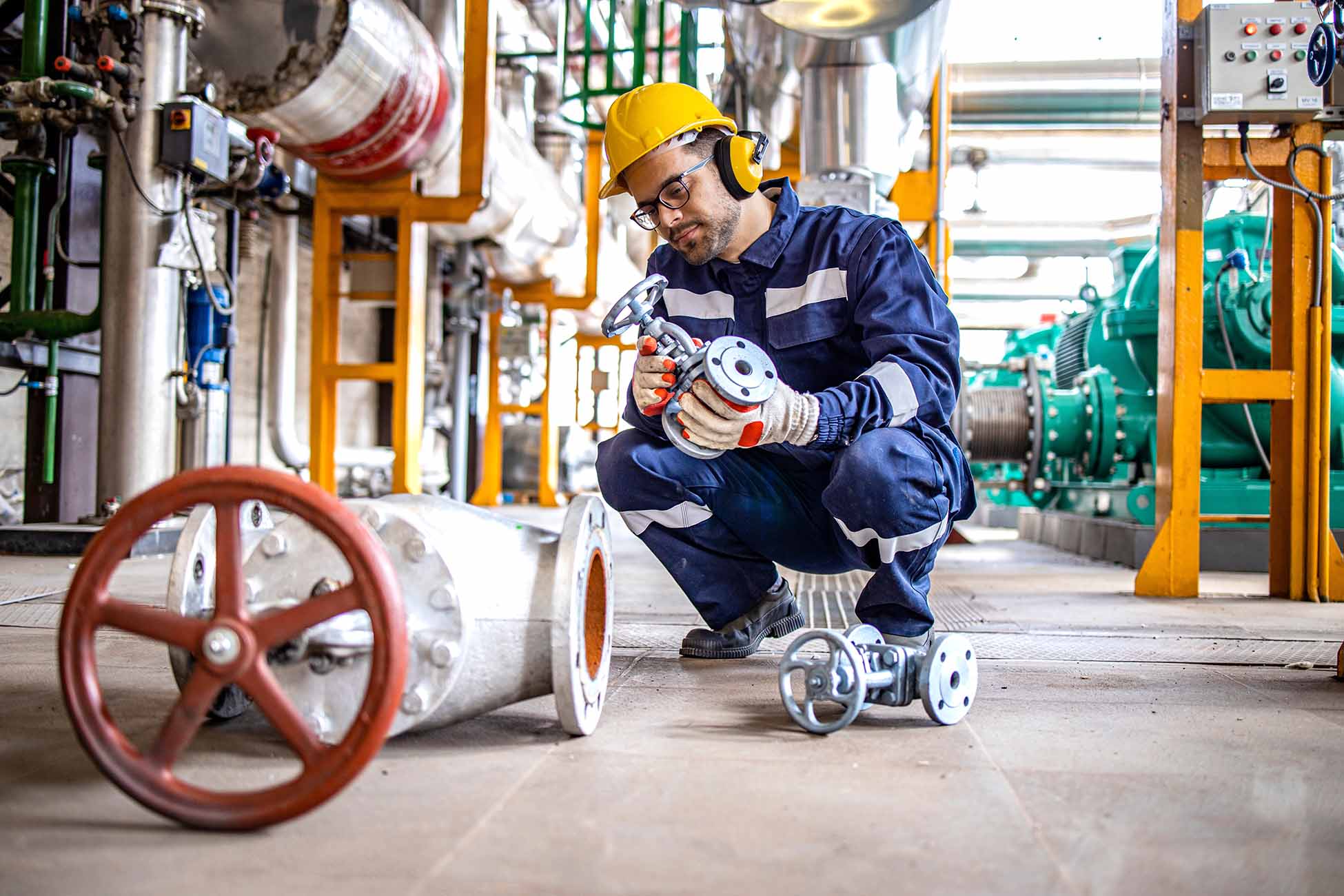
We cold form high-strength, precision components built for pressure, corrosion, and extreme operating conditions. The Federal Group specializes in stud bolts, threaded rods, flange fasteners, valve components, pins, and custom hardware for drilling, pumping, and pressure-critical assemblies.
Cold Forming Materials We Use

Above: A big bolt manufactured by The Federal Group via cold forming.
We use copper, brass, and aluminum, as well as a selection of other softer materials that can be easily cold formed like steel, stainless steel, steel alloys, and other specially blended materials.
Cold Forming Components We Make
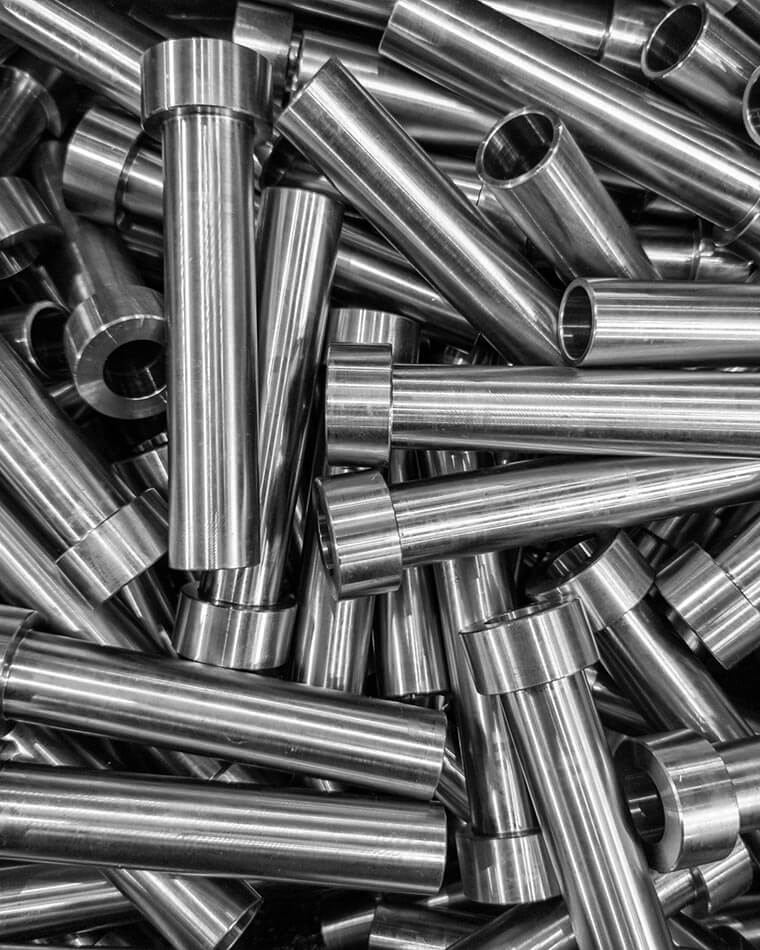

We specialize in producing high-volume, precision metal parts, particularly ones that require excellent strength, tight tolerances, and minimal waste. Here are some of the most common products we make:
- Custom Fasteners: Bolts, screws, washers, pins, and nuts
- Industrial Hardware: Threaded inserts, couplings, anchors, and bushings
- Electrical & Electronic Parts: Connectors, terminals, contact pins, and cable fasteners
- Consumer & Appliance Parts: Handles, knobs, levers, precision housings, and enclosures
Hire TFG for Your Next Cold Forming Project

Whether you’re exploring prototyping options for a new product, or you have an existing product that you’d like to put into production, we can help you with your next cold forming project. We’ve provided high-quality cold forming services to a wide variety of industries for more than 40 years.
Contact us today to request a quote for your cold forming project.
Frequently Asked Questions
What is cold forming?
Cold forming is a metalworking process that shapes metal at or near room temperature using dies, punches, and forming tools rather than cutting away material.
The process can bend, upset, extrude, or otherwise reshape metal to produce a finished or near-finished component. Because the material is formed rather than machined away, cold forming can produce high volumes of parts with excellent repeatability, minimal material waste, and strong mechanical properties.
When should you use cold forming?
Cold forming is generally best suited for medium- to high-volume production of relatively small metal components where consistent dimensions, material efficiency, and production speed are important.
It is commonly used for fasteners, pins, studs, shafts, and other components that can be produced efficiently through forming rather than machining. The right process depends on the part geometry, material, tolerances, annual volume, and tooling requirements.
Is cold forming the same thing as cold heading?
No. Cold heading is a type of cold forming.
Cold heading typically uses high-speed presses and dies to form wire or rod into components such as bolts, screws, rivets, pins, and other fasteners. Cold forming is a broader category that includes cold heading as well as other processes used to bend, extrude, upset, and reshape metal.
Is cold forming better than CNC machining?
Neither process is universally better; the right choice depends on the part and production requirements.
Cold forming can offer significant advantages for medium- to high-volume production because it can produce parts quickly with little material waste and limited secondary machining. CNC machining may be better suited for complex geometries, tight tolerances, lower production volumes, or applications where significant material needs to be removed.
In some applications, cold forming and CNC machining can also be combined to produce the finished component.
Is cold forging the same as cold forming?
Cold forging is a type of cold forming. Cold forming is a broader category of metalworking processes that shape metal without heating it to its melting point or recrystallization temperature.
Cold forging uses compressive forces to deform metal into a desired shape and is commonly used to produce high-strength components with excellent material utilization. Cold forming can also include processes such as cold heading, extrusion, bending, and wire forming.




