
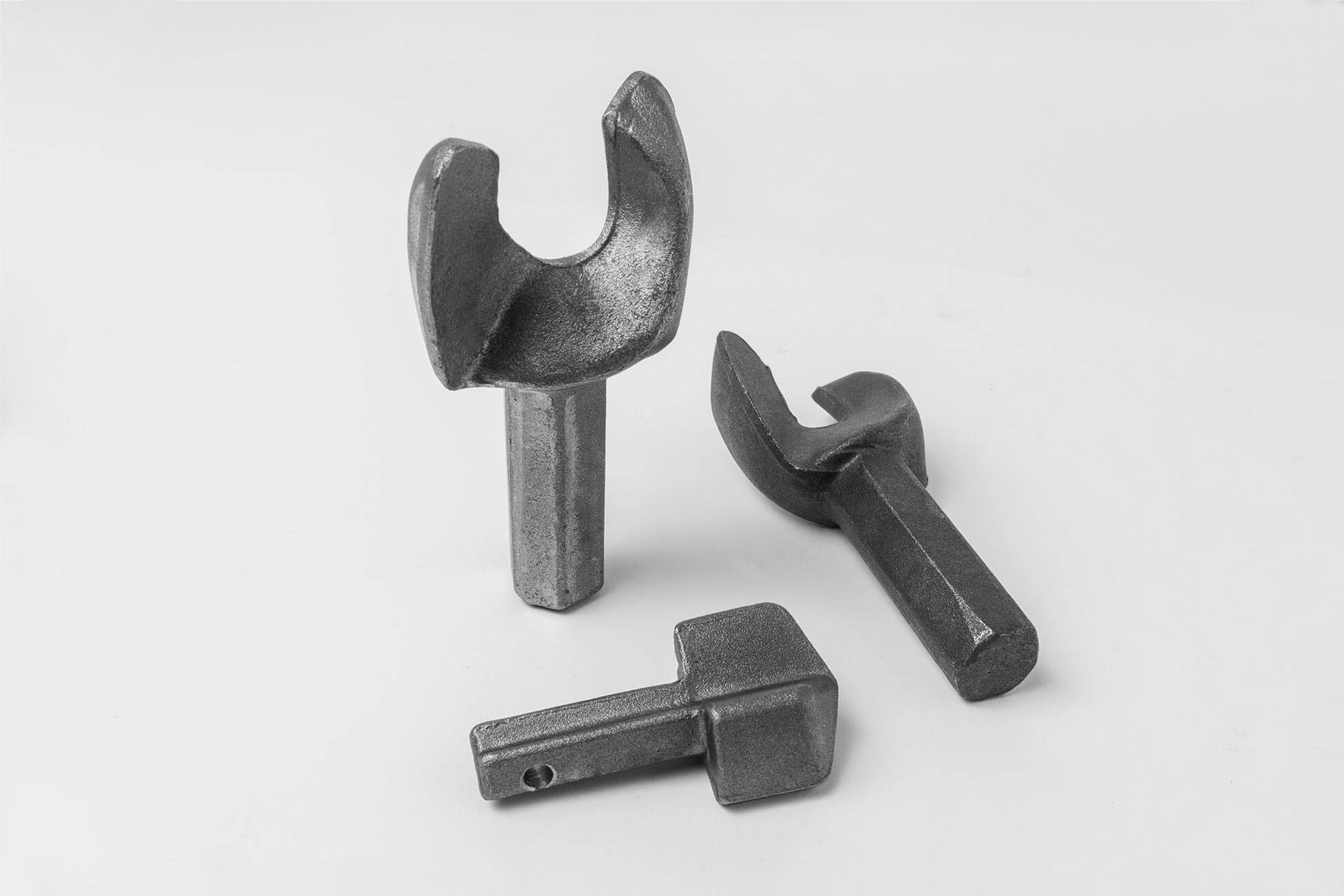
Custom Agricultural Metal Forging Services
The Federal Group USA provides custom agricultural metal forging services for OEMs requiring durable, high-volume components for tractors, harvesting equipment, and heavy-duty machinery. Since 1980, we have manufactured custom forged components using hot forging, cold forging, and secondary machining processes. We produce agricultural forgings from carbon steel, alloy steel, stainless steel, and other high-performance materials built to withstand heavy loads, wear, and harsh field conditions.
Request a QuoteWhy Choose The Federal Group for Agricultural Metal Forging
The Federal Group provides custom agricultural metal forging solutions backed by 45 years of engineering expertise, rigorous quality control, and end-to-end manufacturing support.
QMS 9001:2015 Certified
Our facilities use cross-functional quality inspections to ensure every forged component meets strict built-to-print specifications.
Advanced Machinery
We use robotic forging cells and high-speed mechanical presses to efficiently execute medium- to high-volume production runs.
Material Integrity
We provide comprehensive material certifications verifying alloy composition, yield strength, and structural integrity for severe environmental stress.
Program Management
TFG serves as your single point of contact, coordinating production, quality, and logistics from kickoff through delivery.
High-Performance Machinery and Tooling
Executing medium- to high-volume manufacturing requires equipment capable of handling high dynamic loads without losing precision.

Servo-driven Cold Forging Presses
These systems provide programmable stroke profiles to control grain deformation, typically holding tolerances up to +/- 0.005 inches.

High-speed Mechanical Presses
We operate heavy-tonnage mechanical presses capable of applying thousands of tons of force for rapid, high-volume manufacturing.
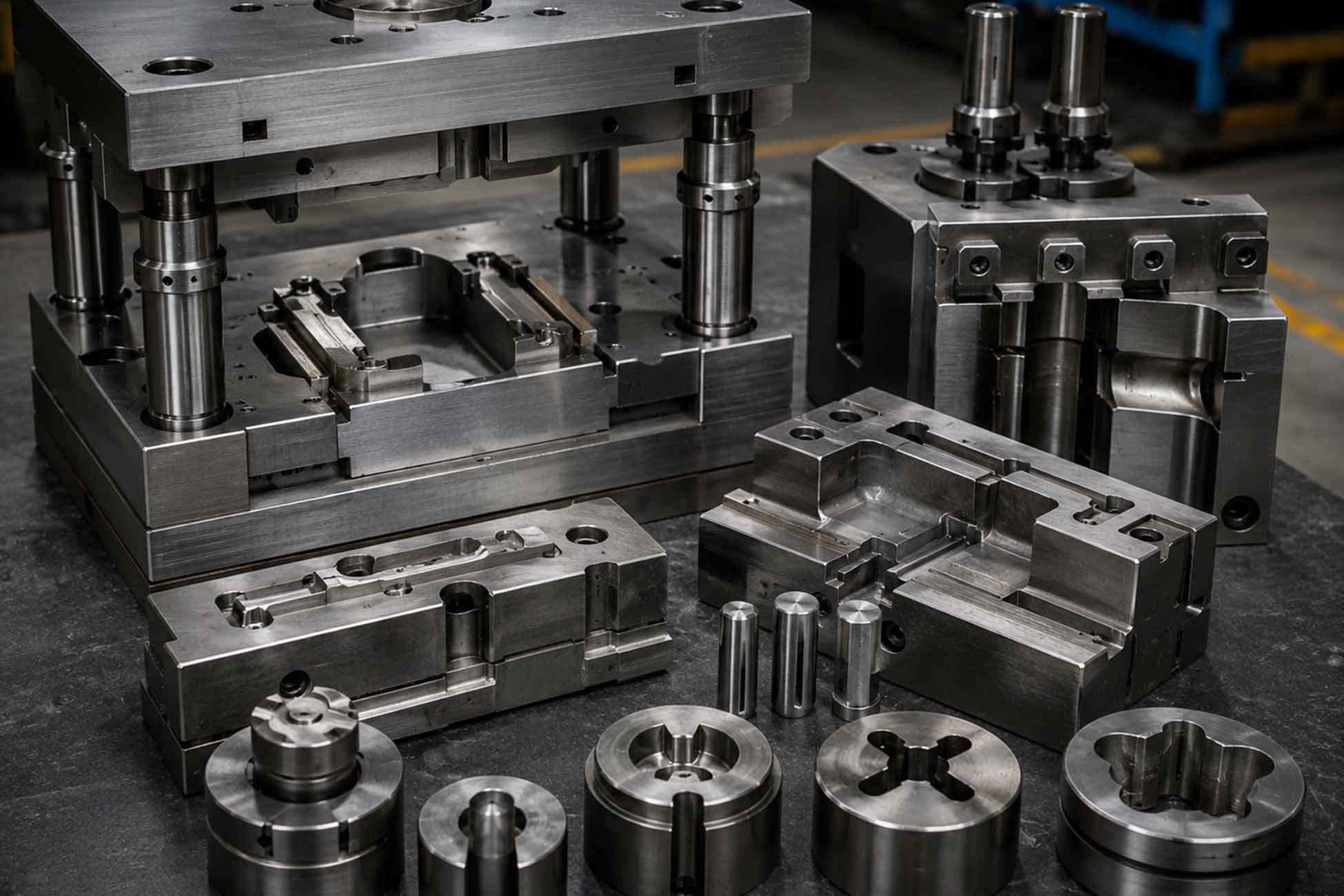
Smart Tooling Systems
Our advanced tooling incorporates continuous monitoring to prevent die wear, extending equipment lifespan and supporting consistent part quality.
Specific Agricultural Metal Forging Materials We Use
Selecting the right metal dictates the metallurgical properties of the final component, so we source materials specifically designed for extreme environmental stress. Heavy-duty agricultural applications require materials that balance high yield strength with impact resistance. We process a range of industrial metals to ensure your parts survive continuous use in abrasive soil conditions.
Material | Yield Strength | Impact Resistance | Ideal Agricultural Use Cases |
Carbon Steel | High | Excellent | Combine harvester components, high-wear gears, and sprockets. |
Micro-Alloy Steel | Very High | Superior | Tractor linkages, universal joints, and heavy-duty drive shafts. |
Extra Hard Tool Steels | Extreme | Moderate | Cutting blades, cultivator parts, and heavy-duty plow points. |
Stainless Steel | Medium-High | Good | Fertilizer handling parts and components requiring corrosion resistance. |
Aluminum | Medium | Moderate | Lightweight structural brackets, yokes, and engine housings. |
Processes and Technologies We Support
- Closed die forging: Our closed die forging capabilities produce high-strength agricultural components with improved grain flow, repeatable tolerances, and reduced material waste compared to machining from billet.
- Cold extrusion: We use this technique to create elongated complex parts with superior strength-to-weight ratios for combine harvester components and combine fingers.
- Cold forging: We use this technique to compress metal into custom dies without heat, producing durable agricultural components with enhanced strength, precision, and material efficiency.
- Cold forming: This process shapes metal at room temperature to create high-strength components with improved surface finishes, tight tolerances, and increased material strength.
- Cold heading: This process rapidly forces unheated metal into dies to produce high-strength custom fasteners and heavy-duty pins for high-volume applications.
- Cold rolling: This method applies high pressure to shape metal while increasing surface hardness for parts exposed to constant friction and torsion.
- Coining: This precision sizing operation delivers exceptionally tight tolerances and smooth surface finishes for critical mating parts.
- Hot forging: We heat metal above its recrystallization temperature to forge massive heavy-duty plow components and connecting rods that require maximum grain flow alignment.
- Open die forging: This process shapes heated metal between flat or simple dies to produce large, heavy-duty agricultural components requiring superior strength and durability.
- Swaging: We rely on this process to alter the dimensions of cylindrical parts, improving the structural integrity of tie rod ends.
Secondary Processes and Finishing Capabilities
Forged parts often require tight tolerances before they can integrate into larger assemblies. We consolidate primary forging and secondary machining operations under one roof, so you avoid the delays of managing multiple vendors. This approach supports precise fits for custom metal components, enhances corrosion resistance for parts exposed to harsh weather, and lowers your total cost of ownership.
- Machining: CNC turning and milling achieve the precise tolerances required for complex machined forgings in agriculture.
- Tapping and drilling: We create exact internal threads and mounting holes to ensure seamless field assembly.
- Assembly: Our team combines multiple forged and machined parts into ready-to-install mechanical sub-assemblies.
- Deburring: We remove sharp edges and surface imperfections to promote safe handling and proper mating.
- Anodizing and plating: These surface treatments protect components from harsh weather and corrosive agricultural chemicals.
- Powder coating: We apply a durable, impact-resistant finish to prevent rust on exposed structural parts.
Custom Forged Agricultural Components We Manufacture
We manufacture custom forged agricultural components designed to withstand demanding field conditions, heavy loads, and continuous equipment operation. Our forging capabilities support a wide range of durable parts used throughout tractors, harvesting equipment, and other agricultural machinery.
- Forged tractor components
- Three-point hitch components
- Clevises and yokes
- Forged pins and bushings
- Hydraulic cylinder components
- PTO components
- Drive shafts
- Gear blanks
- Connecting rods
- Harvester components
- Combine parts
- Tillage equipment components
- Loader and attachment parts
Request a Quote for Custom Agricultural Forgings
Partner with The Federal Group for custom agricultural metal forging solutions built for durability, precision, and long-term performance. Submit your specifications, CAD files, and production requirements, and our team will review your project to provide a manufacturing solution tailored to your application.
FAQs
Is Forging Cheaper Than Machining?
Forging is typically more cost-effective than machining for medium- to high-volume manufacturing. While the initial tooling costs for forging dies are higher, the process produces less material waste than machining a part from solid bar stock.
Forging also features much faster cycle times, which drives down the per-unit cost at scale. Once production volume crosses the initial tooling threshold, the total cost of ownership drops considerably.
What Are the Disadvantages of Metal Forging?
The primary disadvantages of metal forging involve high upfront tooling costs and specific design constraints. Because the process requires expensive custom dies, it’s rarely cost-effective for small prototype runs or low-volume orders.
Forging also limits certain complex internal geometries, often requiring secondary operations to achieve final part specifications. Our engineering team conducts a thorough feasibility review during the initial sales phase, identifying these design constraints early to mitigate risks before production begins.
What Are the Four Types of Forging?
The four primary industrial forging methods include hot forging, cold forging, open die forging, and closed die forging. Hot forging heats the metal above its recrystallization point to shape massive parts, while cold forging shapes metal at room temperature to increase surface hardness and yield strength.
Open die forging compresses metal between flat dies without completely enclosing the material, making it ideal for large and simple shapes. Closed die forging forces the metal into custom-shaped molds, providing the precise tolerances and continuous grain flow alignment required for high-strength agricultural applications.




