
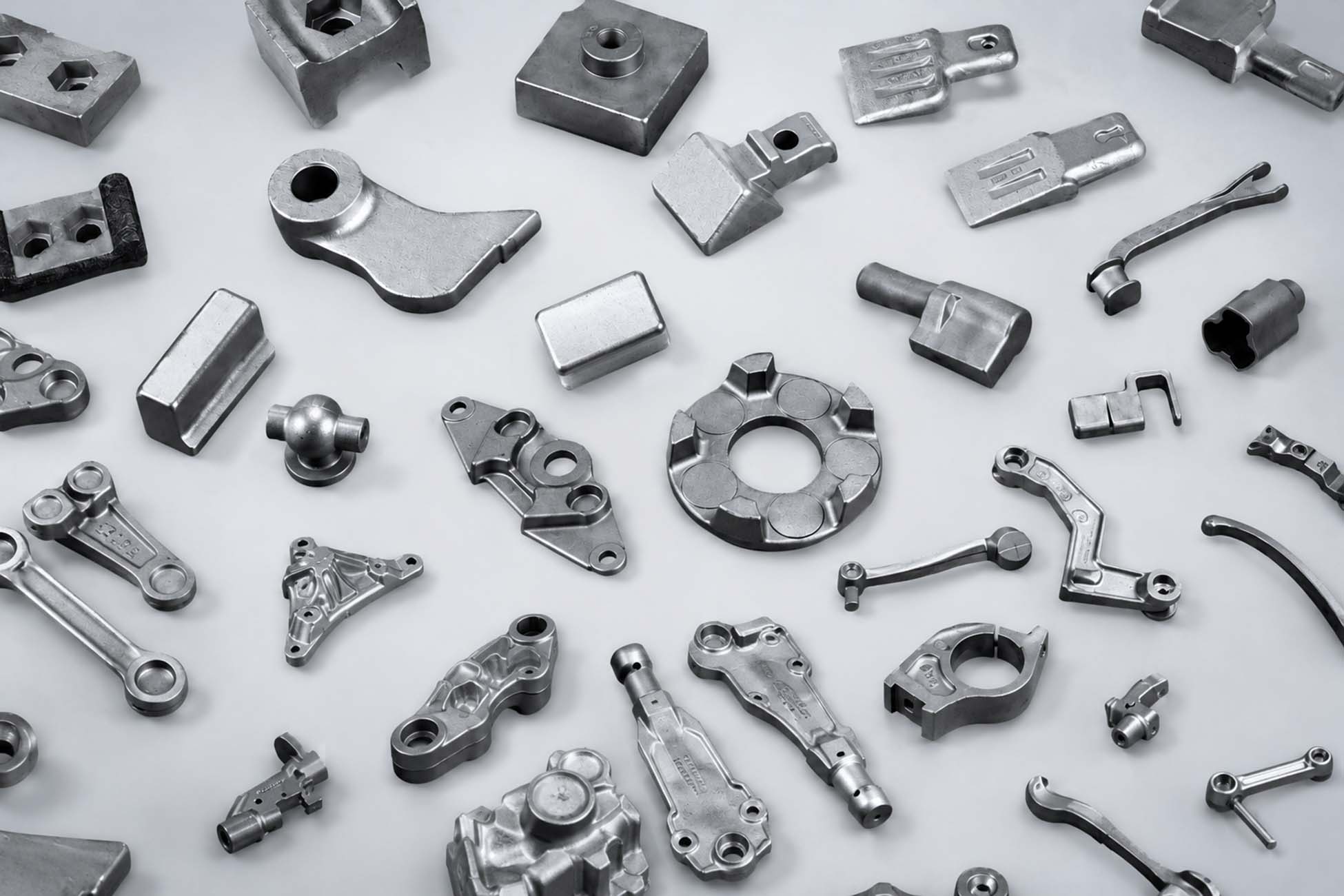
Forging Services for Industrial Equipment
The Federal Group USA is a leading U.S.-owned metal forging company that produces custom industrial equipment and components since 1980. Using advanced servo-driven presses and high-speed mechanical equipment, we help clients turn prototypes into medium to large volume production runs. We manage the full production lifecycle to help every component meet your exact engineering specifications.
Request a QuoteWhy Choose The Federal Group for Forging Industrial Equipment
We believe the best industrial equipment starts with the best forged components, which is why TFG USA focuses on precision, reliability, and manufacturing solutions that help our clients build products they can stand behind.
QMS 9001:2015 Certified
Our manufacturing facilities operate as QMS 9001:2015 Certified environments, designed to meet your exact built-to-print specifications for every high-strength forging.
Advanced Machinery
We use state-of-the-art servo-driven cold forging presses and robotic forging cells to achieve precise near-net shaping for medium- to high-volume production runs.
Material Verification
We provide comprehensive material certifications and quality documentation to verify the precise alloy composition and mechanical properties of your custom metal components.
End-to-End Logistics
Our dedicated program management team tracks over 60 data points to seamlessly coordinate engineering, cross-functional inspections, and global fulfillment.
High-Performance Machinery and Tooling
TFG USA utilizes advanced forging equipment and tooling technologies designed to support precision manufacturing, consistent part quality, and scalable industrial production.
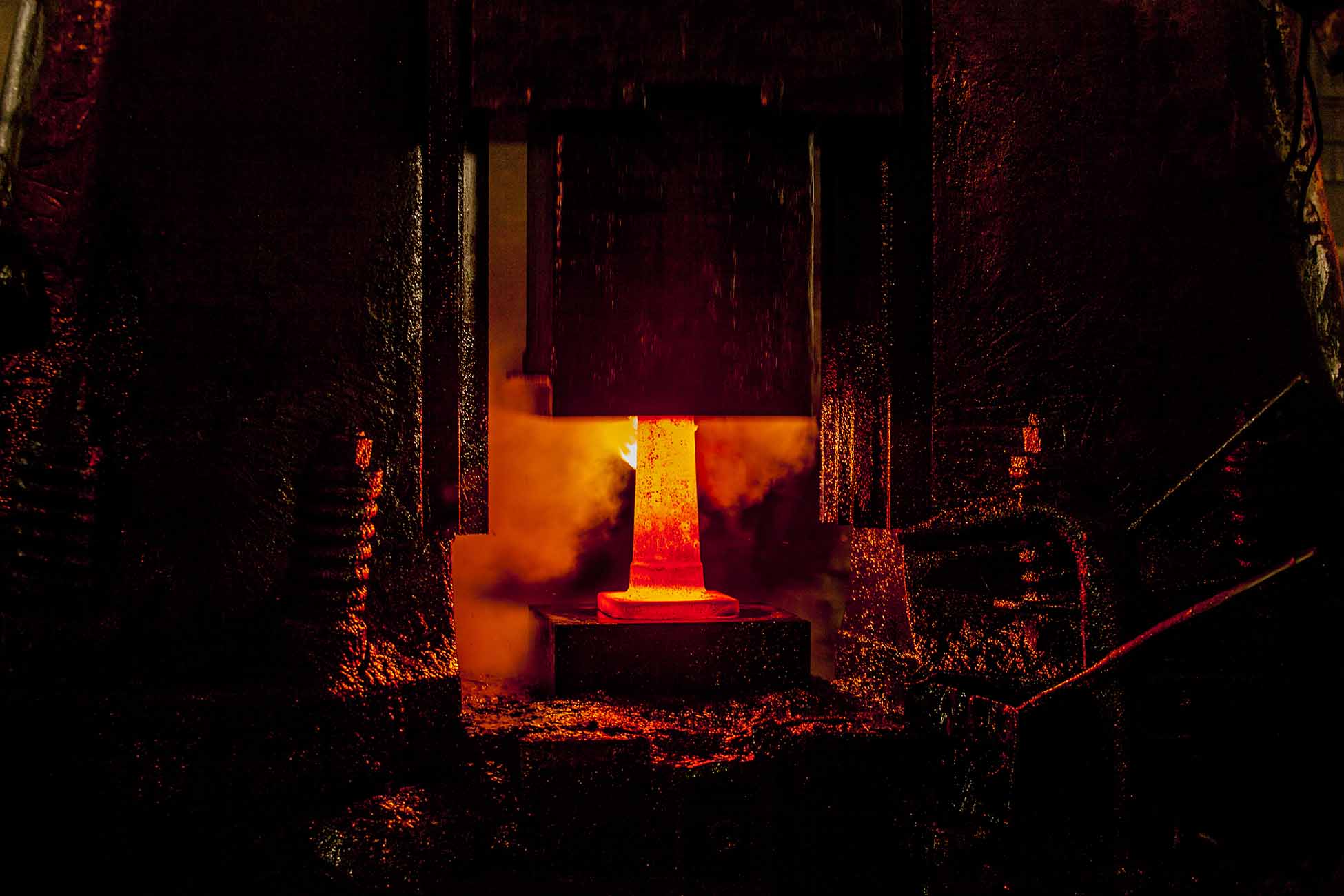
Forging Presses and Hammers
Our manufacturing capabilities include both forging presses and forging hammers depending on the material, geometry, and performance requirements of the component. Forging presses apply controlled compressive force throughout the material, while forging hammers use rapid high-impact blows to efficiently form complex shapes.

Advanced Press Technology
We support medium to large volume production through servo-driven cold forging presses and high-speed mechanical presses engineered for repeatability, tight tolerances, and optimized material flow. These systems help produce durable forged industrial components with excellent dimensional consistency.
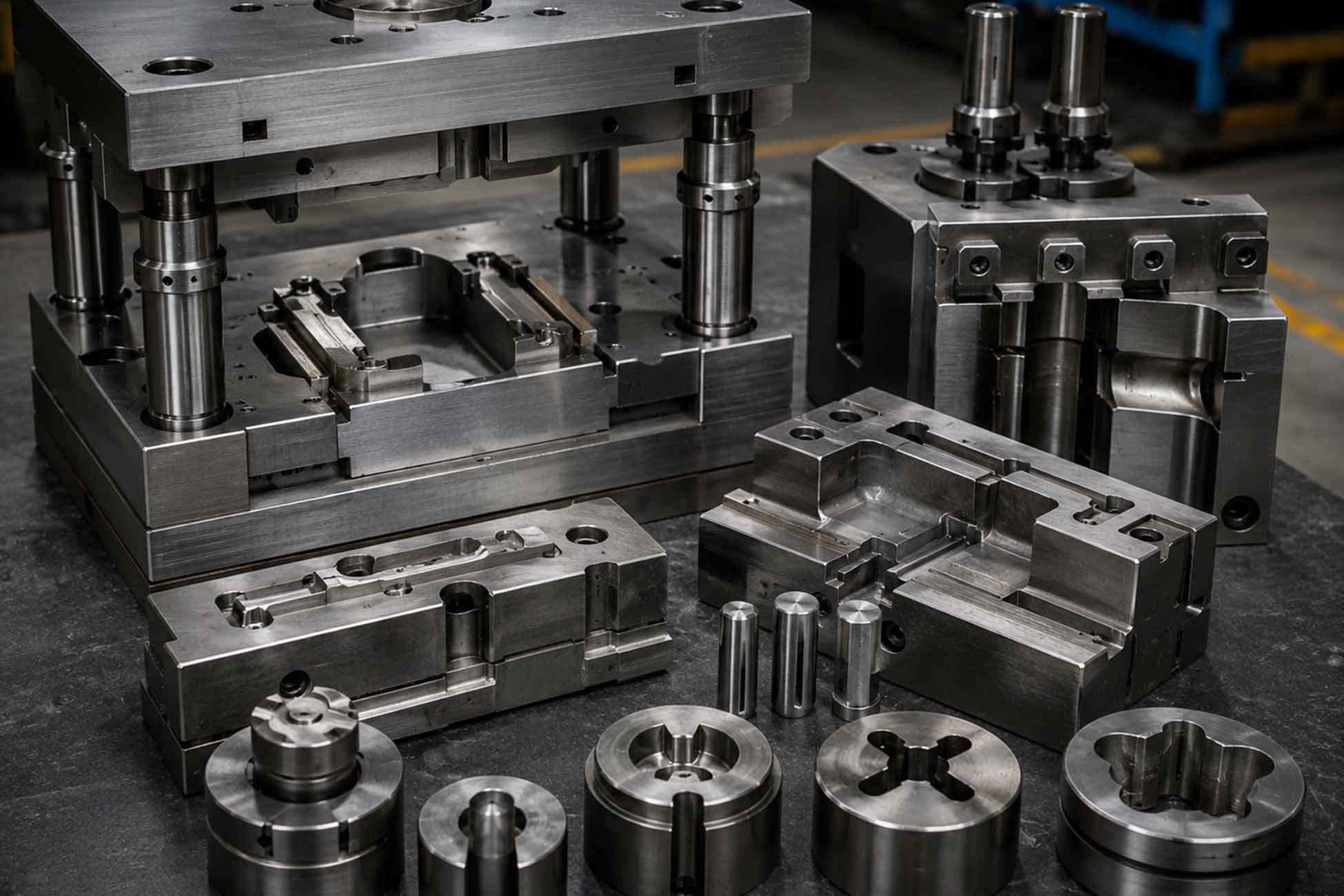
Smart Tooling and Automation
Our smart tooling systems and robotic forging cells improve manufacturing efficiency by monitoring production conditions, reducing defects, and automating material handling throughout the forging process.
Processes and Technologies We Support
TFG USA supports a wide range of industrial equipment forging processes designed to improve structural integrity, optimize material performance, and support medium to large volume production requirements.
- Cold Bending: Forms metal along a controlled axis to manufacture custom industrial equipment components with complex geometries.
- Cold Forming: Shapes metal at room temperature to achieve tight tolerances, improved surface finish, and excellent repeatability.
- Cold Heading: Produces fasteners and precision industrial parts with superior fatigue resistance and material efficiency.
- Coining: Applies high pressure in a closed die to create intricate features and highly accurate forged components.
- Extrusion: Forces metal through a die to create near-net shapes with minimal material waste and consistent dimensional accuracy.
- Hot Forging: Uses heat and compressive force to produce high-strength industrial components with enhanced durability and grain flow.
- Roll Forging: Compresses and elongates metal through rolling dies to increase strength and improve grain structure alignment.
- Swaging: Reduces or reshapes cylindrical components to improve mechanical performance without material removal.
Materials We Use for Industrial Equipment Forgings
TFG USA manufactures custom forged industrial components using a wide range of high-performance metals selected to meet demanding mechanical, environmental, and operational requirements. Our team works closely with clients to identify the right material based on strength, corrosion resistance, wear performance, and application-specific needs.
Common forging materials include:
- Alloy Steel – Offers high strength, toughness, and wear resistance for demanding industrial applications.
- Aluminum – Provides lightweight performance with excellent corrosion resistance and machinability.
- Brass – Ideal for components requiring corrosion resistance, conductivity, and low friction.
- Carbon Steel – Delivers dependable strength and cost-effective performance for heavy-duty equipment.
- Copper – Commonly used for industrial components requiring high electrical and thermal conductivity.
- Nickel Alloys – Designed to withstand extreme temperatures, corrosion, and harsh operating environments.
- Stainless Steel – Combines strength and corrosion resistance for long-lasting industrial performance.
- Titanium – Offers exceptional strength-to-weight ratio and resistance to heat and corrosion.
- Tool Steel – Engineered for high hardness, durability, and resistance to wear under heavy loads.
Secondary Processes and Finishing Capabilities
Forging achieves precise near-net shapes, but critical components often require secondary operations to meet exact engineering specifications. We manage the complete suite of post-forging finishing work to support tight tolerances and consistent defect reduction across your entire production run.
- Secondary Operations: We handle all essential post-forming work including machining, tapping, drilling, assembly, and deburring.
- Anodizing: Increases the thickness of the natural oxide layer to protect aluminum components from heavy wear.
- Plating: Coats the forged part with a thin layer of metal to improve surface hardness and electrical conductivity.
- Powder Coating: Applies a protective dry finish to enhance corrosion resistance for extreme environments in the Energy Industry and Construction Industry.
Kickstart Your Next Industrial Equipment Forging Project
TFG USA supports industrial equipment forging projects with engineering expertise, quality control, and responsive project management.
Submit your project details through our RFQ form to get started.
FAQs
Which Is Better: Forging or CNC Machining?
The choice between these two methods depends on your production volume and structural requirements. Forged parts offer superior structural integrity and high fatigue resistance because the process aligns the internal grain structure of the metal.
Computer Numerical Control machining cuts material away, disrupting the natural grain flow and resulting in moderate fatigue resistance depending on the alloy. Forging requires high initial tooling investments but becomes highly cost-effective at medium- to high-volume production while minimizing material waste through near-net shaping.
CNC machining offers lower setup costs but generates significant scrap metal and maintains a higher per-unit price during large production runs.
What Metals Cannot Be Forged?
Metals with very low ductility or high brittleness can’t withstand the extreme compressive forces required during the forging process. Standard cast irons typically fracture under impact because they lack the necessary elasticity to deform without breaking.
Highly alloyed tool steels also present distinct manufacturing hurdles and often require specialized heating cycles to prevent cracking. We evaluate your specific mechanical requirements to select industrial metals that respond well to heavy forming pressure.
Is Forging Stronger Than Welding?
Forging produces a significantly stronger component than welding for critical, high-load parts. A forged part maintains a continuous grain flow throughout its entire structure. Welding melts two separate pieces together and alters the local metallurgy at the joint.
This thermal disruption creates potential weak points and structural inconsistencies, making forging the superior choice when structural integrity is the primary requirement.




