
July 21, 2026
Die Casting
Die casting is a manufacturing process where molten metal is injected into hardened steel molds under high pressure to create...
Read More

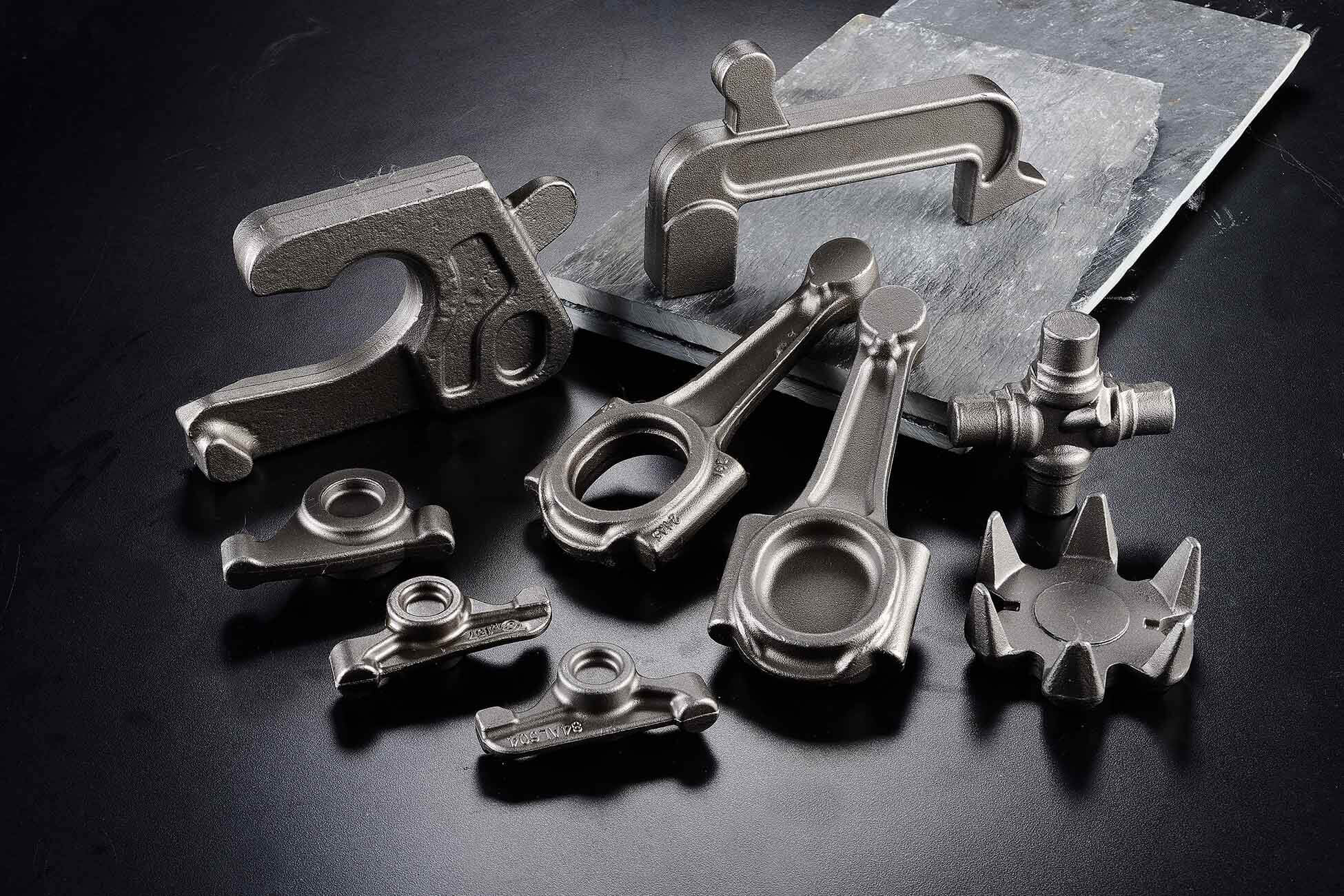
Cold forging is a manufacturing process that shapes metal at or near room temperature by applying high compressive forces within precision dies. The process produces high-strength, near-net-shape components with excellent dimensional accuracy, smooth surface finishes, and minimal material waste, making it ideal for medium- to high-volume production. In this guide, you’ll learn how the cold forging process works, its advantages and limitations, the materials it supports, and the industries and applications where it delivers the greatest value.

Cold forging is a metal forging technique to process bar stock and squeeze it into an open die. This method occurs at ambient temperature or below the metal’s recrystallization temperature to form the metal into the desired shape.
The process begins with selecting the appropriate metal, such as carbon steel, alloy steel, stainless steel, aluminum, brass, or copper. Raw material is typically supplied as wire, rod, or bar stock and cut into precise slugs or blanks based on the final part geometry.
Before forming, the material is cleaned and coated with a lubricant to reduce friction between the workpiece and the tooling. Proper lubrication helps extend die life, improves material flow, and produces a smoother surface finish.
The lubricated blank is placed into a precision die where mechanical or hydraulic presses apply extremely high compressive forces. Depending on the component design, the metal may be upset, extruded, coined, or formed through multiple die stations until it reaches its final shape.
Some parts require additional manufacturing processes after forging, such as drilling, threading, machining, heat treatment, or surface finishing. Because cold forging produces near-net-shape components, these secondary operations are often minimal compared to other manufacturing methods.
Cold forging is compatible with a wide range of ferrous and non-ferrous metals, provided the material has sufficient ductility to deform under high compressive forces without cracking. While many alloys can be cold forged, the process is generally best suited for materials with a hardness of 44 HRC or lower, allowing them to flow effectively through the tooling while maintaining dimensional accuracy and mechanical properties.
Material | Cold Forgeability | Common Applications |
Carbon Steel | Excellent | Fasteners, pins, shafts, bushings, structural components |
Alloy Steel | Excellent | Gears, transmission components, hydraulic fittings, high-strength industrial parts |
Stainless Steel | Good | Medical devices, food processing equipment, marine hardware, corrosion-resistant components |
Aluminum Alloys | Excellent | Lightweight automotive, aerospace, and consumer product components |
Copper | Excellent | Electrical connectors, terminals, and conductive components |
Brass | Excellent | Plumbing fittings, valves, electrical hardware, and decorative components |
Magnesium Alloys | Good | Lightweight industrial and electronic components |

Cold forging relies on specialized equipment designed to apply extremely high compressive forces with exceptional precision and repeatability. The type of equipment used depends on the part geometry, material, production volume, and required tolerances.
Modern cold forging facilities often integrate automation and in-process quality control to maximize throughput while maintaining consistent part quality across high-volume production runs.

Above: Blade Bolts manufactured via the cold forging process.
Designing a component for cold forging requires careful consideration of material flow, tooling limitations, and manufacturability. Optimizing a part during the design phase can reduce production costs, extend tooling life, and minimize the need for secondary operations.
Key design considerations include:
Collaborating with an experienced cold forging manufacturer early in the design process can help identify opportunities to simplify the part, improve manufacturability, and reduce total production costs without compromising performance.

Pictured above: A cold forged drive shaft.
Cold forging is used across a wide range of industries to manufacture high-strength, precision metal components that require excellent dimensional accuracy, repeatability, and long service life. Common applications include:
For the production of high quantities of components at a low cost, cold forging is a successful and cost-effective metal deforming technique.
Cold forging is done with machines designed to deform and shape the metal.
You’ll save money on everything from materials to time. Because of the little amount of scrap generated (compared to metal removal processes), you may save up to 70% on materials. The cost per item is significantly reduced since components are manufactured at a very rapid rate.
You’ll need to think about the part’s size (and weight), as well as the material’s stiffness, and your production volumes. An expert in the field can give you some options to help you make your decision.
Lubricants play a crucial role in the cold forging process by reducing friction and wear on the tools and workpiece, enhancing surface finish, extending tool life, and improving the overall efficiency of the cold forging operation. The choice of lubricant depends on the material being forged, the specific cold forging process, and the desired outcome. Here are the main types of lubricants used in cold forging:
The selection of the appropriate lubricant depends on factors such as the material being forged, the type of forging operation (e.g., upset forging, impression die forging), the desired surface finish, and environmental considerations. It’s important to choose a lubricant that balances performance, cost-effectiveness, and environmental impact for the specific cold forging application.
Metalworking processes at room temperature can include cold forming and cold forging. They both involve the modification of metal to produce different sizes and/or forms. From iron and steel to aluminum, bronze, and more, a variety of metals and alloys are available. Even though they utilize various techniques to alter metal—forming and forging aren’t the same.
Deforming a metal workpiece using mechanical deformation is known as forming. By definition, the word “forming” refers to any metallurgical process that involves deforming a metal workpiece by mechanical means. The term “forming,” according to its exact meaning, refers to any metalworking operation in which a metal workpiece is deformed by physical means. Because no material is added or removed from the workpiece during forming, it does not alter its weight—only its form.
Metalworking has two types of forming: compressive and tensile. Compressive loading is used to bend metal parts via the use of compressive strain, whereas tensile stress is used to deform metal components. Rolling and extrusion are examples of compressive forming because they employ compressing force. Stretching and sinking, on the other hand, are examples of tensile forming since they subject metal products to tension stress.
The process of forging is a metalworking technique that uses pressurized blows to shape and manipulate the shape of a metal workpiece. All metal forging operations entail the use of powerful and pressured impacts to deform and modify a metal workpiece.
Metal parts can be altered in size and/or form using forming or forging. Forging entails delivering strong blows to metal pieces in order to shape them, whereas forming is achieved by using mechanical deformation. There is no waste in either approach, which makes them cost-effective if you’re working with expensive materials. To find out what procedure would be best for the geometry, volume, and mechanical requirements of your final component, you should consult an expert.
Cold forging has become a popular Chip-Free Forming Process. It typically requires no other work but drilling. The most widely used definition involves making or forging a bulk material with zero heating of the workpiece.
In cold forging, no heat is necessary. This forging method provides increased interchangeability and reproducibility. You can achieve a superior surface finish, minimal contamination issues, improved dimensional control, and greater strength as a result of enhanced grain directional qualities.
Cold forging has the drawback of being unsuitable for certain materials since it may induce cracking during production, create undesirable residual stress, and forged metals are often less ductile. An expert in the field can help you choose between several alternatives.
Cold heading is a specific type of cold forging used primarily to manufacture fasteners and other cylindrical components by upsetting the end of a wire or rod. Cold forging is a broader category that includes processes such as upsetting, extrusion, coining, and multi-stage forming to produce a wide variety of precision metal components.
Not always. Cold forging produces near-net-shape parts with tight tolerances, which significantly reduces or eliminates the need for secondary machining. However, some components may still require operations such as drilling, threading, milling, or grinding to achieve final dimensions or meet specific functional requirements.
Cold forging is capable of producing highly precise components, with typical dimensional tolerances ranging from ±0.001 to ±0.005 inches (±0.025 to ±0.127 mm), depending on the part geometry, material, and tooling. Because the process uses precision-engineered dies and repeatable forming forces, it delivers excellent part-to-part consistency and often minimizes or eliminates the need for secondary machining. For applications requiring even tighter tolerances, cold forged components can be finished with secondary operations such as grinding, reaming, or CNC machining.
Both cold forging and hot forging use compressive force to shape metal, but they differ in the temperature at which the material is formed. Cold forging is performed at or near room temperature, producing parts with excellent dimensional accuracy, smooth surface finishes, and increased strength through work hardening. Hot forging heats the metal above its recrystallization temperature, making it easier to form larger or more complex components while improving ductility.
The best manufacturing process depends on the material, part geometry, production volume, and performance requirements. For a more detailed comparison of these two processes, read our Cold Forging vs. Hot Forging guide.
Whether you’re exploring options for a new product or you have an existing one that you’d like to put into production, The Federal Group USA will give you the data and the tools you need to make an informed sourcing decision for your next product—optimized for your manufacturing operation.
We’ve also provided high-quality contract manufacturing services to a wide variety of industries for more than 41 years. Contact us today to learn more.

