
The Strength of Hot Forging: How TFG Reinvented the Structural Crimp
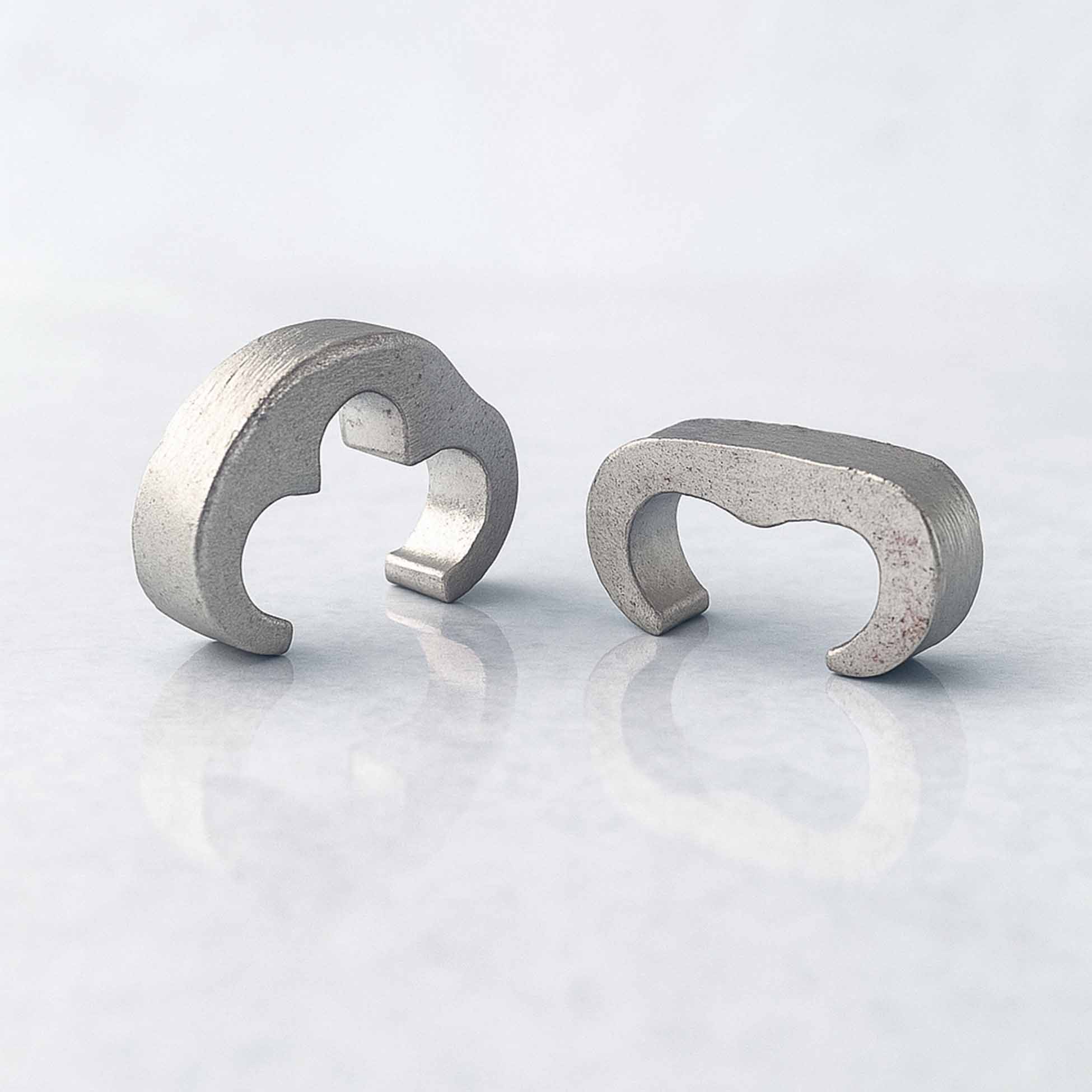
When a global design and fabrication team needed a durable alternative to welding, they partnered with The Federal Group, a trusted hot forging company. Through advanced metal forging and precision CNC machining, TFG manufactured a custom metal crimp that increased strength, improved corrosion resistance, and reduced installation time by 75%.
This case study highlights how working with an experienced hot forging partner can enhance performance, sustainability, and scalability across complex structural projects.
Forging Performance, Efficiency, and Environmental Responsibility—Without Breaking the Budget or the Bond
Behind every large-scale structure—every towering mountain, sculpted rock formation, and imaginative façade—lies a hidden network of steel and ingenuity. These structures may look like pure imagination, but they depend on real-world strength and precision to stand the test of weather, time, and gravity.
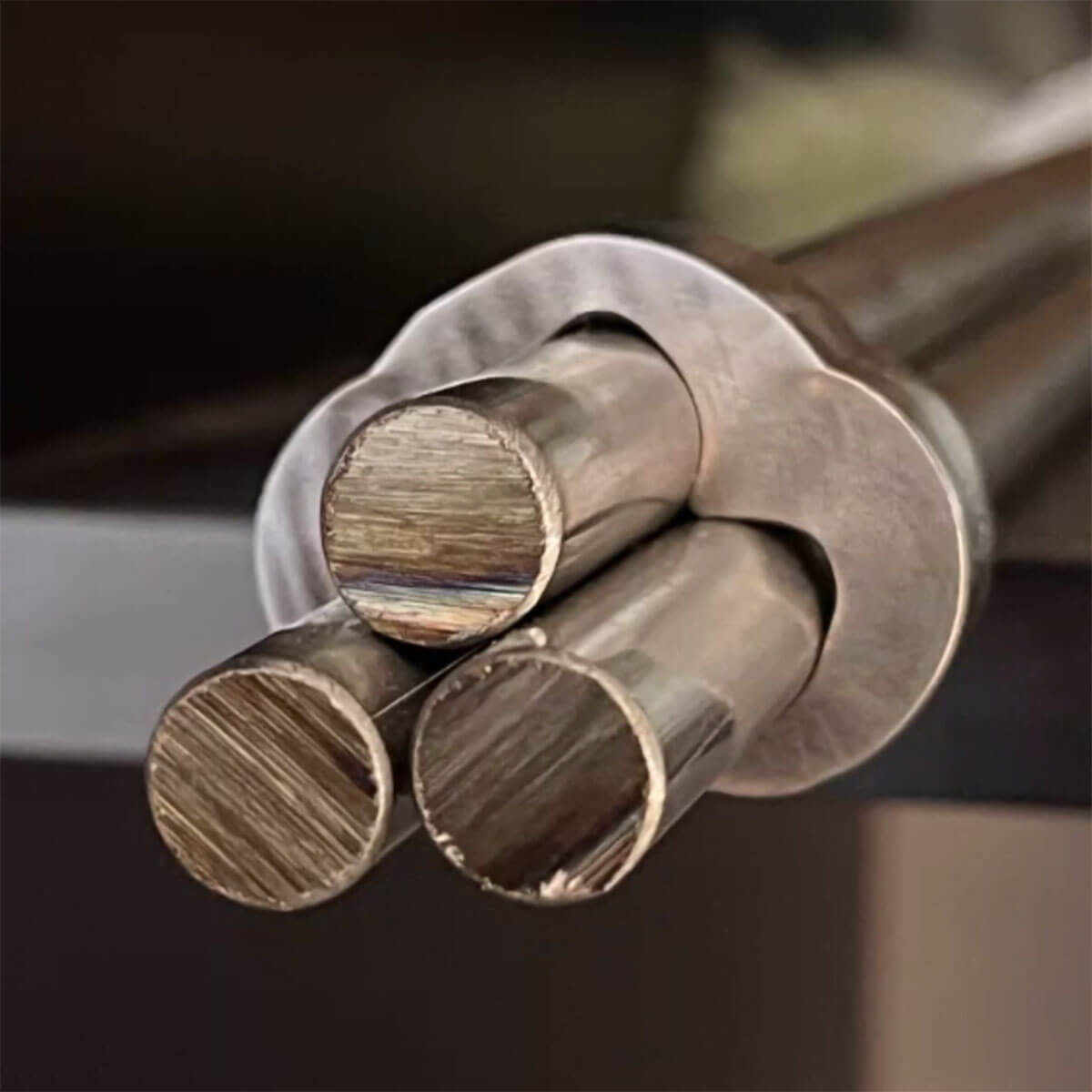
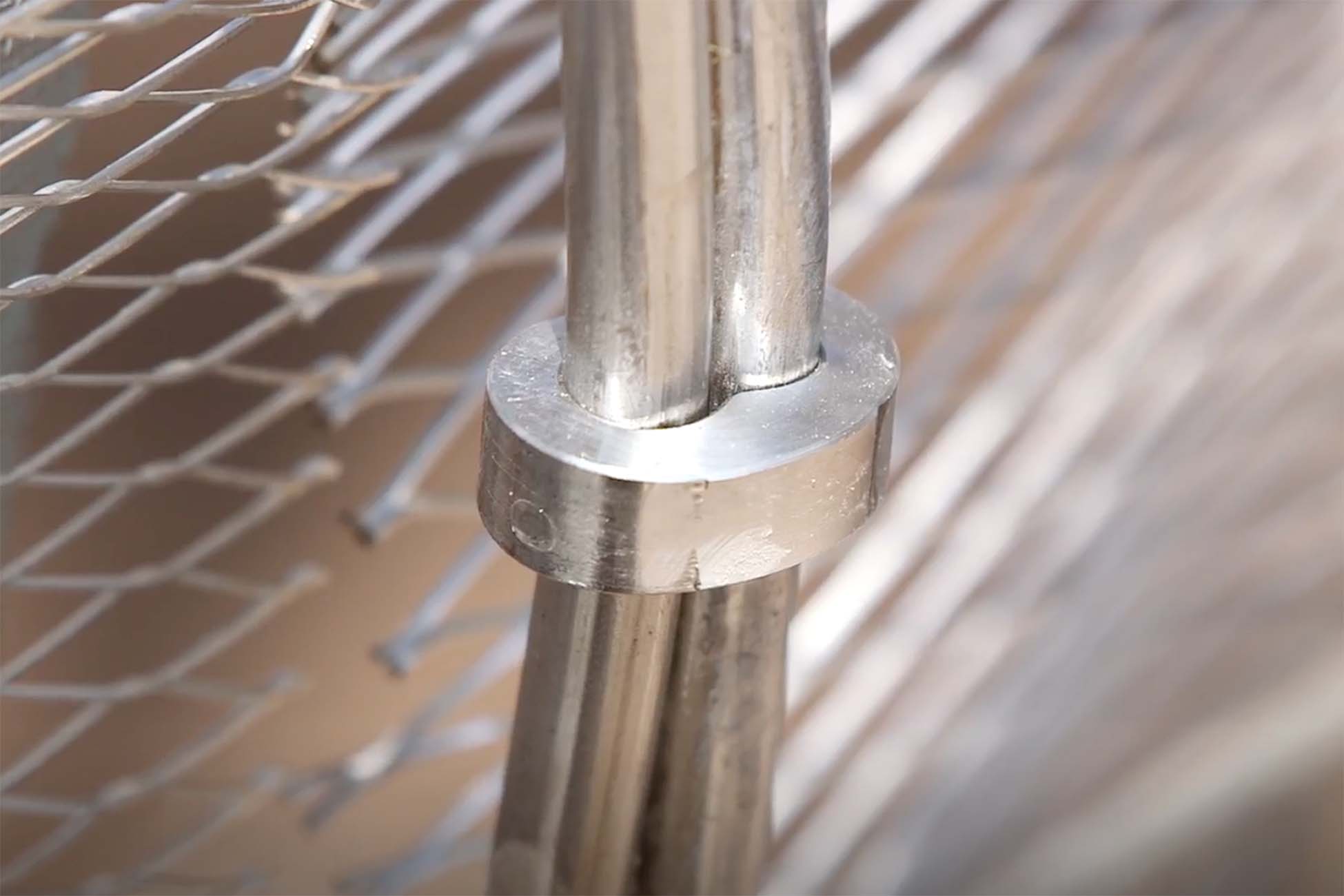
For one global experiential design company, that strength came down to a single, unassuming part: a custom metal crimp that connects and secures the framework behind massive sculptural panels. Working in tandem with reinforced fencing, these crimps form the unseen skeleton that supports some of the most immersive exhibits in the world.
This challenge was more than structural. Every part had to perform in punishing environments—from high heat to heavy salt exposure—while reducing installation costs and environmental impact across dozens of sites worldwide.
They needed a manufacturing partner who could merge creativity with Design For Manufacturing (DFM)—a team capable of balancing intent, durability, and sustainability at scale.
That’s where The Federal Group came in.
Challenges: Finding a Strong, Scalable, Sustainable Solution—at a Cost Savings.
For this global project, the real challenge wasn’t just creating a strong, crimped connection. It was finding one that could perform in punishing conditions, scale across continents, and do it all without growing budgets or carbon footprints.
All-Weather Performance in Every Environment
When you’re building the backbone of imaginative outdoor experiences, imagination faces off against a pretty harsh reality—water, wind, salt, and heat.
These crimps in particular had to perform consistently in drastically different conditions:
- Coastal locations, where salt air and humidity accelerate corrosion.
- Inland sites, where heat and load stress could weaken lesser metals over time.
- Water attractions, where constant exposure to moisture, chlorinated water, and rapid temperature swings can compromise metal coatings and structural stability.
Corrosion resistance, tensile strength, and long-term stability weren’t just desired—they were demanded.
The High Price of the Original Solution
The outside elements weren’t the only challenge. The client’s original welded system came with steep financial, human, and environmental costs.
Each connection required heavy, high-heat welding equipment, multiple operators, and careful (and heavy) cable management across expansive build sites. Between consumables, energy use, and on-site labor, every connection could cost up to three to five times more than a mechanically crimped assembly.
Beyond expense, the process carried a significant environmental burden—drawing high electrical loads, generating waste and emissions, and requiring repetitive on-site rework. For teams working in hot or humid conditions, the physical strain was equally taxing.
Tests of Endurance, Efficiency, and Scalability
Even after the sparks cooled, the challenges continued. The welding system simply wasn’t built to scale. Each new location meant new crews, retraining, and retooling—introducing inconsistencies, downtime, and cost overruns that compounded with every site.
The next iteration needed to do what the original couldn’t: deliver precision without complexity, strength without strain, and sustainability without compromise.
When the client’s timeline—and their team—started to feel the pressure, they turned to The Federal Group to help them bring a smarter, stronger, and faster solution to the job site.
Where Creativity Meets Critical Thinking
Close collaboration between design engineers, fabrication specialists, and our client kept the creative vision grounded in manufacturing reality. Every decision—material, method, or measurement—was tested against one standard: performance that lasts.
Prototyping with Purpose
Before the first prototype ever hit the press, TFG’s engineers mapped out every variable that could affect performance: material composition, stress distribution, corrosion behavior, and assembly flow.
Using a combination of digital modeling, forging simulations, and physical prototypes, the team validated the crimp’s ability to maintain integrity under both coastal corrosion and inland load-bearing stress—long before full production began.
The first prototypes were produced through our investment casting services, which offered promising strength but fell short on corrosion resistance. Rather than compromise, the engineers pivoted quickly, analyzing alternate processes that could deliver both strength and surface protection.
Forging a Better Method
TFG advised moving away from investment casting in favor of our metal forging services, which delivered a dramatic boost in grain flow, strength, and surface consistency.
The decision also reduced long-term corrosion risk and supported smoother integration with downstream machining. Read more about Casting vs Forging here.
As the forging tooling was in development, we used CNC prototyping to validate and fine-tune the crimp’s geometry. Running these efforts concurrently accelerated the timeline and confirmed the part’s fit, alignment, and structural performance within the client’s panel system.
Mastering Metallurgy
Through iterative testing and metallurgical analysis, the team evaluated performance across multiple environments. Two alloys—stainless steel and zinc-coated carbon steel—were ultimately selected to balance corrosion resistance, weight, and cost across coastal and inland builds.
The Final Metal Crimp: An Engineering Wonder
TFG’s engineering and manufacturing teams approached the challenge with a dual focus: durability in the field and efficiency in both production and use.
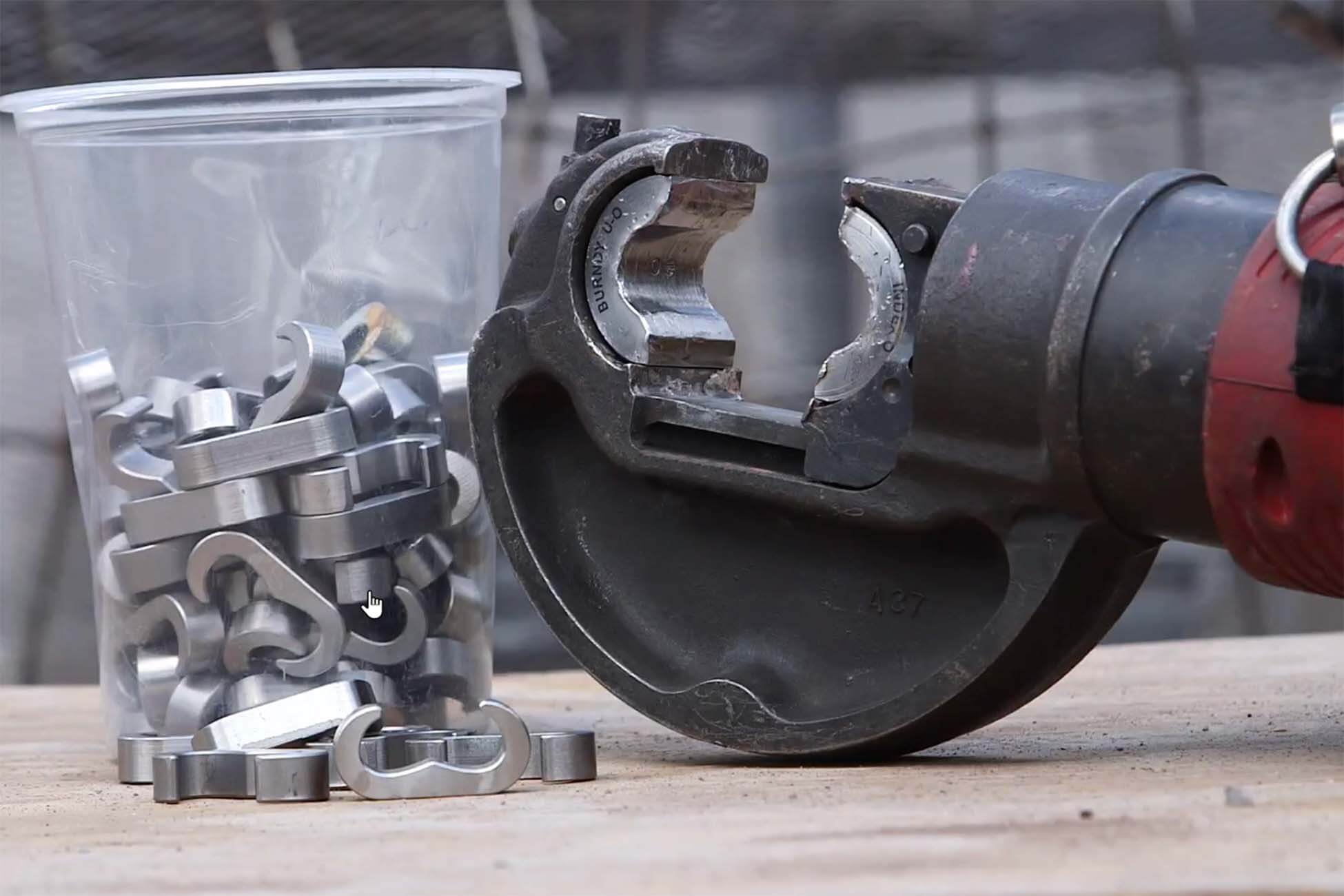
Rather than reengineer the installation process, the client and our team adapted the new crimp to fit standard industrial crimping tools. This meant the crews could install crimps quickly, safely, and precisely—no oversized manual presses, air compressors, or unwieldy welding equipment required.
Once the geometry was set, each crimp was hot forged then zinc-plated to withstand salt, humidity, and UV exposure.
Before delivery, every batch underwent non-destructive testing (NDT) and dimensional inspection to ensure structural integrity and repeatability—whether destined for a coastal attraction or an inland landmark.
In testing, each crimp withstood over 15,000 pounds of applied force before showing deformation—a level of performance that ensures long-term stability even under extreme environmental conditions.
Results: The Real Magic
When installation crews put the new crimp system to the test, the results were impossible to ignore.
- Assembly times dropped by more than 75%, transforming what had been a slow, labor-intensive process into a fast, seamless installation.
- Material waste and energy use decreased by nearly 50%, thanks to the elimination of weld-heavy joints and the move toward precision-engineered crimps.
- Field safety improved as heavy welding equipment and long cable runs were replaced with lightweight, hand-operated tools.
- Costs fell across the board, with savings realized through reduced labor hours, minimal tooling requirements and maintenance, and lower ongoing energy consumption.
The result? A part that delivered measurable impact in the field—reducing installation timelines, costs, and carbon footprints, all while boosting safety and scalability.
Because when the smallest part gets smarter, the entire system gets stronger.
Always Ready to Put the Part in Partnership
When engineering and imagination work hand in hand, even the smallest part can make a world of difference. Whether you’re engineering outdoor environments, industrial assemblies, or mission-critical systems, TFG delivers the strength, scalability, and support to bring your vision to life.
Contact our team to start your next custom hot forging project—or explore more of our manufacturing capabilities and process innovations that keep performance strong from concept to completion.
Client Testimonials
 Trustindex verifies that the original source of the review is Google.
 Jonathon Lanham2025-09-26Mike Allen and The Federal Group have been an absolute pleasure to work with. From the first day we reached out to them they responded punctually and professionally and helped us with every step of the process. We came to them with a budget conscious challenge and they delivered above and beyond a fitting and accurate solution. A quality finished part that has improved the overall quality of our product, and that's what really counts. Thank you to The Federal Group!Trustindex verifies that the original source of the review is Google.Sean Brockhouse2025-04-20Sandor Holzer has gone above and beyond helping us to get another part ramped up for production, creative getting samples ahead of schedule so we could meet tight timelines. Outstanding customer service!!Trustindex verifies that the original source of the review is Google.Melissa Quiroz2024-08-09Good company, knowledgeable staff, product was exactly what i asked for. Got me out of a jam!Trustindex verifies that the original source of the review is Google.Alex Armstrong2023-12-15Steve was great to work with and was always available when needed.Trustindex verifies that the original source of the review is Google.Jon Ramsey2023-10-07Mike at TFG was tenative to our supply needs and an immense help! Took on a project that was quite large and daunting, only to be resilient through the task challenges. In conclusion, everything was completed successfully and a huge success. Would recommend and I plan to use them for future projects. Thanks again Mike and TFG team.Trustindex verifies that the original source of the review is Google.Nic Robinson2023-10-05Steve Bogdanovich has been critical to our team meeting deadlines with a quality product. The communication and customer service is top notch. We know we can rely on Steve and The Federal Group team to get us a quality product and in a timely manner. We've sent all of our casted parts through them because we know we will get the best service, and they keep us informed through every step in the process.Trustindex verifies that the original source of the review is Google.Sean Connelly2023-06-21The Federal Group was great to work with. Steve was very professional and diligent in providing good advice/feedback as well as following up with me. Look forward to working with them in the future as well!Trustindex verifies that the original source of the review is Google.Sher Stahl2020-07-10The Federal Group is a top-notch supplier of ours. They take quality very seriously and strive to ensure we have exactly what we want and when we need it. Communication is excellent. Service is excellent. I have worked with this supplier directly for better than 7 years now, and still considered one of my best suppliers. We've recently expanded our product line with this company and are excited to partner on this line and on future projects. Words cannot express how grateful I am to have such a responsive company, and rep, Richard, to work with. I highly recommend this supplier.Trustindex verifies that the original source of the review is Google.Marshall2020-06-30Excellent customer service and products!



