
Advantages of Using Cast Aluminum: A Comprehensive Engineering Guide
Manufacturing high-performance components is a constant balancing act. You need parts that are strong enough to withstand operational stress, light enough to meet efficiency standards, and affordable enough to mass-produce. Engineers and procurement managers often find themselves stuck between these competing demands.
Steel offers strength but carries a weight penalty. Machining from solid blocks offers precision but drives up cycle times and waste. This is why cast aluminum remains a dominant material choice across medical, automotive, and energy sectors. It solves the equation by offering a unique combination of lightweight performance, complex geometry capabilities, and scalable production costs.
At The Federal Group (TFG), we see firsthand how switching to cast aluminum helps clients transition from a successful prototype to a profitable product line.
Table of Contents
Key Takeaways
- Cast aluminum offers a high strength-to-weight ratio, making it ideal for consumer products and industrial applications where every ounce counts.
- While tooling costs are upfront, the per-unit cost drops significantly as production volume increases.
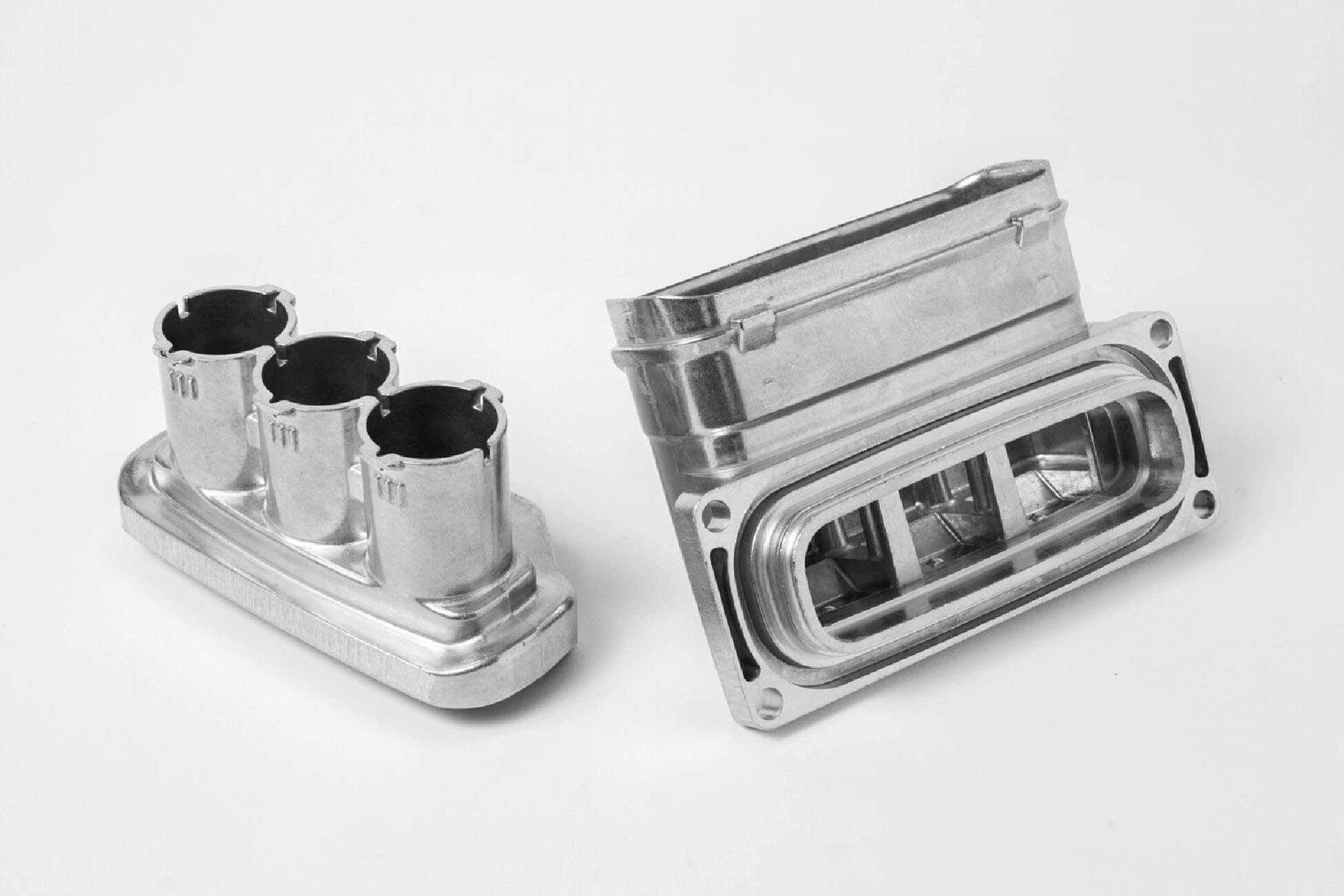
- The casting process allows for complex, near-net shapes that are otherwise near-impossible or too costly to achieve with machining alone.
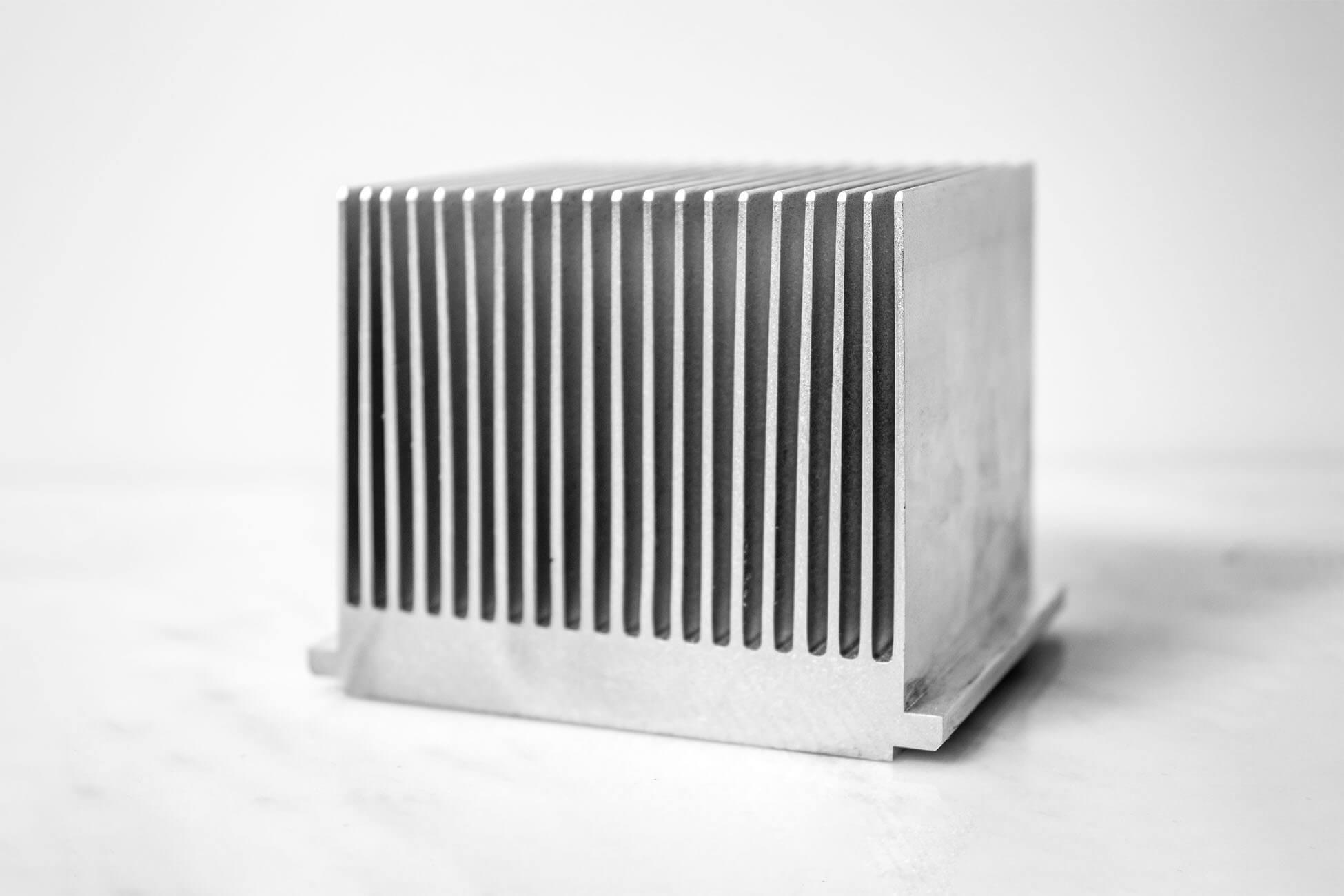
- Superior heat dissipation properties make it the standard for electronic enclosures and heat sinks.
What is Cast Aluminum?

To understand the value of cast aluminum, you must first distinguish it from its counterparts. The term “aluminum” often gets used broadly, but the manufacturing method dictates the material’s internal structure and performance.
Cast aluminum is created by melting aluminum alloys and pouring or injecting them into a mold. The metal then solidifies in the shape of the component. This process creates an isotropic grain structure, meaning that the material has consistent properties in all directions – it handles stress differently than material that has been rolled or extruded.
Wrought aluminum (or billet) starts as a solid block or sheet. It is mechanically worked into shape through rolling, forging, or extrusion. This mechanical working aligns the grain structure, which gives it exceptional strength in the direction of the grain but less strength across it.
Engineers choose cast aluminum vs. regular aluminum (wrought) when geometry is complex. If you need internal voids, thin walls, or intricate organic shapes, casting is the logical path. Wrought aluminum is typically reserved for simpler structural shapes or parts requiring maximum fatigue resistance in a specific direction.
The 7 Key Advantages of Cast Aluminum for Industrial Applications
Deciding on a material is about more than just checking a box on a spec sheet. It determines your supply chain stability, your unit costs, and the longevity of the final assembly. Here are the seven primary reasons engineering teams specify cast aluminum for their most critical components.
1. Superior Strength-to-Weight Ratio
Weight is the enemy of efficiency. In the automotive and aerospace sectors, reducing vehicle mass directly correlates to better fuel economy and payload capacity. Aluminum has a density roughly one-third that of steel.
But lightness alone isn’t enough. The part must still hold up under load. Cast aluminum alloys are engineered to provide impressive tensile strength relative to their mass. You can often replace a heavy iron component with a slightly thicker aluminum casting. The result is a part that is significantly lighter but still meets the required structural safety factors.
2. Design Flexibility and Near-Net Shape Manufacturing
Machining a complex part from a solid block is expensive. You pay for the material you cut away, and you pay for the machine time to cut it. Casting changes this dynamic by achieving “near-net shape.”
The molten metal fills the mold, capturing intricate details, internal channels, and complex contours in a single step so you don’t need to weld multiple pieces together or machine away 50% of your stock. This allows designers to integrate features like bosses, ribs, and heat sinks directly into the casting, reducing the total part count and simplifying assembly.
3. High Thermal and Electrical Conductivity
Heat management is a critical challenge in modern electronics and energy systems. Components that trap heat fail faster, but cast aluminum can prevent this as it is an excellent thermal conductor. It pulls heat away from sensitive components like circuit boards or engines and dissipates it into the surrounding air.
This is why you see cast aluminum used almost exclusively for heat sinks, LED lighting fixtures, and automotive engine blocks. It also offers good electrical conductivity, which makes it useful for grounding applications and electrical enclosures.
4. Corrosion Resistance and Durability
Industrial environments are harsh, with moisture, chemicals, and salt spray potentially wearing down lesser materials. Aluminum naturally forms a thin, protective oxide layer when exposed to air. This “self-healing skin” prevents deep corrosion.
For applications requiring even more protection, cast aluminum serves as an excellent substrate for surface treatments. You can anodize, paint, or powder coat the surface to enhance resistance to wear and environmental attack. This ensures the component maintains its integrity over years of service, even in harsher outdoor construction or marine settings.
5. Cost-Effectiveness at Scale
Cost analysis in manufacturing involves two main buckets: tooling costs and unit costs. Casting usually requires a higher upfront investment in molds (tooling). The good news is that this investment will typically lower your total cost of ownership over time.
Once the tool is made, the cycle time to produce each part is fast. You can produce thousands of identical parts with minimal labor compared to fabrication or machining. This drives the unit cost reduction down significantly as volumes rise. For projects moving from prototype to mass production, casting provides the scalability needed to keep margins healthy.
6. RFI and EMI Shielding Properties
Electronic devices are everywhere, and they all emit electromagnetic interference (EMI) or radio frequency interference (RFI). This “noise” can disrupt the function of nearby medical devices or control systems.
Cast aluminum creates a natural Faraday cage. It blocks outgoing interference and protects internal components from incoming signals. By using a cast aluminum enclosure, you often eliminate the need for additional shielding materials. This simplifies the bill of materials and ensures compliance with strict industry regulations.
7. Sustainability and Recyclability
Modern supply chains are under constant pressure to reduce their carbon footprint, so they often turn to aluminum since it is one of the most recyclable metals on the planet. For context, recycling cast aluminum requires only 5% of the energy needed to produce new primary aluminum.
Using cast aluminum therefore supports a circular economy. At the end of a product’s lifecycle, the component can be melted down and recast with no loss of properties. This is a strong selling point for companies looking to improve their environmental impact statements without sacrificing part quality.
Which Is Better? Cast Aluminum vs. Steel and Iron Compared
Is steel always the best choice for heavy-duty applications? Engineers are often torn between using cast aluminum or sticking with traditional steel and iron. Making the right choice depends on understanding the trade-offs between strength, weight, and manufacturing complexity.
Steel is undeniably stronger in terms of yield strength. But that strength comes at a significant weight penalty. Cast iron offers excellent vibration damping and wear resistance, but it is heavy and brittle. Machined parts offer the highest precision, but the cost per part remains high regardless of volume.
Here is a breakdown to help you compare aluminum casting vs steel and other common materials:
Feature | Cast Aluminum | Steel (Wrought/Machined) | Cast Iron |
Density (g/cm³) | ~2.7 (Lightweight) | ~7.8 (Heavy) | ~7.2 (Heavy) |
Strength-to-Weight Ratio | High | Medium | Low |
Corrosion Resistance | Excellent (naturally oxidizes) | Poor (requires coating/plating) | Poor (rusts easily) |
Thermal Conductivity | High (good for heat sinks) | Low | Medium |
Complex Geometries | Excellent (near-net shape) | Limited (machining required) | Good (casting possible) |
Tooling Cost | Moderate to high | Low (unless stamping) | Moderate |
Unit Cost at Scale | Low | High | Low to medium |
Note: If your application demands high stiffness and wear resistance (like heavy machinery gears), steel or cast iron comparison wins here hands down. However, for components requiring weight reduction, complex shapes, or corrosion resistance (like automotive brackets or electronic housings), cast aluminum is the superior choice.
Choosing the Right Casting Process (Step-by-Step Guide)

Selecting the right casting method is critical. The “best” process depends entirely on your production volume, part complexity, and budget. Choosing the wrong method can lead to excessive tooling costs or high per-unit prices that kill profitability.
At TFG, we guide clients through this selection process daily. We analyze your specific requirements, including tolerance, surface finish, and annual usage, to recommend the most cost-effective path. This ensures you don’t overspend on a die-casting mold for a low-volume run or struggle with inconsistent sand castings for a high-precision part.
Here is a comparison of the primary casting methods to help you navigate your options:
Process | Best For... | Volume | Tooling Cost | Surface Finish |
Die Casting | High-volume production of complex, thin-walled parts. | High (10,000+) | High | Excellent |
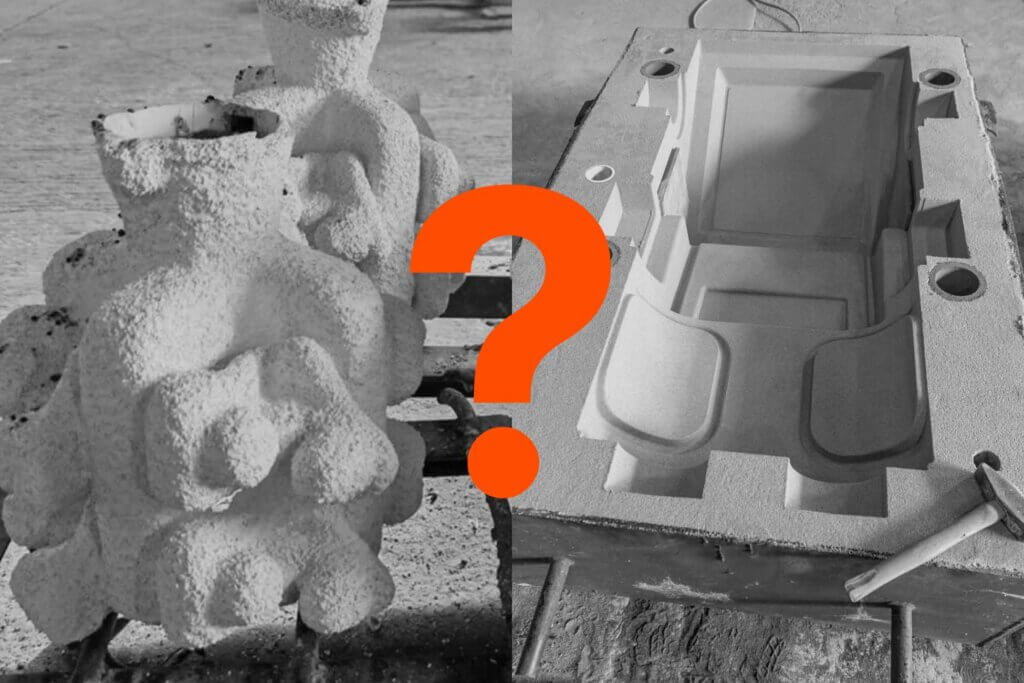
Sand Casting | Large, heavy parts or low-volume prototypes. | Low to Medium | Low | Rough |
Permanent Mold | Parts requiring high strength and moderate volume. | Medium (1,000 - 10,000) | Moderate | Good |
Investment Casting | Intricate, high-precision parts with smooth finishes. | Low to High | Moderate | Excellent |
When deciding between sand casting vs. die casting, remember that die casting offers the lowest unit cost but the highest initial investment. The investment casting process creates incredible detail but is slower. Partnering with a manufacturing expert helps you balance these trade-offs effectively.
Maximizing Benefits with Design for Manufacturing (DFM)
Great parts start with smart design. You cannot simply take a machined part drawing and send it to a foundry as the geometry must first be optimized for the casting process to avoid defects and reduce costs. This is where Design for Manufacturing becomes essential.
- Draft angles: Vertical walls must have a slight taper (draft) to allow the part to release from the mold. Without this, the part will stick and damage the tooling.
- Wall thickness: Uniform wall thickness is crucial. Varying thickness causes uneven cooling, which leads to casting defects like shrinkage or porosity. If you need a thicker section for strength, use ribs instead of solid mass.
- Fillets and radii: Sharp corners create stress points and impede metal flow. Use generous radii to smooth out transitions and improve the durability of the mold.
By addressing these factors early, you minimize the risk of porosity and ensure a consistent, high-quality production run.
Cons of Cast Aluminum: What You Need to Know
What happens when a part fails in the field? After all, no material is perfect. While cast aluminum offers immense benefits, engineers must be aware of its limitations to avoid costly failures.
- Porosity: The casting process inherently introduces some level of porosity (tiny air pockets) into the metal. This can weaken the part and make it unsuitable for high-pressure hydraulic applications unless specifically treated (e.g., vacuum impregnation).
- Welding challenges: You generally cannot weld cast aluminum easily. The porous structure and oxide layer make welding cast aluminum difficult and prone to cracking. If your assembly requires welding, you might need a wrought alloy or a specialized casting grade.
- Lower fatigue strength: Compared to wrought aluminum or steel, cast aluminum has lower fatigue strength. It may not be the best choice for parts subjected to constant, high-cycle cyclic loading.
Understanding these limitations allows you to design around them by using inserts, bolting instead of welding, or selecting high-integrity casting methods like squeeze casting.
Making the Switch to Cast Aluminum

Switching to cast aluminum is a strategic move for manufacturers looking to reduce weight, lower costs, and scale production. It offers a balance of performance and manufacturability that few other materials can match.
From the lightweight strength required in automotive components to the complex geometries needed in medical devices, cast aluminum delivers. But realizing these benefits requires more than just picking a material. It also requires expertise in process selection, DFM, and quality control.
Whether you’re exploring prototyping options for a new product, or you have an existing product that you’d like to put into production, The Federal Group USA can help you with your next aluminum die casting project. We’ve provided high-quality metal fabrication services to a wide variety of industries since 1980. Contact us today to request a quote for your die-casting project.
FAQs
Does cast aluminum crack easily?
Cast aluminum is generally brittle compared to wrought aluminum. It can crack under high impact or extreme stress if not designed correctly. But proper alloy selection and heat treatment can significantly improve its ductility and resistance to cracking.
Is cast aluminum rust-proof?
Yes, cast aluminum is highly resistant to rust. Aluminum naturally forms a protective oxide layer that prevents deep corrosion so it does not rust like steel or iron. For harsh environments, additional coatings like anodizing can further enhance this protection.
Can you anodize cast aluminum?
Yes, you can anodize cast aluminum, but the results may vary. Because of the silicon content in many casting alloys (like A380), the anodized finish may appear darker or splotchy compared to wrought aluminum. It provides excellent corrosion protection but is often used for functional rather than decorative purposes.
Robert Levy
Manufacturing Business Leader
Owner of The Federal Group for 44 years, Robert is a serial entrepreneur and built his manufacturing business from scratch at the age of 26. He is an expert on all things forging, casting, and machining. On the weekends, he enjoys golfing, playing guitar, and spending time with family.
Up Next