Custom Fasteners vs Standard Fasteners: When Going Custom Pays Off
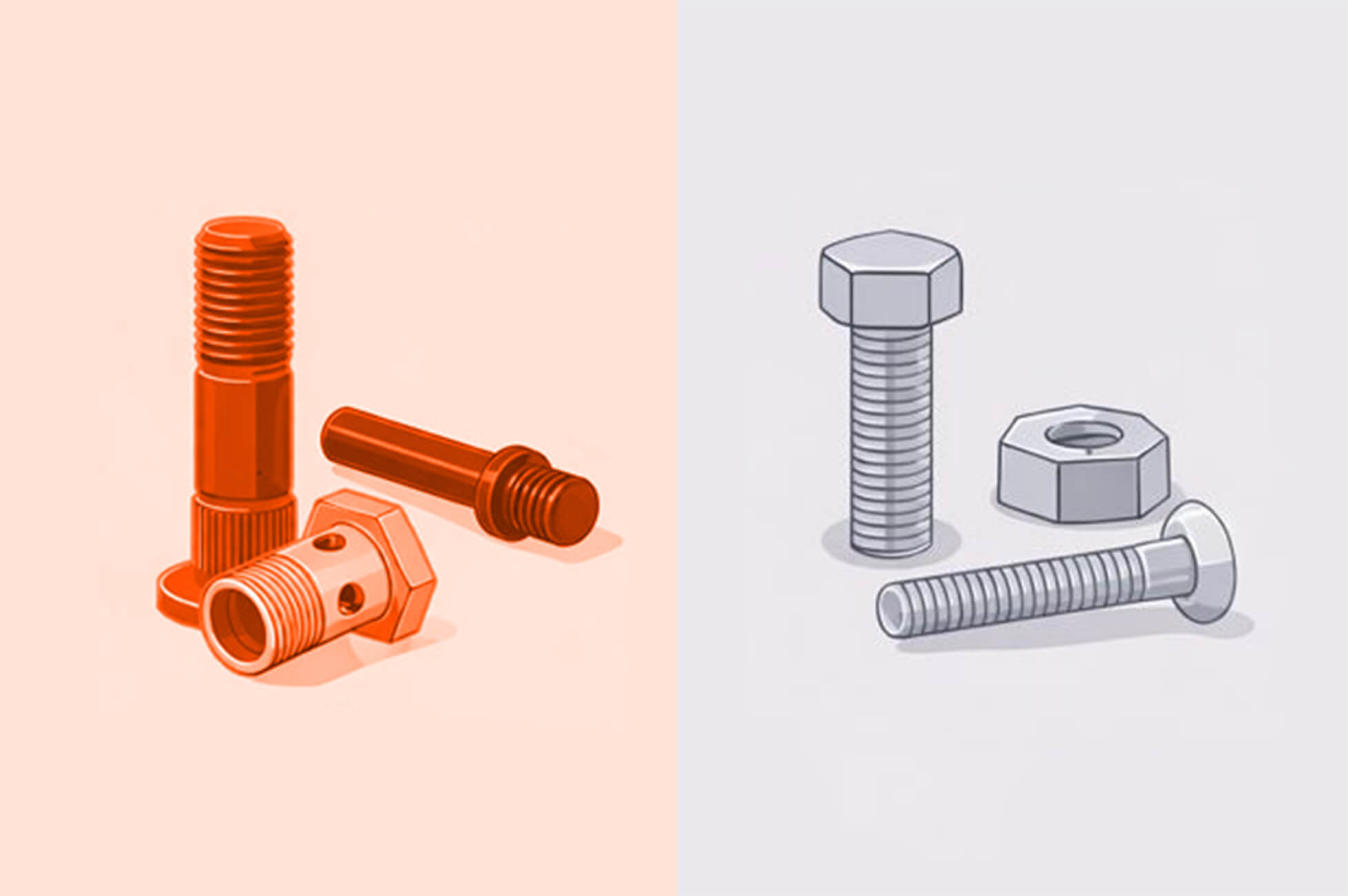
For most engineering teams, standard fasteners are the logical starting point. They’re readily available, cost-effective, and well understood. But as designs become more complex—and performance, packaging, or safety requirements tighten—standard fasteners often become the limiting factor rather than the solution.
For nearly 50 years, custom fasteners have been central to how The Federal Group (TFG) helps manufacturers solve those constraints. The company’s roots in non-standard fasteners date back to 1974, when founder Bob Levy began supplying hard-to-find socket screws and extended-length Allen bolts that simply didn’t exist in standard catalogs. Those early challenges revealed a recurring truth: when designs push beyond the norm, fasteners must evolve with them.
Today, TFG supports global clients in safety-critical, high-load, and extreme-environment applications—where off-the-shelf fasteners fall short and custom solutions become essential. As a vertically integrated custom fastener company, TFG combines engineering support with specialized manufacturing processes to meet those demands.
Table of Contents
When Standard Fasteners Stop Working

Standard fasteners should always be evaluated first. They’re faster to source, easier to validate, and cheaper to implement. However, many designs eventually reach a point where standard hardware introduces compromises that engineers can’t accept.
The most common reasons teams transition to custom fasteners include:
- Geometric constraints
Tight packaging, limited clearances, or interference between components may prevent standard head styles from fitting or functioning properly. - Length limitations
Standard fasteners are produced in fixed increments, and the exact length required for optimal clamping or engagement often doesn’t exist. - Non-standard diameters or thread forms
This is especially common in systems that mix metric and imperial components or must interface with legacy equipment. - Material and performance demands
Off-the-shelf alloys may not meet requirements for torque, fatigue life, vibration resistance, corrosion, or extreme temperatures. - Assembly efficiency goals
Custom fasteners can simplify tooling, reduce part counts, and standardize installation methods across an assembly.
In most cases, engineers arrive at custom fasteners reluctantly—but once the need is clear, there’s no functional alternative.
Why Drawings Rarely Tell the Whole Story
Even well-developed fastener drawings are rarely perfect on the first attempt. That isn’t a failure of engineering—it’s a reflection of the difference between theoretical models and real-world behavior.
In CAD, parts are rigid, perfectly aligned, and free of variation. In reality, components flex, tolerances stack, surfaces interfere, and assemblies behave differently under torque, vibration, and heat. A fastener that looks flawless in simulation may reveal unexpected issues during physical testing or installation.
That’s why prototyping is critical. Custom fastener development depends on testing what was designed—not what was assumed. Through physical validation, issues like fit, torque response, fatigue behavior, and manufacturability become clear, allowing engineers to refine the design based on actual performance rather than theoretical expectations.
The Custom Fastener Development Process

Developing a production-ready custom fastener typically takes six to twelve months, depending on complexity, testing requirements, and client responsiveness. While every project is different, the process generally follows a consistent path:
- Initial design submission
By the time drawings reach manufacturing, client engineers have already invested significant effort defining requirements and constraints. - Baseline prototype manufacturing
The first prototype is produced exactly to the original specifications and serves as a performance baseline. - Internal quality validation
Prototypes undergo dimensional inspection, hardness testing, tensile and pull testing, and other QC evaluations to confirm they meet design intent. - Real-world application testing
Field or assembly testing often reveals issues that weren’t visible in CAD—this is expected and essential. - Design refinement with DFM guidance
Geometry, material selection, manufacturing methods, and cost drivers are balanced through multiple iterations until performance and manufacturability align. - Final approval and production
Once validated, the fastener moves into full-scale production with repeatable quality and long-term support.
The pace of this process is dictated by the project. Some programs move quickly with frequent testing cycles; others require extended evaluation periods. The goal is always the same: a fastener that performs reliably for the life of the product.
For complex fasteners, partnering with a custom cold heading company can streamline development and ensure high-quality results.
What Custom Fasteners Make Possible

Custom fasteners aren’t about novelty—they exist to solve specific, high-impact problems. Below are several real-world examples of custom fastener applications that TFG has experience supporting:
- Seismic anchoring screws: Long, slender fasteners designed for earthquake-resistant structures must maintain straightness, strength, and predictable thread behavior at extreme length-to-diameter ratios.
- Eccentric alignment bolts: In heavy-duty vehicle applications, a single custom bolt can fasten components while also aligning and adjusting a bushing—eliminating multiple parts and simplifying assembly.
- Locomotive engine bolts: Massive, safety-critical fasteners often require specialized alloys, heat treatment, and destructive tensile testing to validate elongation and failure behavior under extreme loads.
Across all these examples, the pattern is consistent: when performance, safety, or function are non-negotiable, custom fasteners become an enabling technology. Producing these specialized components often relies on advanced processes such as precision cold forming services or secondary operations performed by an experienced screw machining company.
Common Misconceptions About Custom Fasteners
Many challenges arise not from design limitations, but from misunderstandings about how fasteners behave in real systems. Commonly overlooked factors include:
- The torque limits of reduced or low-profile head designs
- The true cost and availability of exotic materials
- The performance differences between rolled and cut threads
- How assembly processes influence fastener design—and vice versa
Another often-missed consideration is longevity. Once a custom fastener is released, it becomes a service part. It must be supported, stocked, and available for the full lifecycle of the product in the field.
Are Custom Fasteners Expensive?
Compared to standard fasteners, yes—on a per-part basis.
Compared to redesigning an assembly, managing field failures, or issuing recalls, often no.
Custom fasteners carry costs associated with tooling, lower initial volumes, and extended development timelines. But those costs are frequently offset by improved performance, simplified assemblies, reduced part counts, and avoided downstream issues.
A custom fastener that costs a few dollars more can ultimately be the most economical choice if it allows the design to function as intended.
When Does Going Custom Pay Off?

Custom fasteners make sense when a standard fastener forces compromises in performance, reliability, or assembly efficiency—or when the fastener must do more than simply clamp two parts together.
In those situations, the fastener isn’t just a component. It’s a critical part of the engineering solution.
If you’re facing a design challenge where hardware limitations are holding performance back, custom fasteners may be the key to unlocking the next iteration of your product.
Need a Fastener That Doesn’t Exist Yet?
TFG works with engineers to turn complex requirements into production-ready fasteners built for real-world performance. Send us your RFQ to start building what’s next.
Noah Levy
Marketing Director
At TFG USA, Noah focuses on enhancing the company's digital presence, engaging with clients through innovative marketing strategies, and fostering partnerships that align with the company's vision for growth and technological advancement.
Up Next