September 21, 2023
Metal Fabrication: Under Construction
Metal fabrication plays a central role in construction—and it’s not in the way you think It’s well known that metal...
Read More


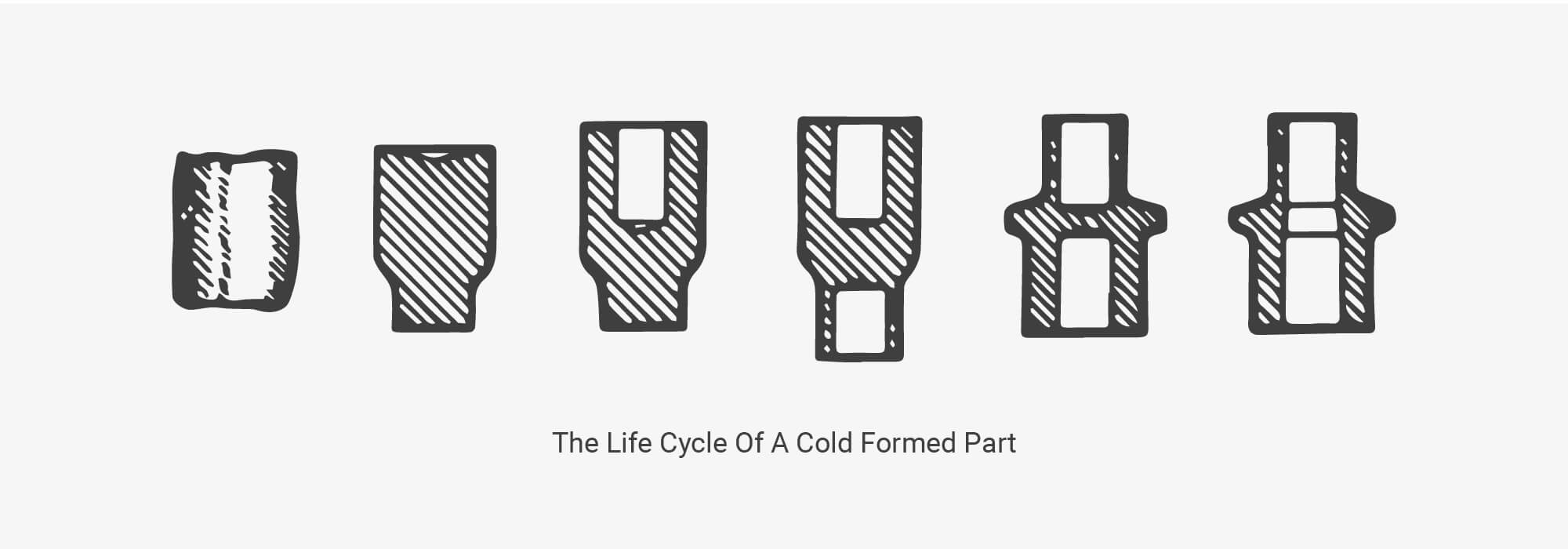
Cold forming, a type of cold working, is an innovative metal forming process that creates metal components with near-net-shape accuracy, low scrap rates, and minimal secondary finishing at cooler temperatures. This technology allows custom fastener manufacturers to produce complex parts like pinions, special screws, rivets, electronic components, and more.
Table of Contents
Cold forming can produce metal components that are near net shape as they come out of the forming die at an ambient temperature. Unlike hot working, the cooler temperatures provide added tensile strength.
There are many benefits to using this process over traditional manufacturing processes like machining. Some of the advantages include:
The four major groups of cold forming are squeezing, bending, shearing, and drawing. Within each of these groups is a multitude of unique techniques that are used to form metal at near room temperature. Keep reading to learn more about the specific processes offered by The Federal Group USA.
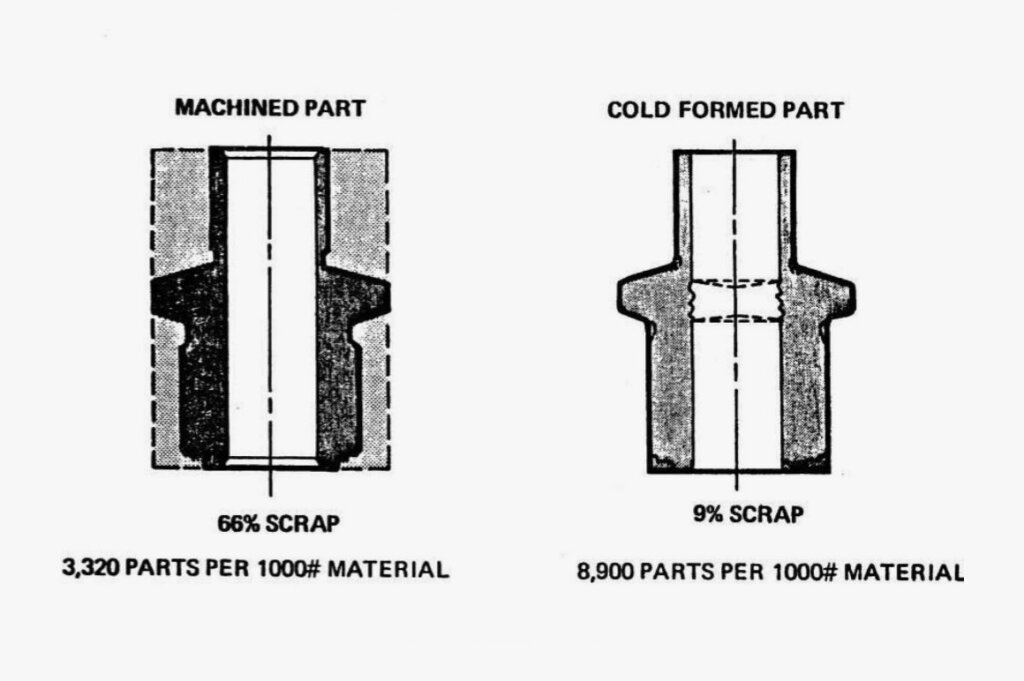
As engineers, we should create and design components to do the job using the most economical capabilities and keep the cost down. Functional analyses examine a part to understand what function it must perform and then develop that element to perform that task.
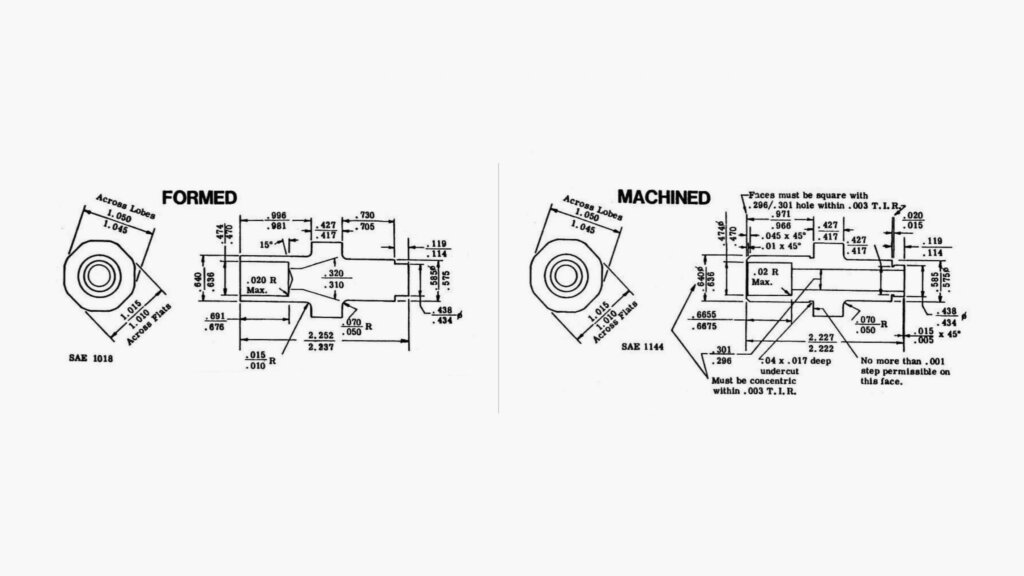
The design of a component need not be a personal statement about your drawing and engineering abilities. You’ll be the hero if you come up with a part that does the job and is cost-effective to produce. For example, in the illustration above, cold forming will yield over 2x more parts than the same machined part.
The following information should help you create a near net shape cold formed component.
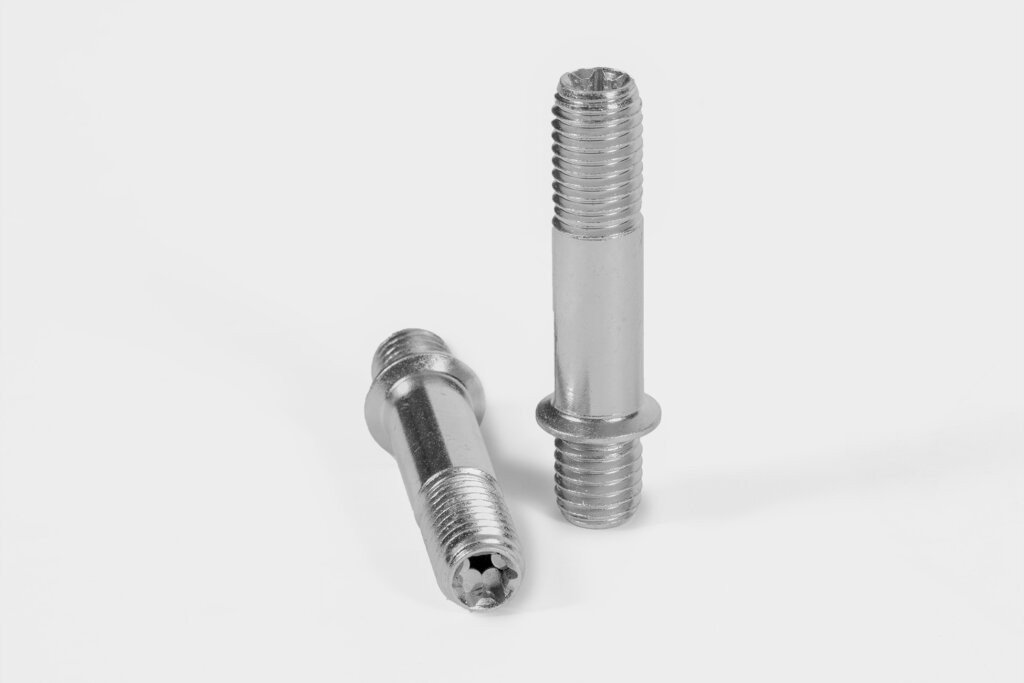
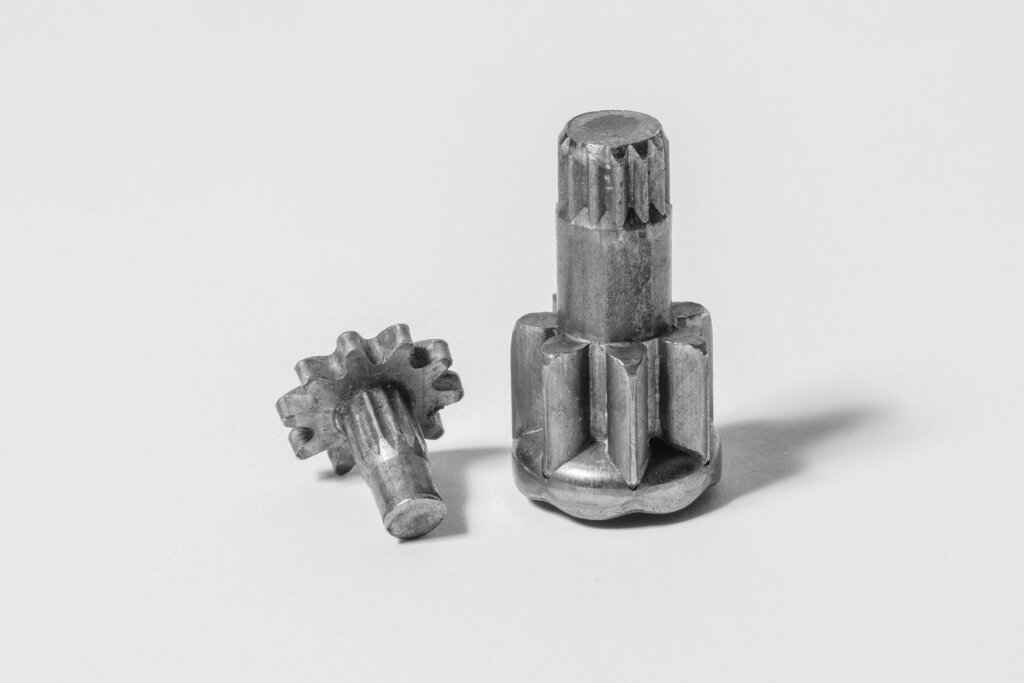
Image above: Plow studs produced by cold forming.
As you design a part for near net shape cold forming (a.k.a. cold working), you must realize that holding tight tolerances is possible. Still, the tighter the tolerance, the more costly it is to manufacture.
Manufacturing conditions govern the accuracy of a cold formed part. The most important factors include:

Cold forming yields high-quality components. They have a good surface finish and little need for secondary operations to the surface. Below are a few best practices when it comes to the cold forming process.
Near net shapes can be machined or ground to the desired shape to meet a specific need.
With cold heading and forming, the finished part’s accuracy depends on the condition and quality of the machinery, operator, process, and more.
Cold forming saves money in a variety of ways:
Cold forming is a process that uses pressure by forming metal at room temperature into a final product. You should consider the following when designing your cold forming parts:
Volume is the most crucial consideration when choosing a manufacturing process. Will the volume be enough to support the tooling and development expenses? Our size-to-volume guidelines are intended to keep pricing competitive while offsetting set-up and tooling expenditures.
Is the component suitable for cold forming? Seeking assistance from a specialist engineer is essential for creating cold-formed parts, as it involves complex criteria and understanding design parameters. TFG USA has the talented and experienced engineering personnel to collaborate with you throughout the entire process.
Cold forming generally produces a strong final piece in comparison to metalworking techniques performed at high temperatures, but not all materials have good cold-forming properties. Material selection will depend strongly on the desired shape of the part and the type of secondary operations that will be required. The materials selection guide further down in this article gives a general ranking of the material for cold forming. National Machinery‘s list of materials is considered a reliable source for determining your needs.
In general, cold forming will result in a less expensive component than material removal. Price, however, is determined by the degree of intricacy and quantity.
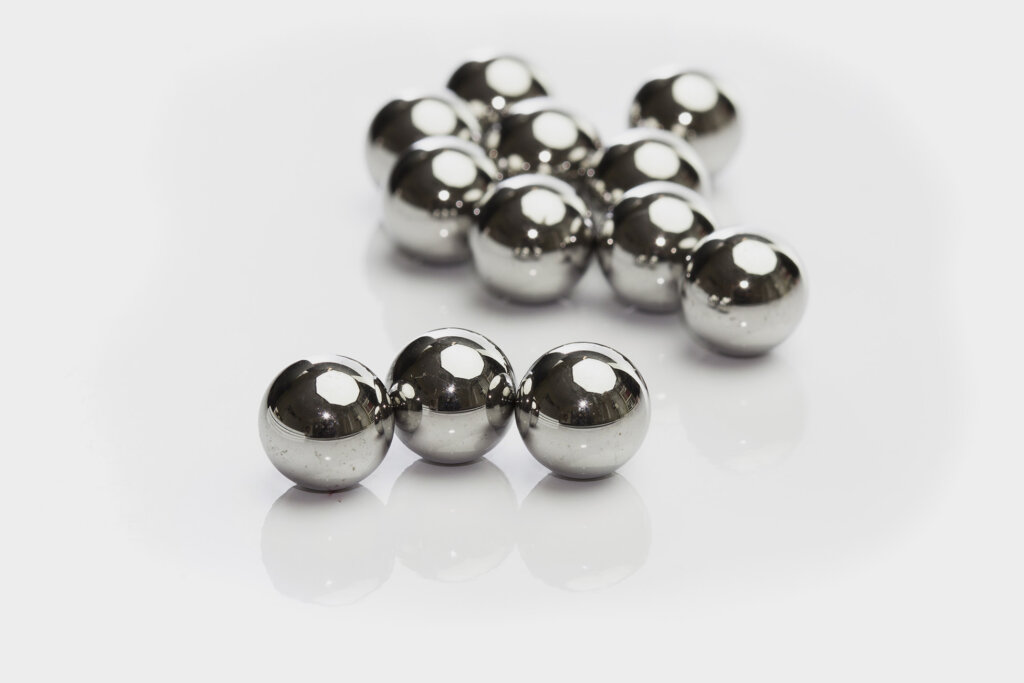
Several types of products can be manufactured using cold forming, including:
The advantages of cold forming, such as improved material properties and dimensional accuracy, make it a preferred choice for producing high-quality components across a wide range of industries.
Operation | Upsetting Ratio |
One Die | s < 2.3 |
Two Die | s < 4.5 |
Three Die | s < 8.0 |
Multi Die Cold Former* | s < 10.0 |
*Predicated on material and part configuration.
S = Original blank length / original blank diameter.
Best | Good | Fair | Poor |
1008 | 1018 | 1035 | 1045 |
1010 | 1020 | 1038 | 1050 |
1013 | 1022 | 1040 | 1060 |
1016 | 1024 | 1070 | |
1017 | 1030 | 1080 |
The physical and mechanical properties resulting from variable processing of the material selected may influence its rank. Rank of each material may also be influenced by type of cold forming to be done, wire coating, and lubricant.
This article is about using cold forming as a method to produce consistent metal production parts. We talk about function, cost, process, and economic advantages.
We also provide guidelines for the cold-forming process and selecting the correct part. Cold forming is a great way to produce metal parts. These are general guidelines for material selection and process optimization.
Whether you’re exploring prototyping options for a new metal product, or you have an existing product that you’d like to put into production, The Federal Group USA can help you with your next cold forming project.
We’ve provided high-quality metal fabrication services to a wide variety of industries since 1980. Contact us today to request a quote for your cold forming project.