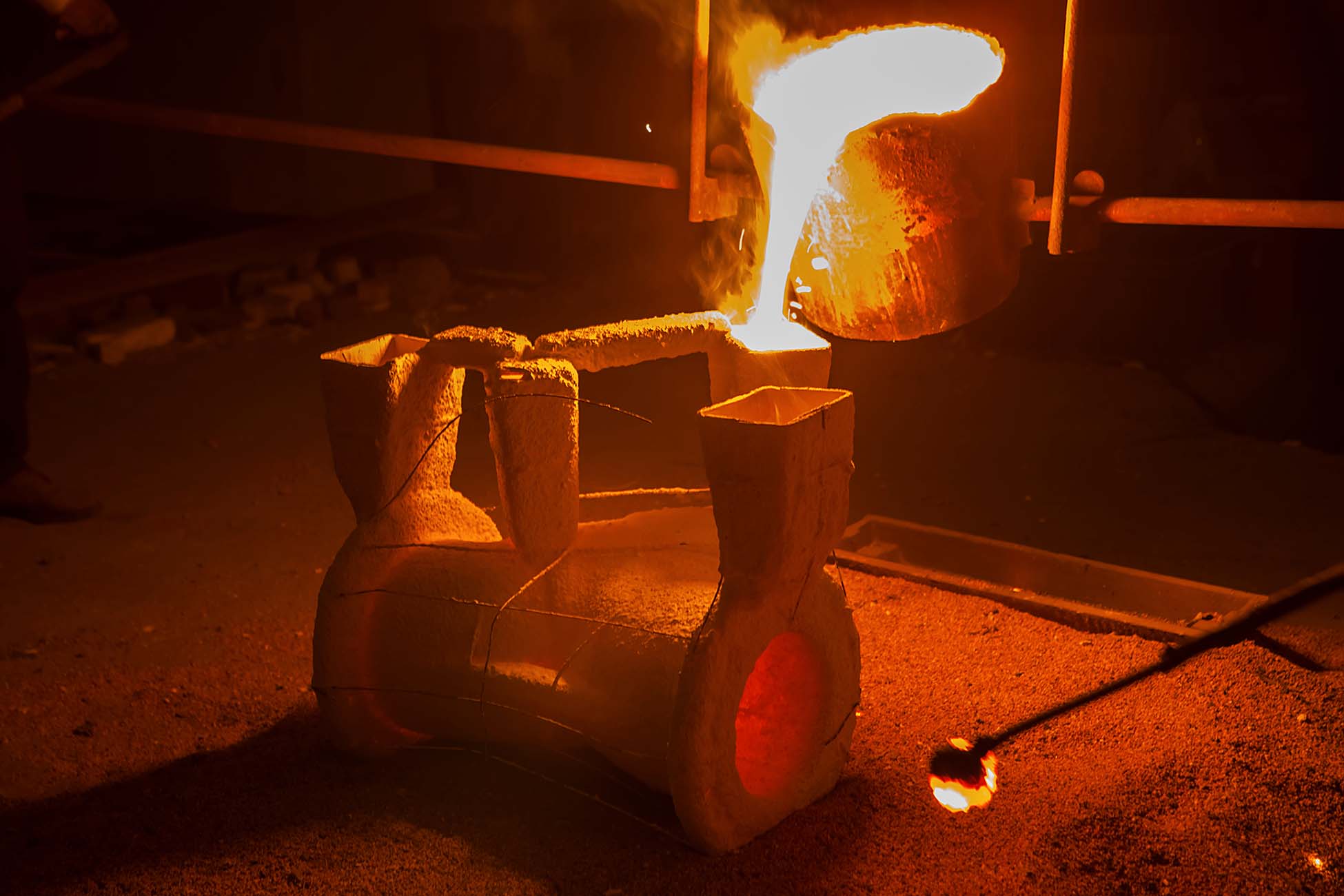
Stainless steel investment casting is well suited for components that require corrosion resistance, complex geometry, dimensional accuracy, and a good surface finish.
Compared with other casting methods, investment casting can produce intricate stainless steel components with relatively little secondary machining. However, it is not always the most economical option. Part geometry, size, production volume, tolerances, and finishing requirements all influence which process is best.
Table of Contents
What Is Stainless Steel Investment Casting?

Stainless steel investment casting is a precision casting process that uses a wax pattern and ceramic shell to produce stainless steel components.
Also known as lost-wax casting, the process can reproduce intricate features and produce parts close to their final geometry. This can reduce the amount of machining required after casting.
For a detailed explanation of how investment casting works, see TFG USA’s Investment Casting Resource page.
Why Use Stainless Steel Investment Casting?
Stainless steel is commonly selected for investment cast components because it combines corrosion resistance with strength, durability, and a wide range of available mechanical properties.
Common stainless steel investment casting alloys include 304, 304L, 316, 316L, 17-4 PH, 15-5 PH, 410, 420, 440C, Duplex 2205, and Super Duplex 2507.
The specific alloy depends on the application. For example, 316 stainless steel may be selected for greater corrosion resistance in certain environments, while precipitation-hardening grades such as 17-4 PH can provide high strength.
Benefits of Stainless Steel Investment Casting
Stainless steel and investment casting complement each other well. Investment casting provides the ability to produce complex, near-net-shape components, while stainless steel provides corrosion resistance, strength, durability, and a wide range of material properties.
Together, they make it possible to manufacture intricate components for demanding environments without sacrificing material performance.
Corrosion Resistance
One of the primary reasons to choose stainless steel is its resistance to corrosion. Depending on the alloy, stainless steel investment castings can withstand moisture, chemicals, chlorides, and other corrosive environments.
This makes stainless steel investment casting well suited for applications such as pumps, valves, food processing equipment, marine components, and chemical processing equipment.
Strength and Durability
Stainless steel offers a combination of strength, toughness, and durability that makes it suitable for components exposed to mechanical loads and demanding operating conditions.
Different stainless steel grades can be selected based on the required mechanical properties. For example, precipitation-hardening grades such as 17-4 PH can provide high strength, while austenitic grades such as 304 and 316 offer a combination of corrosion resistance and durability.
Complex Geometry
Investment casting allows stainless steel components to incorporate intricate features that can be difficult or expensive to produce through conventional casting or machining.
Undercuts, curves, thin sections, fine details, and complex contours can often be incorporated directly into the casting.
Good Surface Finish
Investment casting generally produces a smoother surface than conventional sand casting. Combined with stainless steel’s corrosion resistance and appearance, this can be beneficial for components where both performance and surface quality are important.
A good as-cast finish can also reduce grinding and other secondary finishing operations.
Dimensional Accuracy
Investment casting typically provides better dimensional control than conventional sand casting. This makes it useful for stainless steel components with relatively tight dimensional requirements and complex geometry.
Critical dimensions can still be machined after casting when tighter tolerances are required.
Near-Net-Shape Production
Investment casting produces stainless steel components relatively close to their final geometry. Less material may therefore need to be removed during machining compared with manufacturing the same component entirely from solid stainless steel.
This can be particularly valuable for complex stainless steel components, where machining the entire part from bar or billet could require significant material removal and machining time.
Wide Range of Stainless Steel Alloys
Another advantage is the range of stainless steel alloys that can be used for investment casting.
Common options include 304, 304L, 316, 316L, 17-4 PH, 15-5 PH, 410, 420, 440C, Duplex 2205, and Super Duplex 2507.
This allows the material to be selected based on the application’s specific requirements, including corrosion resistance, strength, hardness, wear resistance, and temperature performance.
Design Consolidation
Investment casting can sometimes combine features that would otherwise require multiple machined or fabricated stainless steel components.
This can reduce part count, welding, fastening, and assembly requirements while creating a single component with complex integrated geometry.
Stainless Steel Investment Casting Applications

Stainless steel investment castings are used in applications where corrosion resistance and complex geometry are both important.
Common examples include:
- Valve bodies and components
- Pump components and impellers
- Fluid-handling components
- Food processing equipment
- Marine hardware
- Chemical processing equipment
- Industrial machinery
- Agricultural equipment
- Medical equipment
- Automotive components
- Energy equipment
The combination of stainless steel’s corrosion resistance and investment casting’s geometric flexibility makes the process particularly useful for components exposed to demanding environments.
Stainless Steel Investment Casting vs. Other Casting Processes
The best casting process depends on the part’s geometry, size, production volume, material, tolerances, and surface finish requirements.
Characteristic | Investment Casting | Sand Casting | Die Casting |
Typical Materials | Stainless steel, steel, aluminum, other alloys | Stainless steel, steel, iron, aluminum, other alloys | Aluminum, zinc, magnesium |
Geometry | Highly complex | Simple to complex | Highly complex |
Dimensional Accuracy | Excellent | Fair to good | Excellent |
Surface Finish | Excellent | Fair to good | Very good to excellent |
Production Volume | Low to medium | Low to high | Medium to very high |
Tooling | Moderate | Low to moderate | High |
Stainless Steel | Excellent fit | Excellent fit | Generally not used |
When Is Investment Casting the Better Choice?
Investment casting is generally most attractive for complex stainless steel components that require good surface finish and dimensional accuracy. It can also reduce machining when intricate features are incorporated directly into the casting.
Sand casting may be more economical for larger or simpler components, while shell molding and permanent mold casting can be better suited to higher-volume applications with less complex geometry. Die casting is primarily used for high-volume non-ferrous components and is generally not an option when stainless steel is required.
For components requiring extremely tight tolerances, investment casting can also be combined with CNC machining to machine critical features after casting.
Frequently Asked Questions
What is stainless steel investment casting used for?
Stainless steel investment casting is used for complex components that require corrosion resistance, good dimensional accuracy, surface finish, and intricate geometry. Common applications include pumps, valves, industrial machinery, food processing equipment, medical equipment, and marine components.
What stainless steel grades can be investment cast?
Common grades include 304, 304L, 316, 316L, 17-4 PH, 15-5 PH, 410, 420, 440C, Duplex 2205, and Super Duplex 2507. Available alloys depend on the specific foundry and casting requirements.
Can stainless steel investment castings be machined?
Yes. Critical features such as holes, threads, sealing surfaces, bearing fits, and other tight-tolerance features can be machined after casting.
Choosing the Right Casting Process
Stainless steel investment casting can be an excellent choice for complex components requiring corrosion resistance, dimensional accuracy, and good surface finish. The right process ultimately depends on the part’s geometry, size, production volume, tolerances, and total manufacturing cost.
Learn more about TFG USA’s stainless steel casting capabilities or investment casting capabilities.
Robert Levy
Manufacturing Business Leader
Owner of The Federal Group for 44 years, Robert is a serial entrepreneur and built his manufacturing business from scratch at the age of 26. He is an expert on all things forging, casting, and machining. On the weekends, he enjoys golfing, playing guitar, and spending time with family.
Up Next


