

Custom Metal Forging Services
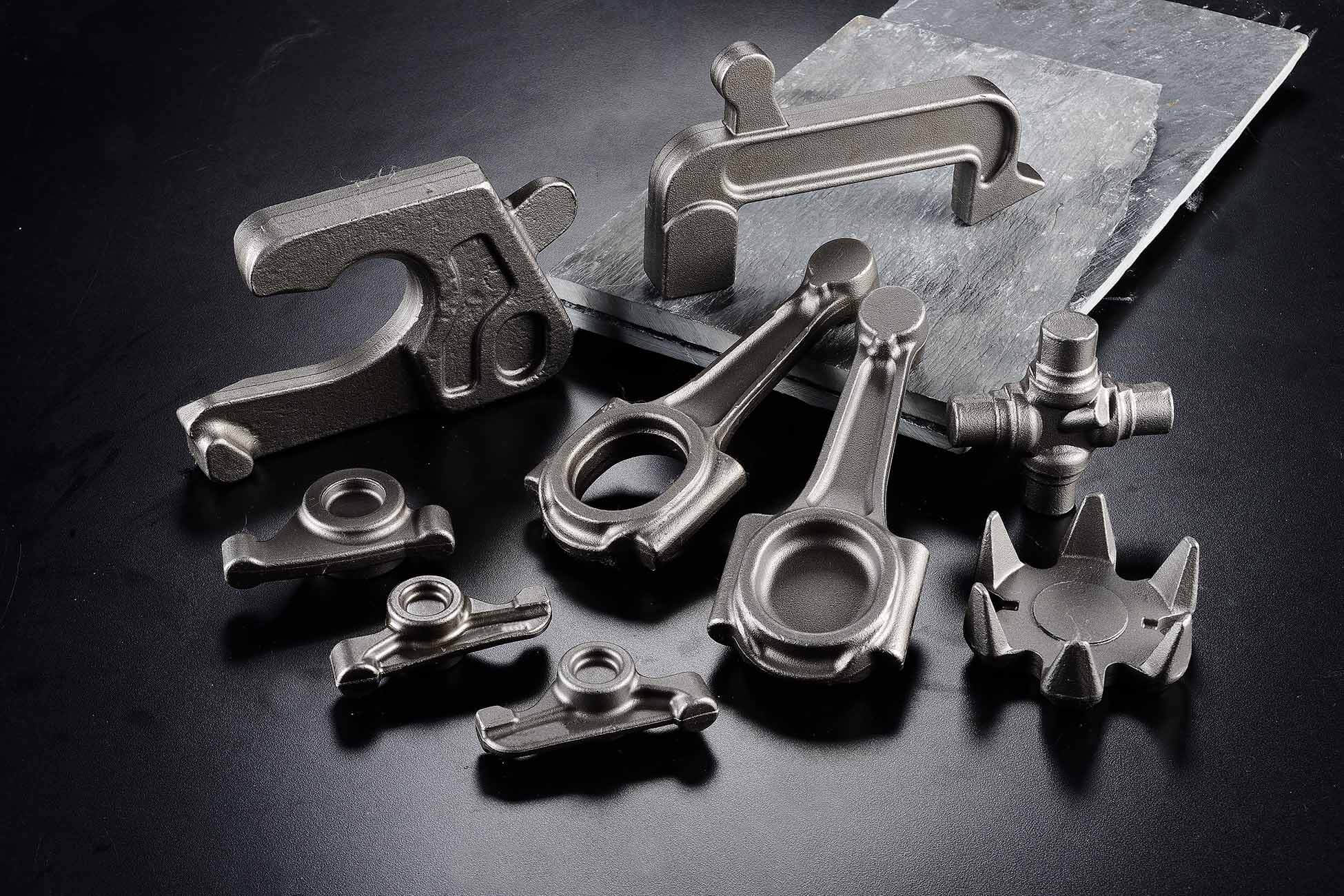
TFG USA is a QMS ISO 9001:2015 certified metal forging company specializing in custom forged components for medium to high-volume production runs. We work with carbon steel, stainless steel, alloy steel, aluminum, brass, copper, and more. Our capabilities include closed-die forging, open-die forging, hot forging, cold forging, and secondary machining to print.
Request a QuoteWhy Choose TFG USA for Metal Forging Services?
TFG USA combines front-end engineering support, cross-functional quality inspections, and dedicated project management to deliver cost-effective metal forgings with accurate timelines and dependable production performance.
Material Flexibility
We forge carbon steel, stainless steel, alloy steel, aluminum, brass, copper, and other engineered metals to meet your mechanical, corrosion, and performance requirements.
Secondary Operations
We provide value-added secondary services including CNC machining, drilling, tapping, heat treating, deburring, and assembly to deliver finished forged components ready for production use.
Advanced Equipment
We utilize modern forging presses, hammers, and precision tooling to produce repeatable components with consistent grain flow, strength, and dimensional accuracy for demanding applications.
Quality Documentation
We provide material certifications, inspection reports, and quality documentation to verify composition, mechanical properties, tolerances, and compliance with your project specifications.

Metal Forging Case Study
When a global fabrication team needed a stronger alternative to welded assemblies, TFG USA redesigned the component using metal forging to improve structural integrity and long-term durability. The result was a cost-effective forged crimp that reduced weld-related failure risks while delivering consistent performance in production.
Industries We Serve
TFG USA supplies custom metal forgings for OEMs and manufacturers that require durable, high-strength components built for demanding environments, continuous use, and medium to high-volume production.
Industrial Equipment
We manufacture forged components for industrial machinery, material handling systems, pumps, valves, conveyors, and other equipment where strength, wear resistance, and long service life are critical. Our team supports industrial OEMs with engineered parts designed for harsh operating conditions and continuous production environments.

Agriculture
Our forged metal components are built for agricultural equipment exposed to shock loads, vibration, abrasion, and outdoor conditions. Common applications include shafts, pins, brackets, linkage components, and other heavy-duty parts used in tractors, tillage equipment, harvesting systems, and field machinery.

Construction
TFG USA provides forged parts for construction equipment including loaders, excavators, skid steers, and off-highway machinery. We supply rugged components such as pins, hubs, flanges, couplers, and structural hardware engineered for high loads and repetitive stress.
Metal Forging Processes We Employ
TFG USA provides custom metal forging solutions for medium to high-volume production using proven processes selected for your part geometry, material grade, and performance requirements. Our engineering team helps determine the most cost-effective method based on strength, tolerances, tooling investment, and annual usage.
- Closed-Die Forging: Ideal for near-net shaped parts requiring repeatability, strength, and tighter tolerances.
- Open-Die Forging: Best for larger components, simple geometries, and lower volume applications.
- Hot Forging: Forms heated metal for improved ductility and complex part shapes.
- Cold Forging: Produces high-strength components with excellent surface finish and dimensional consistency.
- Upset Forging: Commonly used for bolts, shafts, fasteners, and headed components.
- Precision Forging: Minimizes machining by producing near-finished part geometries.
Metal Forging Machinery & Equipment
Our manufacturing network utilizes modern forging equipment engineered for consistent output, repeatable quality, and scalable production. We match the correct press type and tooling configuration to your part design and volume requirements.
- Mechanical forging presses
- Hydraulic forging presses
- Upset forging machines
- Screw presses
- Power hammers
- Induction heating systems
- Trim presses
- CNC tool room equipment
- Automated handling systems
- In-process inspection equipment
Materials We Use for Metal Forging
TFG USA manufactures forged metal components in a wide range of ferrous and non-ferrous alloys to meet mechanical, wear, corrosion, and temperature requirements. Material recommendations can be made based on application performance and cost targets.
- Carbon Steel
- Alloy Steel
- Stainless Steel
- Aluminum Alloys
- Brass
- Copper
- Bronze
- Tool Steel
- Nickel Alloys
- Specialty Engineered Metals
Secondary Processes & Value-Added Services
We provide complete finishing and post-forging operations to deliver production-ready components from a single supply partner. This reduces vendor management, shortens lead times, and improves quality control.
- CNC machining
- Drilling & tapping
- Thread rolling
- Heat treating
- Grinding
- Deburring
- Shot blasting
- Surface finishing
- Plating & coating
- Assembly
- Part marking
- Final inspection & certifications
Looking for a Metal Forging Manufacturer?
There are many things to consider when choosing the right metal forging manufacturer for your project. Contact us today to speak with a Sales Engineer regarding your next metal forging component or assembly.
Frequently Asked Questions
What Is Metal Forging?
Metal forging is a manufacturing process that shapes metal using localized compressive forces delivered by hammers, presses, or dies. This method aligns the internal grain structure of the material to significantly increase the overall strength and toughness of the final component.
Which Is Better, Forged or CNC?
Neither process is universally better, but they serve different manufacturing requirements. The choice depends entirely on your specific need for structural strength versus dimensional precision. Forged components provide superior structural integrity by maintaining continuous grain flow throughout the part, whereas CNC machining interrupts this internal structure during the cutting process.
While forging achieves near-net shapes that often require secondary finishing, CNC machining delivers extreme precision and exact tolerances right off the machine. Ultimately, you must choose forging for high-impact durability and CNC machining for complex, high-accuracy geometries.
Is Forging Stronger Than Welding?
Yes, forging typically produces much stronger components than welding or casting. The application of intense compressive forces significantly reduces internal voids and gas pockets, creating a uniform, directional grain structure that makes forged parts vastly more reliable under high-stress conditions.
What Metals Cannot Be Forged?
Highly brittle metals lack the necessary malleability for this process. Materials like cast iron or certain high-carbon tool steels at room temperature will fracture and break under compressive plastic deformation rather than shaping smoothly.
Client Testimonials
 Trustindex verifies that the original source of the review is Google.
 Jonathon Lanham2025-09-26Mike Allen and The Federal Group have been an absolute pleasure to work with. From the first day we reached out to them they responded punctually and professionally and helped us with every step of the process. We came to them with a budget conscious challenge and they delivered above and beyond a fitting and accurate solution. A quality finished part that has improved the overall quality of our product, and that's what really counts. Thank you to The Federal Group!Trustindex verifies that the original source of the review is Google.Sean Brockhouse2025-04-20Sandor Holzer has gone above and beyond helping us to get another part ramped up for production, creative getting samples ahead of schedule so we could meet tight timelines. Outstanding customer service!!Trustindex verifies that the original source of the review is Google.Melissa Quiroz2024-08-09Good company, knowledgeable staff, product was exactly what i asked for. Got me out of a jam!Trustindex verifies that the original source of the review is Google.Alex Armstrong2023-12-15Steve was great to work with and was always available when needed.Trustindex verifies that the original source of the review is Google.Jon Ramsey2023-10-07Mike at TFG was tenative to our supply needs and an immense help! Took on a project that was quite large and daunting, only to be resilient through the task challenges. In conclusion, everything was completed successfully and a huge success. Would recommend and I plan to use them for future projects. Thanks again Mike and TFG team.Trustindex verifies that the original source of the review is Google.Nic Robinson2023-10-05Steve Bogdanovich has been critical to our team meeting deadlines with a quality product. The communication and customer service is top notch. We know we can rely on Steve and The Federal Group team to get us a quality product and in a timely manner. We've sent all of our casted parts through them because we know we will get the best service, and they keep us informed through every step in the process.Trustindex verifies that the original source of the review is Google.Sean Connelly2023-06-21The Federal Group was great to work with. Steve was very professional and diligent in providing good advice/feedback as well as following up with me. Look forward to working with them in the future as well!Trustindex verifies that the original source of the review is Google.Sher Stahl2020-07-10The Federal Group is a top-notch supplier of ours. They take quality very seriously and strive to ensure we have exactly what we want and when we need it. Communication is excellent. Service is excellent. I have worked with this supplier directly for better than 7 years now, and still considered one of my best suppliers. We've recently expanded our product line with this company and are excited to partner on this line and on future projects. Words cannot express how grateful I am to have such a responsive company, and rep, Richard, to work with. I highly recommend this supplier.Trustindex verifies that the original source of the review is Google.Marshall2020-06-30Excellent customer service and products!



