
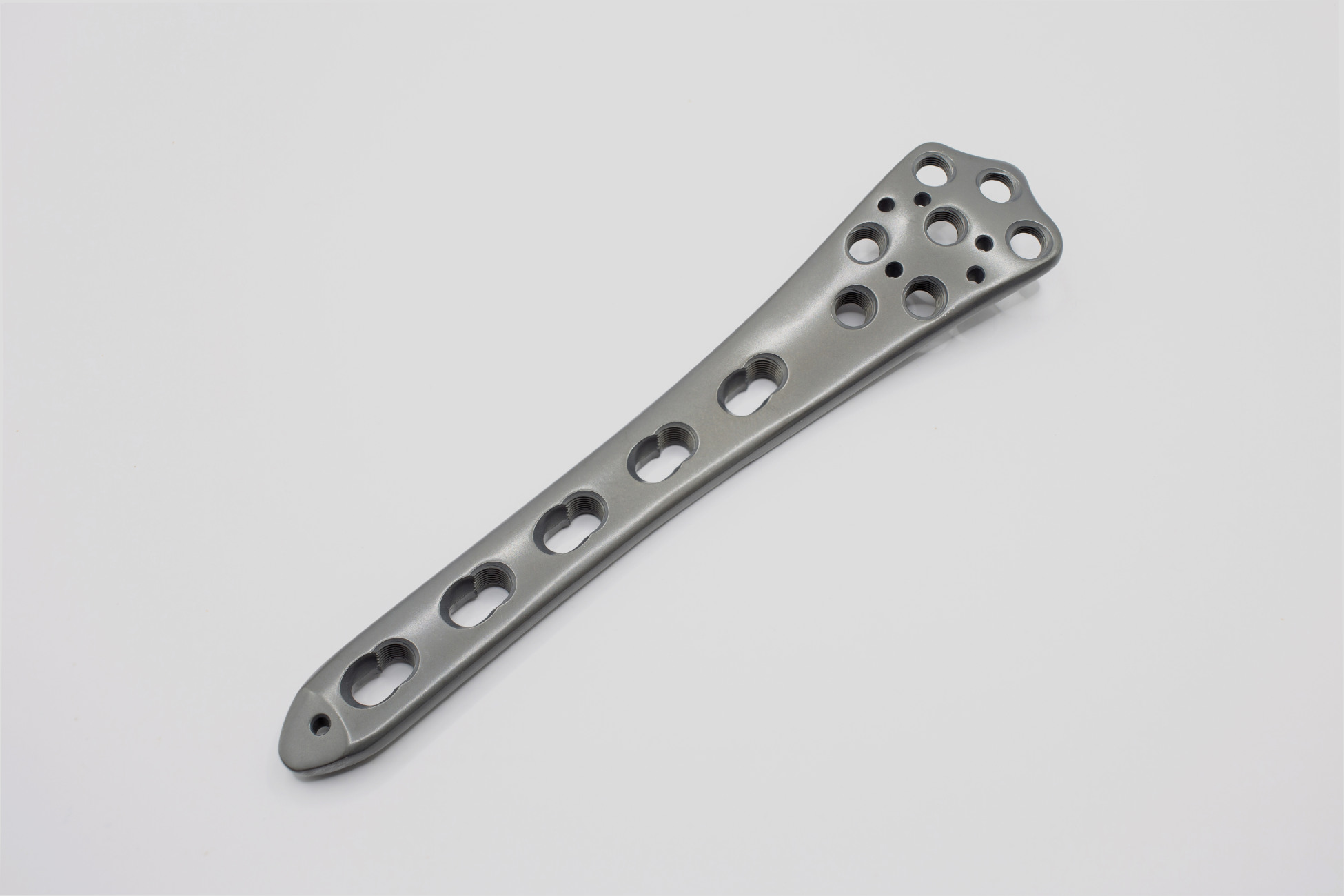
Metal Injection Molding for Medical Devices
The Federal Group USA is a leading U.S.-owned manufacturing partner producing custom medical metal injection molding components since 1980. Using advanced high-pressure injection machinery and premium biocompatible alloys, we help clients turn intricate prototypes into medium to large volume production runs. We manage the full production lifecycle to help ensure every component meets your exact engineering specifications.
Request a QuoteWhy Choose Us for Metal Injection Molding for Medical Devices
Scaling medical parts requires strict traceability and process control to maintain quality across high-volume runs. TFG USA solves this by combining rigorous quality systems with end-to-end supply chain ownership to support medium to large volume scalability and risk reduction.
QMS 9001:2015 Certified
Our quality-controlled MIM processes support precision medical components such as surgical instruments, orthopedic parts, and dental devices.
Manufacturing Support
We manage the full MIM production lifecycle, from DFM and tooling through finishing, inspection, warehousing, and global logistics.
Medical-Grade Verification
We provide material certifications and inspection documentation to verify alloy composition, mechanical properties, and dimensional accuracy.
Advanced Technology
Our advanced molding, debinding, and sintering equipment produces complex medical components with tight tolerances for medium- to high-volume production.
Processes and Technologies We Support
Scaling medical MIM requires tight control over metallurgical outcomes, so we manage four core process stages to achieve exceptional structural integrity, near-net-shape processing, and maximum design freedom for your components.

Injection Molding Machines
We utilize precision vertical and horizontal MIM injection molding machines ranging from 15 to 150 tons to manufacture complex medical components with exceptional repeatability. These systems are capable of processing micro-sized parts weighing less than a gram as well as larger precision components used in surgical instruments, dental devices, and orthopedic assemblies.
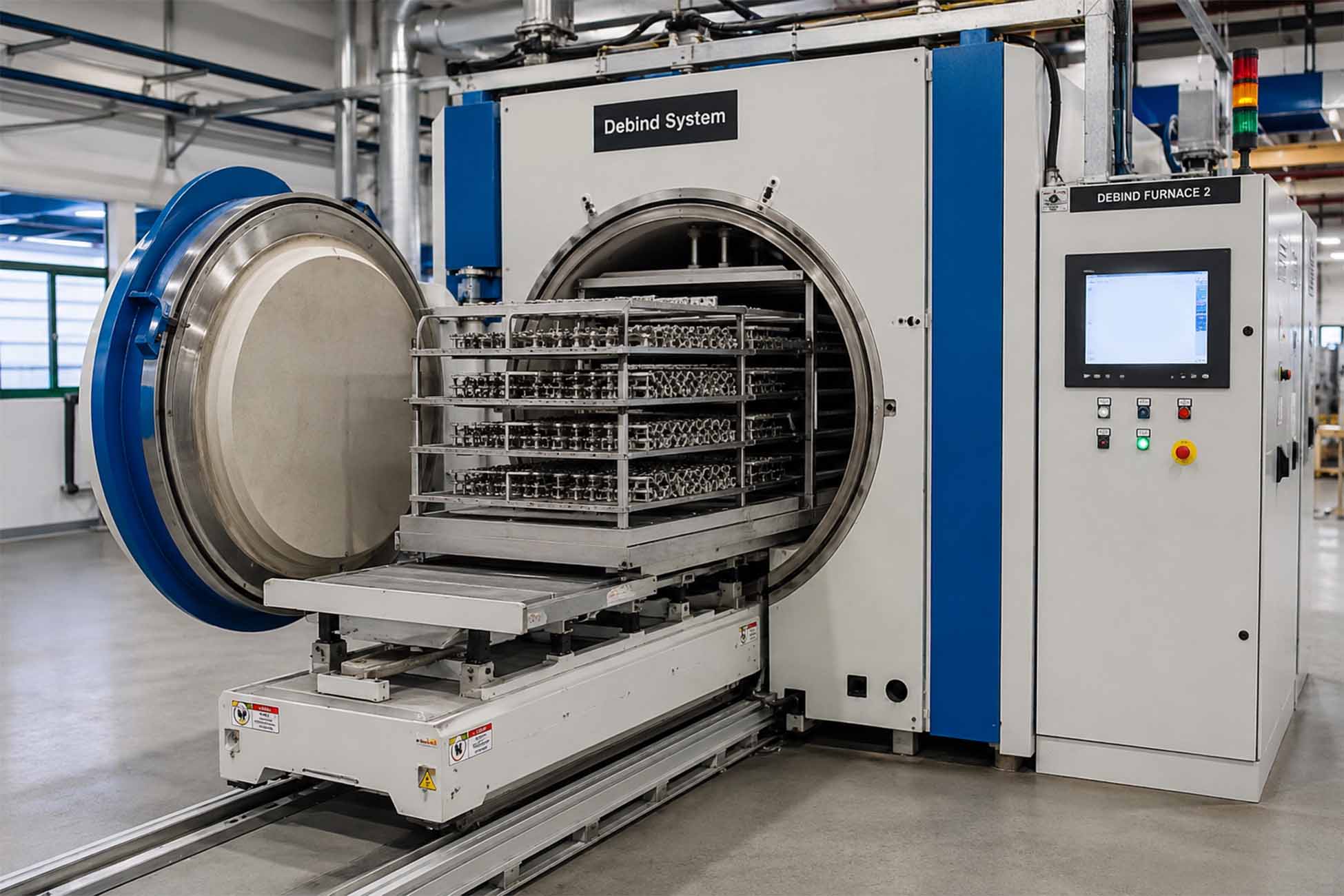
Debinding Furnaces
Our controlled-atmosphere debinding furnaces safely remove binder materials while maintaining dimensional stability on intricate medical components. This process is critical for producing defect-free parts with consistent quality prior to sintering.

High-Temperature Vacuum Sintering Furnaces
Our vacuum and controlled-atmosphere sintering furnaces operate at temperatures exceeding 2,400°F to achieve densities of 95–99% theoretical density. These systems produce high-strength stainless steel and specialty alloy medical components with excellent mechanical properties, corrosion resistance, and surface finishes.
Specific Medical Metal Injection Molding Materials We Use
Achieving high-strength parts requires selecting the right biocompatible materials for your specific application. The sintering process allows these metals to mimic the mechanical properties of traditional wrought materials. We process a range of medical-grade alloys designed for strict regulatory environments.
- 316L stainless steel: This alloy provides peak corrosion resistance for surgical instruments and components exposed to harsh sterilization cycles.
- 17-4 PH stainless: This material delivers an ideal balance of hardness and strength for load-bearing medical devices and structural components.
- Titanium alloys: These lightweight metals offer exceptional biocompatibility and strength for high-performance orthopedic implants and bone screws.
- 400 series stainless: This series provides enhanced wear resistance for cutting tools and specialized surgical jaw components.
Secondary Processes and Finishing Capabilities
While the primary molding process achieves near-net shape, tight tolerances often require primary and secondary operations to support exact engineering specifications. We provide a comprehensive suite of secondary operations to refine your custom medical components.
- Precision CNC machining: We use advanced CNC equipment to hold micro-tolerances on critical dimensions not fully achieved during the initial molding phase.
- Tapping and drilling: We add precise internal threads and micro-holes required for complex mating parts and assemblies.
- Deburring and assembly: We remove microscopic edge imperfections and assemble multi-component medical devices for final packaging.
- Custom surface finishing: We apply specialized plating and passivation treatments to enhance the final surface finish and maximize corrosion resistance.
Start Your Next Medical MIM Project
Scaling a complex medical component into high-volume production requires an experienced manufacturing partner. TFG USA supports medical OEMs through every stage of the process, from engineering feasibility and tooling through production and global logistics.
Our team evaluates your component designs for manufacturability, scalability, and cost efficiency to help ensure long-term production success. Request a quote to schedule an engineering review with our team.
FAQs
What Are the Most Common Applications for Metal Injection Molding for Medical Devices?
Metal Injection Molding for medical manufacturing is ideal for producing highly intricate parts that are too expensive to machine at scale. Common applications include intricate surgical instruments like forceps, scalpels, and specialized surgical jaw components. The process also excels at manufacturing orthodontic appliances such as dental brackets and complex diagnostic equipment components. Engineers frequently use MIM for medical devices to consolidate multi-part assemblies into single custom metal components. This consolidation reduces overall production costs while maintaining strict dimensional accuracy.
How Does Medical Metal Injection Molding Achieve High Material Strength?
The process builds mechanical properties through a sequence of highly controlled thermal and chemical steps rather than physical cutting. It begins with precise feedstock compounding to ensure a uniform distribution of metal powder and binder. We then extract the binder through a highly controlled debinding phase to prepare the green part for the furnace. Finally, high-temperature sintering fuses the metal particles together to achieve 95 to 99% theoretical density. This final step delivers structural integrity and mechanical properties comparable to traditional wrought metals.
How Do You Ensure the Quality of Medical Components During Production?
We maintain strict QMS 9001:2015 Certified quality processes across every phase of the manufacturing lifecycle. Our cross-functional inspection teams monitor multiple checkpoints from initial molding through final logistics to verify dimensional accuracy. We provide full material documentation and material certifications to verify the exact alloy composition of every production batch. Our on-the-ground staff continuously audits the equipment and tooling to prevent defects before they occur. This rigorous oversight helps ensure your custom medical components meet exact engineering specifications.




