3-Axis vs. 4-Axis vs. 5-Axis CNC Machining: What’s the Difference?
Choosing the right CNC machining process depends on more than the material or dimensions of a part. The number of axes a machine uses can affect part geometry, setup requirements, machining time, and overall production cost.
Three common configurations for CNC milling are 3-axis, 4-axis, and 5-axis machining. Each has advantages depending on the design and manufacturing requirements of the part. If you’re new to CNC machining, see our guide on What Is CNC Machining? for an overview of the process.
Table of Contents
Key Takeaways
- 3-axis Machining: Well suited for simpler parts and is often the most economical option.
- 4-axis and 5-axis Machining: Provide greater access to multiple surfaces and complex features while potentially reducing setups.
- Machine Selection: The right CNC machine depends on the part, including its geometry, tolerances, material, production volume, and overall cost.
How Do CNC Machine Axes Work?
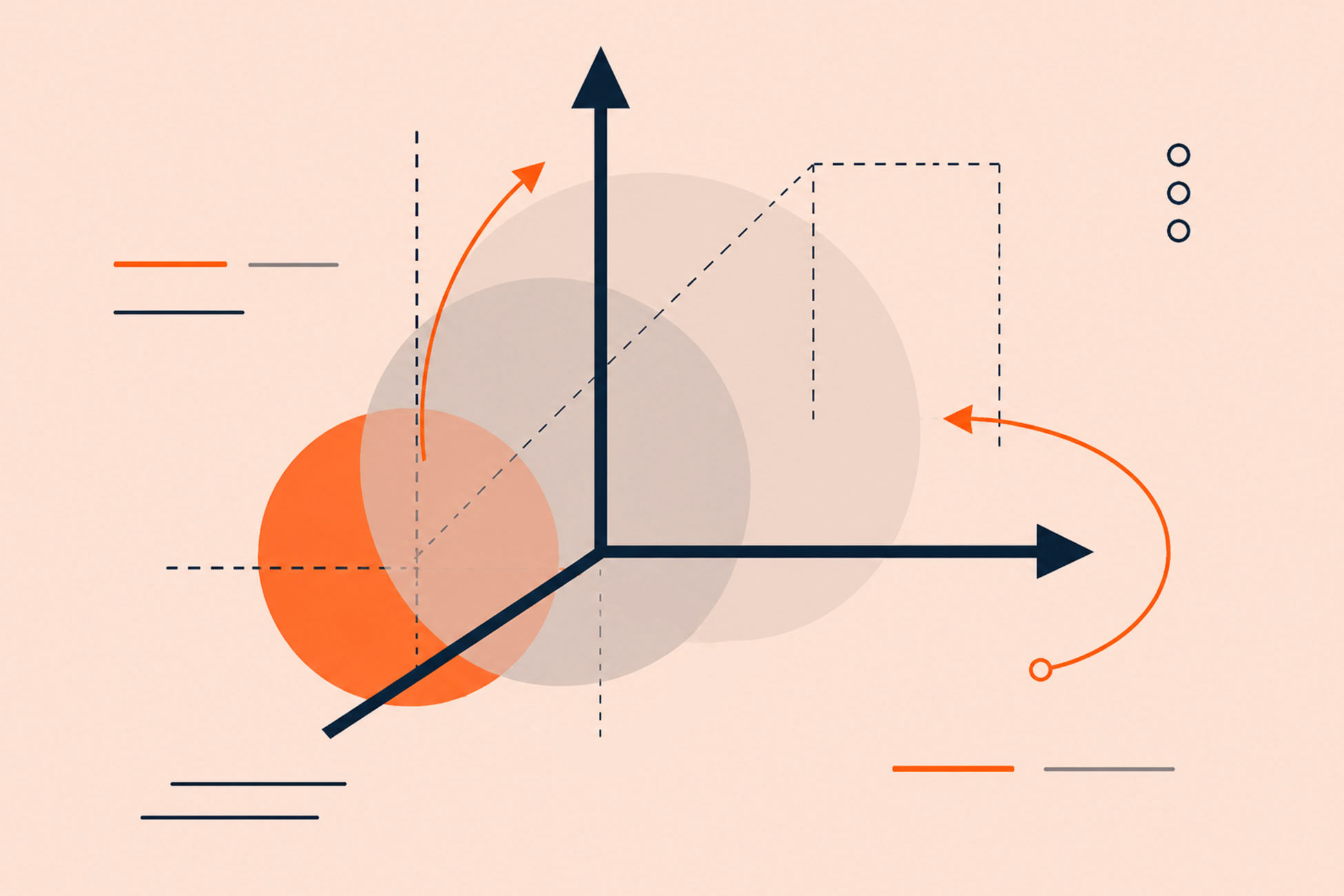
CNC milling machines use linear and rotary axes to control the movement of the cutting tool and workpiece.
The three primary linear axes are:
- X-axis: Left-to-right movement
- Y-axis: Front-to-back movement
- Z-axis: Up-and-down movement
A 3-axis machine uses these three linear axes. A 4-axis machine adds one rotary axis, while a 5-axis machine adds two rotary axes.
The additional axes allow the machine to access more surfaces and features without requiring the workpiece to be manually repositioned.
Understanding the Different Types of CNC Machining Axes

The primary difference between 3-axis, 4-axis, and 5-axis CNC machines is how many directions the cutting tool and workpiece can move during machining.
- 3-Axis CNC Machine: Uses three linear axes—X, Y, and Z—to move the cutting tool while the workpiece generally remains fixed. It is well suited for parts with relatively simple geometry and features that can be accessed from one primary direction.
- 4-Axis CNC Machine: Adds a rotary axis to the standard X, Y, and Z axes, allowing the workpiece to rotate during machining. This provides access to multiple sides and can reduce the number of setups required for certain parts.
- 5-Axis CNC Machine: Adds two rotary axes to the three primary linear axes, allowing the cutting tool to approach the workpiece from multiple angles. It is well suited for complex geometries, compound angles, contoured surfaces, and difficult-to-access features.
3-Axis vs. 4-Axis vs. 5-Axis CNC Machining
Feature | 3-Axis | 4-Axis | 5-Axis |
Linear Axes | 3 | 3 | 3 |
Rotary Axes | None | 1 | 2 |
Part Access | Primarily one orientation | Multiple orientations | Multiple angles and orientations |
Setup Requirements | May require multiple setups | Can reduce setups | Can significantly reduce setups |
Best Suited For | Simple to moderate geometry | Multi-sided or rotational features | Complex geometry and contours |
Machine Complexity | Lower | Moderate | Higher |
3+2 vs. Simultaneous 5-Axis Machining
5-axis machining can be performed using either 3+2 positioning or simultaneous movement of all five axes. In 3+2 machining, the rotary axes position the workpiece or cutting tool at a specific angle before the three linear axes perform the cut. Simultaneous 5-axis machining allows all five axes to move during cutting, providing greater flexibility for complex surfaces and continuously changing tool orientations.
Choosing the Right CNC Machining Process
As a general rule:
Choose 3-axis machining when the part has relatively simple geometry and most features are accessible from one direction.
Consider 4-axis machining when rotary positioning can provide access to multiple sides or features while reducing setups.
Consider 5-axis machining when complex geometry, compound angles, difficult tool access, or setup reduction justify the additional capability.
The best machining process is the one that produces the required part consistently, efficiently, and at the right production cost. For more information about the factors that influence machining costs, see our guide to CNC machining costs.
TFG’s CNC Machining Capabilities
TFG provides 3-axis, 4-axis, and 5-axis CNC machining for medium- and high-volume production. We work with manufacturers to determine the most appropriate machining process based on part geometry, material, tolerances, production volume, and overall cost.
Noah Levy
Marketing Director
At TFG USA, Noah focuses on enhancing the company's digital presence, engaging with clients through innovative marketing strategies, and fostering partnerships that align with the company's vision for growth and technological advancement.
Up Next


