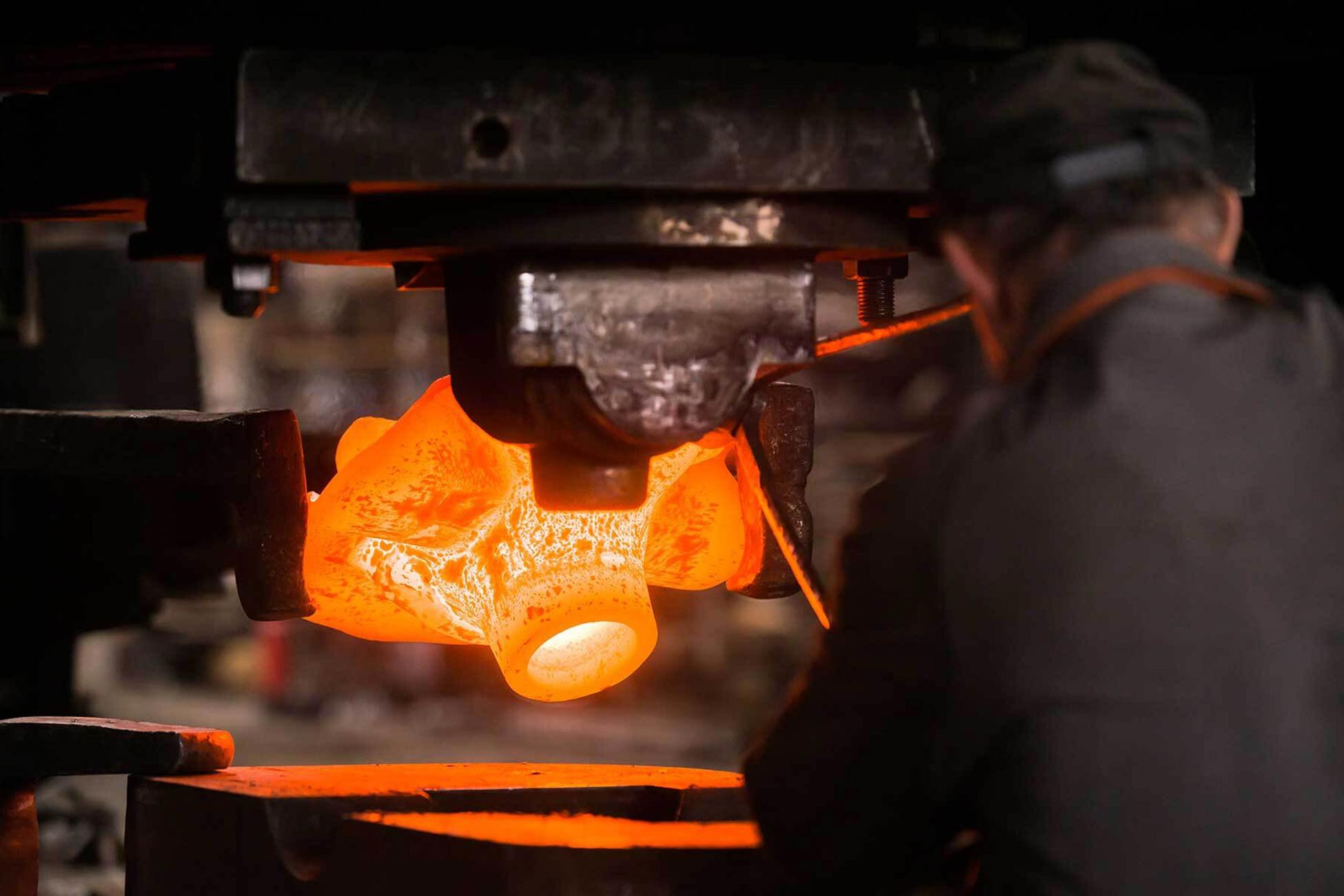
When components need exceptional strength, tight dimensional tolerances, and long service life, closed die forging is one of the most reliable metal forging processes available. Used to produce everything from heavy equipment components to surgical instruments, closed die forging creates parts with superior mechanical properties by forcing heated metal to flow into precision-machined dies under extreme pressure.
Unlike casting, which pours molten metal into a mold, or machining, which removes material from a solid block, closed die forging reshapes metal while maintaining a continuous grain structure. The result is stronger, more fatigue-resistant components capable of performing in the most demanding applications.
In this guide, we’ll explain how closed die forging works, its advantages and limitations, common materials, industries served, and key design considerations.
Table of Contents
Key Takeaways
- High Strength: Closed die forging produces components with superior strength, fatigue resistance, and impact toughness due to optimized grain flow.
- Precision Manufacturing: Precision dies create near-net-shape parts with excellent dimensional consistency and reduced machining requirements.
- Broad Material Compatibility: Carbon steel, alloy steel, stainless steel, aluminum, titanium, and copper alloys can all be forged using this process.
- Ideal for Production: Closed die forging is best suited for medium to high-volume manufacturing where tooling costs are offset by lower per-part costs.
- Long-Term Performance: Forged components offer greater reliability and longer service life than many cast or machined alternatives in demanding industrial environments.
How the Closed Die Forging Process Works
Closed die forging follows a series of controlled manufacturing steps to produce strong, precision components with consistent quality.
- Material Preparation: Metal stock is cut into billets of the required size and heated to the appropriate forging temperature based on the alloy. Because most closed die forgings are produced using the hot forging process, heating improves material flow and allows manufacturers to form complex, high-strength components with less force.
- Forging: The heated billet is placed between precision-machined dies and compressed using a mechanical press, hydraulic press, drop hammer, or screw press. As the dies close, the metal flows into the die cavity, forming the desired shape while excess material is forced into a thin flash around the part.
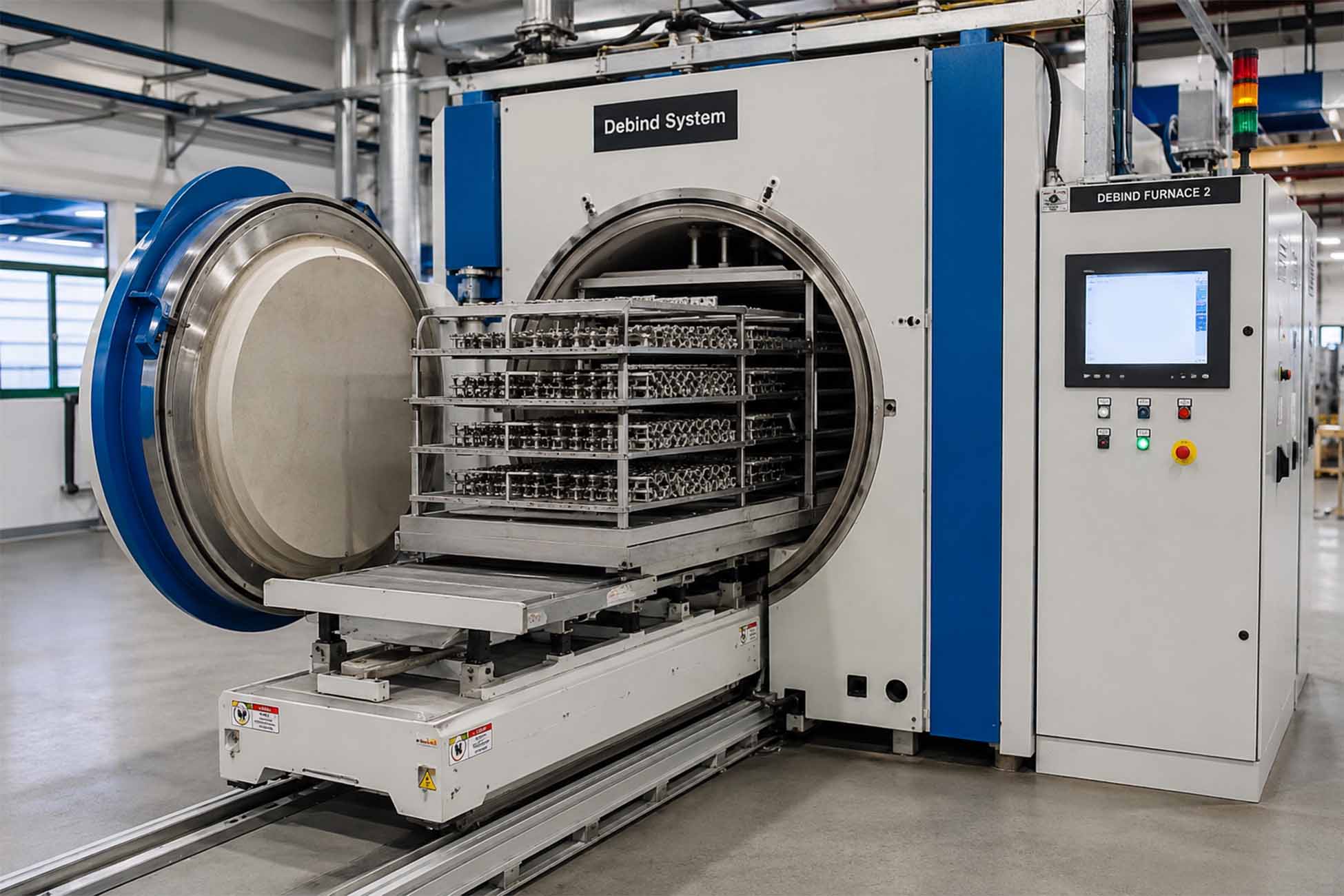
- Flash Trimming & Heat Treatment: The flash is removed, and the forging may undergo heat treatment processes such as normalizing, quenching and tempering, annealing, or solution treating to achieve the required mechanical properties.
- Secondary Operations & Inspection: Critical features are CNC machined as needed before the part undergoes finishing processes such as shot blasting, grinding, coating, or plating. Each component is then inspected to verify dimensional accuracy and overall quality before shipment.
Benefits of Closed Die Forging
Closed die forging is widely used because it produces components that are stronger, more consistent, and more cost-effective over the life of the product than many alternative manufacturing methods.
- Superior Strength & Durability: The forging process aligns the metal’s grain flow with the shape of the part, resulting in higher tensile strength, improved impact resistance, and significantly better fatigue life than cast or machined components.
- Excellent Mechanical Properties: Forged parts have a dense, uniform microstructure with minimal internal porosity or voids. This improves wear resistance, ductility, and overall reliability in demanding applications.
- High Dimensional Accuracy: Precision dies produce near-net-shape components with consistent dimensions, reducing the amount of secondary machining required and improving repeatability from part to part.
- Improved Material Efficiency: Because the process closely matches the final part geometry, less raw material is wasted compared to machining components from solid stock. This is especially beneficial when working with high-value materials such as titanium and stainless steel.
- Lower Cost at Production Volumes: Although tooling requires an upfront investment, closed die forging becomes highly economical for medium to high production runs due to faster cycle times, lower per-part costs, and consistent quality.
- Long-Term Reliability: The combination of superior strength, refined grain structure, and repeatable manufacturing produces components with longer service life, reduced maintenance requirements, and greater overall performance in critical applications.
Limitations of Closed Die Forging
Although highly effective, closed die forging isn’t ideal for every application.
Potential limitations include:
- High upfront tooling costs
- Longer tooling lead times
- Less economical for very low production volumes
- Size limitations compared to open die forging
- Complex internal cavities may require machining
For many production programs, however, the lower per-piece cost offsets tooling expenses over time.
Materials Used in Closed Die Forging
Closed die forging is compatible with a wide range of ferrous and non-ferrous alloys, allowing manufacturers to balance strength, weight, corrosion resistance, and cost based on the application’s requirements.
- Carbon Steel (1018, 1020, 1045, 1050): A cost-effective choice for general industrial components requiring good strength and machinability.
- Alloy Steel (4140, 4340, 8620, 9310): Offers higher strength, toughness, and wear resistance, making it ideal for gears, shafts, drivetrain components, and other heavily loaded parts.
- Stainless Steel (304, 316, 410, 420, 17-4 PH): Provides excellent corrosion resistance and mechanical performance for medical, food processing, marine, and industrial applications.
- Aluminum Alloys (6061, 6063, 7075, 2014): Lightweight with a high strength-to-weight ratio, making them well suited for applications where reducing weight is a priority.
- Titanium: Combines exceptional strength, low weight, and outstanding corrosion resistance, making it a preferred material for medical devices, aerospace, and high-performance industrial applications.
- Copper Alloys (Copper, Brass, Bronze): Commonly used for electrical conductivity, thermal performance, and corrosion resistance in specialized industrial components.
Industries That Use Closed Die Forging
Closed die forging is widely used across industries that demand durable, high-performance components.
- Industrial Equipment: Gears, shafts, couplings, housings, and lifting hardware.
- Construction Equipment: Pins, brackets, track components, hydraulic fittings, and structural parts.
- Agriculture: Hitch components, cultivator parts, transmission components, and PTO assemblies.
- Oil & Gas: Valve bodies, flanges, connectors, drilling components, and pressure-containing parts.
- Medical Devices: Surgical instruments, orthopedic implants, and stainless steel medical hardware.
- Renewable Energy: Wind turbine shafts, transmission components, couplings, and heavy-duty fasteners.
- Mining: Wear components, lifting hardware, sprockets, and heavy equipment parts.
- Defense: High-strength structural components, brackets, and mechanical assemblies (subject to applicable regulations).
Design Considerations
Designing a component for closed die forging can significantly reduce manufacturing costs while improving quality.
Key considerations include:
- Draft Angles: Slight tapers help remove parts from the dies without damage.
- Fillet Radii: Generous radii improve metal flow while reducing stress concentrations.
- Uniform Wall Thickness: Consistent sections reduce forging defects and improve die filling.
- Parting Line Placement: Strategic placement simplifies tooling while improving dimensional control.
- Machining Allowance: Critical surfaces should include enough stock for final machining.
Closed Die Forging vs Open Die Forging
Feature | Closed Die Forging | Open Die Forging |
Tooling | Precision impression dies | Flat or simple dies |
Complexity | High | Low |
Accuracy | Excellent | Moderate |
Surface Finish | Good | More rough |
Production Volume | Medium to high | Low to medium |
Material Utilization | High | Lower |
Part Size | Small to medium-large | Very large components |
While both processes improve material strength by refining the grain structure, they serve different manufacturing needs. Closed die forging excels at producing high-volume, precision components, whereas open die forging is better suited for large, simple shapes and lower production volumes.
Learn more about the advantages, process, and applications of open die forging in our guide, What Is Open Die Forging?
Is Closed Die Forging Right for Your Project?
Closed die forging is often the best choice when your component requires:
- High mechanical strength
- Excellent fatigue life
- Tight dimensional consistency
- Medium to high production volumes
- Reduced machining
- Long-term cost savings
While tooling costs are higher than some manufacturing methods, the resulting strength, reliability, and repeatability make closed die forging a cost-effective solution for many production applications.
Why Partner with The Federal Group USA for Closed Die Forging?
The Federal Group USA provides medium to high-volume closed die forging solutions backed by ISO 9001:2015 quality management. From material selection and design optimization to machining, finishing, and assembly, we help manufacturers reduce costs while delivering consistent, high-quality forged components.
Contact us today to discuss your next project.
Alanna Loren
Client Success Manager
Alanna is a Client Success Manager at The Federal Group USA, where she helps clients source custom metal components for production. She writes about metal manufacturing processes, materials, and best practices to help engineers and buyers make informed sourcing decisions.
Up Next