July 20, 2026
Choosing the Best Aluminum Alloy for Die Casting
Choosing the right aluminum alloy is critical to the success of any die casting project. The material you select affects...
Read More

Understanding the difference between metal injection molding vs die casting requires looking at the physical state of the raw material during the forming phase. One process forces purely liquid metal into a hardened steel die, while the other injects a semi-solid composite of metal powder and polymer binder into a mold.
These fundamental metallurgical mechanics dictate which metals can be processed, how complex the internal geometries can be, and how the final component will perform under stress. This guide breaks down the material constraints, structural capabilities, and volume requirements of each manufacturing process.
Table of Contents

The biggest difference between metal injection molding (MIM) and die casting is the form of the metal when it’s shaped.
This difference affects the materials each process can use, the complexity of the parts they can produce, and the applications they’re best suited for.
Material selection heavily influences the choice of manufacturing process. Each method accommodates specific metal families based on their thermal properties and flow characteristics. If you’re evaluating aluminum for a die casting project, learn more about the most common alloys used in die casting and their applications.
Feature | Metal Injection Molding (MIM) | Die Casting |
Material Category | Stainless steel, titanium, low-alloy steel | Aluminum, zinc, magnesium, copper alloys |
Metal Type | Ferrous | Non-ferrous |
Mechanical Properties | High tensile strength and wear resistance | High strength-to-weight ratio and corrosion resistance |
Best For | Small, complex, high-strength parts | Lightweight, high-volume components |
Matching the geometric requirements of a component to the right manufacturing process ensures both structural integrity and long-term viability. Metal injection molding and die casting offer distinct capabilities when handling complex geometries and varying part sizes.
Feature | Metal Injection Molding | Die Casting |
Part Size | Ideal for small components typically weighing under 100 grams. | Scales effectively for large parts weighing up to 10-15 pounds. |
Design Complexity | Easily accommodates fine features and highly intricate internal geometries. | Supports complex external shapes but requires draft angles for ejection. |
Structural Integrity | Delivers high structural strength with near-full density after the sintering phase. | Provides excellent strength but can develop minor internal porosity during cooling. |
Scaling from initial tooling to high-volume production requires a clear understanding of how each process amortizes costs over time.
Cost Factor | Metal Injection Molding | Die Casting |
Initial Tooling Investment | Requires specialized multi-cavity molds that carry higher upfront costs. | Requires heavy-duty hardened steel dies with heavy upfront engineering investment. |
Per-Unit Costs | Becomes highly cost-effective at volumes typically exceeding 10,000 units. | Offers extremely low per-unit costs for large-scale mass production runs. |
Secondary Machining | Often eliminates the need for post-processing due to near-net-shape accuracy. | May require trimming or surface finishing to remove flash and casting marks. |
Both metal injection molding and die casting require a significant upfront tooling investment, but the lifespan of the tooling differs considerably.
This difference in tooling durability is one of the reasons die casting is often preferred for very high-volume manufacturing.

The choice between metal injection molding and die casting ultimately comes down to your part’s material requirements, geometry, production volume, and performance expectations. While metal injection molding excels at producing small, complex components from high-performance alloys like stainless steel and titanium, die casting offers unmatched efficiency for larger, high-volume parts made from non-ferrous metals.
Understanding the strengths and limitations of each process early in the design phase can help reduce manufacturing costs, improve part performance, and avoid unnecessary production challenges. If you’re evaluating which manufacturing method best fits your application, TFG USA works with OEMs to assess material selection, part design, and production requirements to develop the most practical and cost-effective manufacturing solution.
Yes, metal can be injection molded using a specialized process called metal injection molding. This method mixes fine metal powders with a thermoplastic binder to create a moldable feedstock.
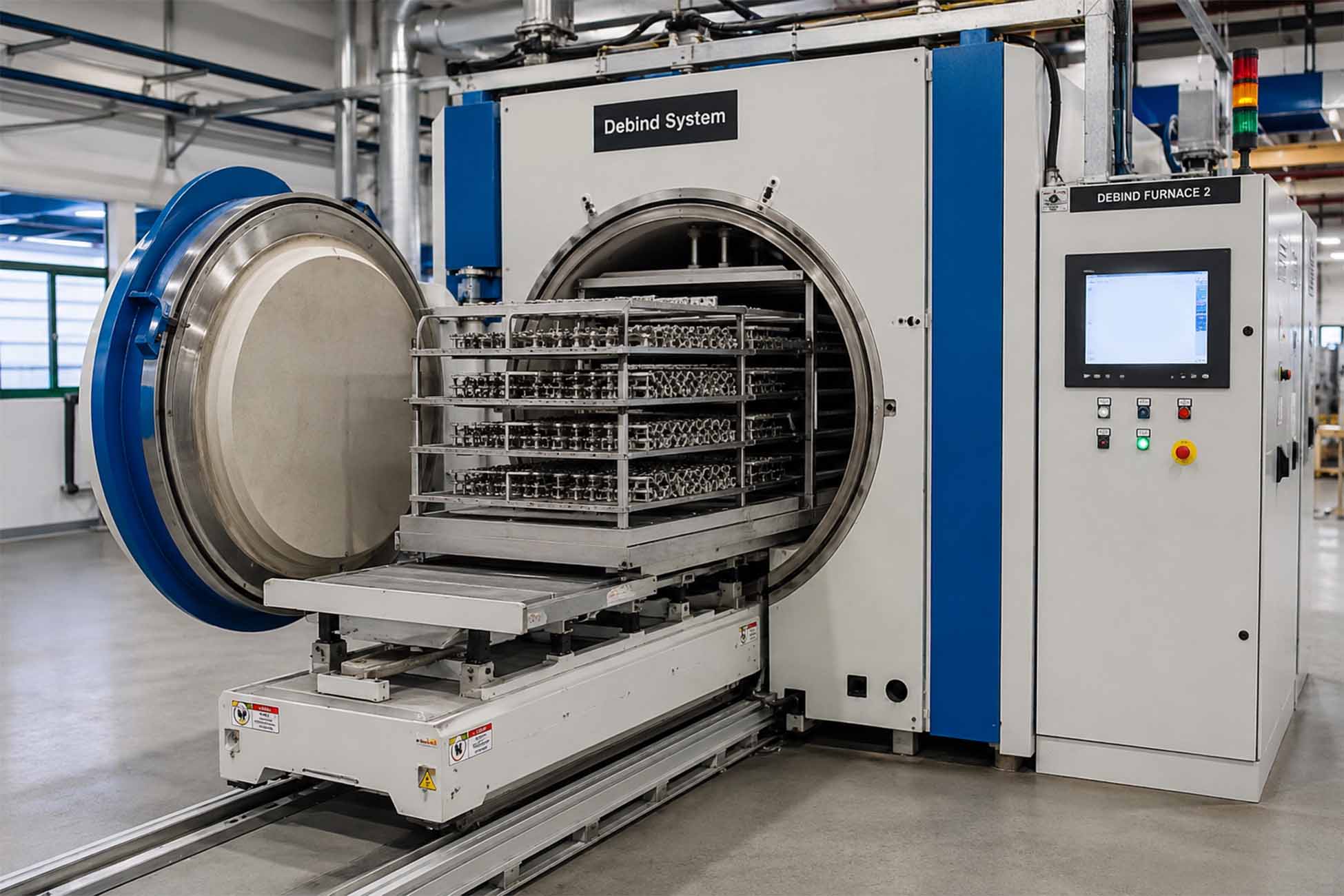
Operators inject the mixture into a mold using standard molding equipment, and the part then undergoes a thermal debinding and sintering process to remove the polymer. The final result is a solid, high-density metal component with complex geometries.
The lifespan of a die casting mold depends heavily on the type of metal being cast and the operating temperatures involved. Molds used for casting lower-melting-point metals like zinc can often last for up to 1,000,000 uses before requiring replacement.
Molds used for casting aluminum typically experience more thermal fatigue and may require maintenance after 100,000 to 150,000 cycles. Proper tooling design and routine maintenance play a critical role in maximizing the operational life of any steel die.
Die casting and injection molding share similar mechanical principles but operate using entirely different material states. Both processes force material under high pressure into a reusable mold cavity to create complex shapes rapidly.
Die casting injects purely liquid molten metal into a hardened steel die, while injection molding pushes a semi-solid mixture of metal powder and binder into the cavity. This fundamental difference in material state dictates the types of metals each process can handle and the specific tooling required.

