June 09, 2026
What Is Drop Hammer Forging? The Complete Process Explained
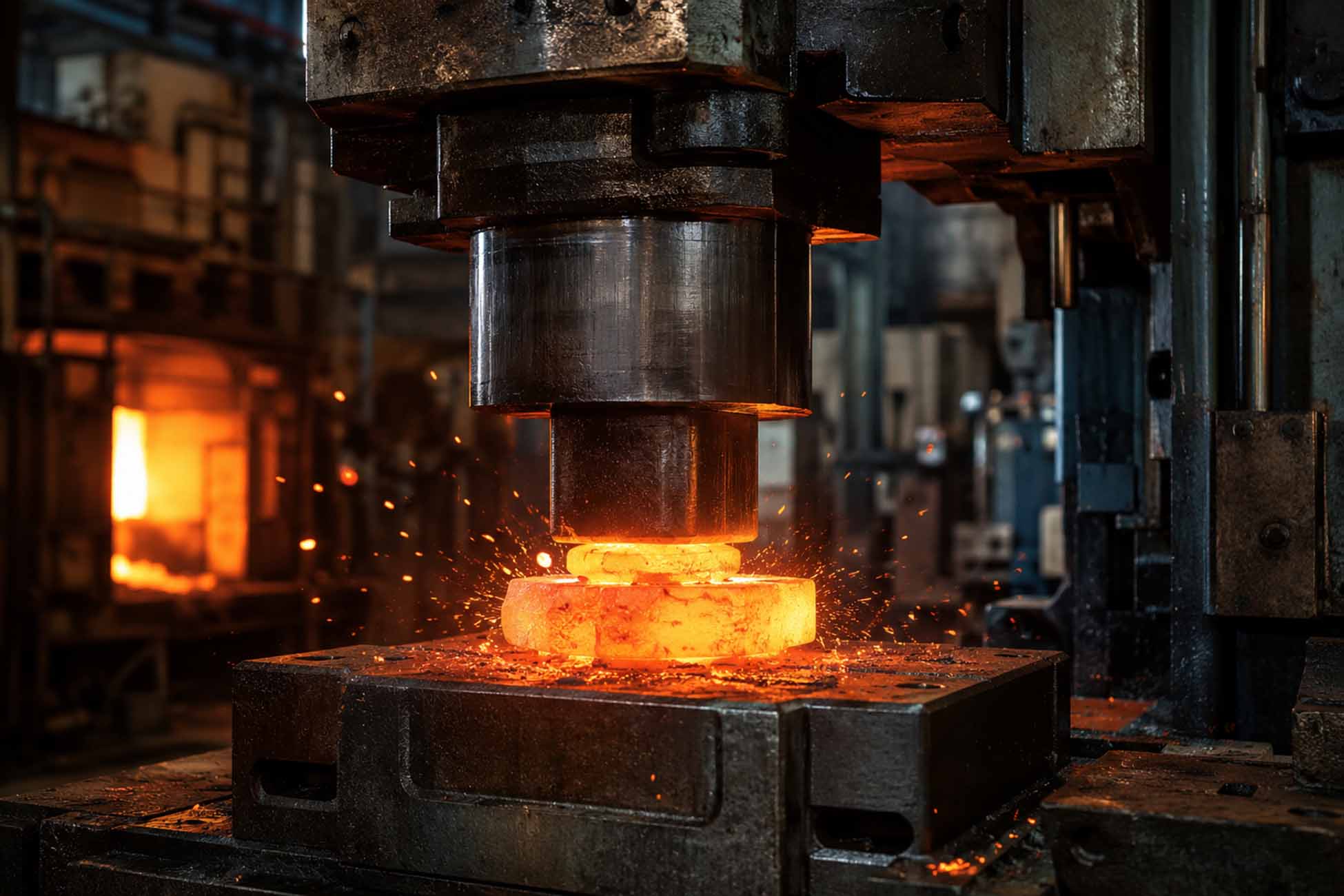
Drop hammer forging relies on massive kinetic energy to compress solid metal into highly durable custom shapes. By dropping a...
Read More

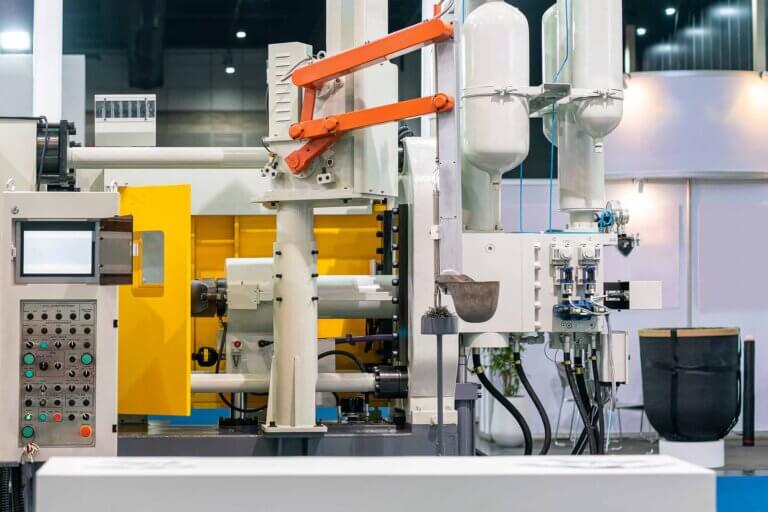
Die casting is a metal manufacturing process that uses reusable molds to produce precise, high-quality components with consistent results. Choosing between high pressure die casting and low-pressure die casting depends on your part requirements, production volume, and performance goals. While both methods create precision metal parts, understanding their differences in speed, cost, material flow, and casting properties can help manufacturers select the best solution for their application.
Table of Contents
The primary difference between low-pressure and high-pressure die casting is the flow mechanics and operating pressures used to inject molten metal into the mold. High-pressure die casting uses a hydraulic piston to force metal into a die at extreme speeds, which minimizes cycle times but introduces turbulence. Low-pressure die casting pushes metal upward through a riser tube using gentle air pressure, so the mold fills slowly and allows gases to escape naturally.
High Pressure Die Casting is engineered for rapid component manufacturing. The process forces molten aluminum into a closed mold cavity under immense pressure.
This high injection speed allows the metal to fill complex geometries before it solidifies, making the method ideal for producing near-net-shape components with extremely thin walls. Procurement teams rely on this approach for high-volume precision runs where fast output and tight dimensional control take priority over maximum structural density.
The mechanical advantage of this process comes directly from the hydraulic system. The machine generates extreme injection pressure and immense locking force to shoot liquid metal into a hardened steel die in milliseconds. Managing the thermal dynamics of this rapid fill rate requires an advanced cooling circuit to accelerate metal solidification.
This allows the machine to initiate the demoulding process almost immediately, ejecting the part to maintain a short cycle time that drives high output rates and lower per-unit costs. The intense pressure also ensures the metal packs tightly against the die walls to achieve strict dimensional tolerances without requiring extensive secondary operations.
The extreme velocity of the injection process creates distinct metallurgical limitations. Turbulent flow mechanics often lead to gas entrapment and internal porosity because air can’t escape the mold fast enough.
These microscopic air pockets limit the part’s heat treatment capabilities, as high temperatures cause the trapped gas to expand and blister the surface. The rapid cooling rate can also cause shrinkage cavities in thicker sections of the part. Initial tooling costs are significant, so this method is typically reserved for production volumes large enough to offset the expensive die investments.
Low Pressure Die Casting prioritizes metallurgical quality and mechanical strength over raw production speed. The system places a sealed furnace directly beneath the mold. Pressurized gas pushes the molten aluminum slowly up a ceramic riser tube and into the die cavity.
The metal fills the mold smoothly from the bottom up to maintain a calm fluid front. This controlled flow preserves the integrity of the alloy, making the process highly effective for load-bearing structural frame components and parts that require strict pressure tightness.
The slow fill mechanics naturally push air out of the mold cavity before the metal solidifies. This virtually eliminates gas entrapment and yields exceptionally dense parts with high structural integrity. The calm fluid front also allows engineers to incorporate sand cores into the mold to form complex internal cavities, which is a technique highly restrictive in high-pressure environments where extreme velocity would destroy the core.
Because the internal structure remains free of voids, the resulting components offer excellent heat-treatable outcomes. Post-casting heat treatments can improve both the tensile strength and yield strength of the final part, making this method ideal for critical applications like energy infrastructure components.
The gentle pressure profile restricts the geometric flexibility of the final design. The slow flow rate means the metal begins to cool as it travels, which creates minimum wall thickness limits typically around 3mm to 4mm. Thinner walls may freeze before filling completely.
The continuous exposure of the riser tube to molten metal also leads to crucible erosion, requiring regular maintenance. The extended cooling time required for directional solidification lowers the overall production speed, and the initial tooling setup still demands a sizable investment compared to basic gravity die casting.
Evaluating the difference between high pressure and low pressure die casting requires a direct comparison of how each method handles high-volume production demands. Procurement managers must weigh the initial capital requirements against the long-term performance of the finished component.
Understanding low-pressure vs. high-pressure die casting capabilities helps engineers match their specific part geometries to the correct manufacturing environment.
Manufacturing Requirement | High Pressure Die Casting | Low Pressure Die Casting |
Production Volume & Scalability | This method typically supports high-volume production runs exceeding 10,000 units. Rapid cycle times reduce the per-unit cost across large orders. | This process generally fits medium-to-high volume production runs. Slower cycle times limit raw output but reduce the need for expensive secondary machining on complex internal geometries. |
Aluminum Alloys Compatibility | The process works exceptionally well with standard aluminum alloys like A380. These materials flow rapidly under pressure to fill thin-walled sections before cooling. | This method excels with high-purity aluminum alloys like A360. The slow fill rate preserves the alloy structure to allow for post-casting heat treatments. |
Common Applications | Engineers specify this method for lightweight enclosures and complex consumer parts. The fast injection speed creates excellent surface finishes right out of the mold. | Procurement teams choose this approach for heavy-duty structural components. The dense internal structure supports load-bearing applications and leak-proof requirements. |
The fundamental contrast between the two processes centers on how the equipment moves liquid metal. High-pressure systems rely on a robust hydraulic piston to shoot metal into the die at extreme velocities, so the mold fills in a fraction of a second.
Low-pressure systems use a sealed furnace to gently push metal up a vertical riser tube. This gradual injection pressure allows the fluid front to rise evenly without creating turbulent splashing inside the cavity.
Cycle time dictates the mass production scalability of any casting project. The hydraulic force in a high-pressure setup packs the metal tightly against the cooling lines, so the part solidifies almost instantly and allows the machine to cycle rapidly.
This speed drives per-unit cost reduction over the life of a high-volume program. Low-pressure casting requires the metal to cool slowly and directionally to prevent shrinkage, which extends the cycle time and lowers the overall hourly yield.
The speed of the fill directly impacts the internal structural integrity of the final component. High-pressure injection traps air inside the metal, creating microscopic porosity that prevents the part from undergoing high-temperature processing without blistering.
The slow, bottom-up fill of a low-pressure system pushes air out of the mold cavity ahead of the metal front. This lack of porosity yields excellent heat-treatable outcomes, allowing engineers to harden the parts to meet strict tensile and yield strength requirements.
Selecting the correct process requires aligning your exact built-to-print specifications with the physical realities of the casting equipment.
Component Profile | Recommended Casting Method | Engineering Reasoning |
Complex Geometries & Thin Walls | High Pressure Die Casting | The extreme injection velocity forces metal into narrow mold cavities before it can freeze. This makes the process ideal for lightweight medical device housings. |
Pressure Tightness & Density | Low Pressure Die Casting | The slow fill mechanics prevent trapped gas and internal voids. This density is critical for fluid-handling parts that must operate under constant internal pressure without leaking. |
High-Volume Cost Efficiency | High Pressure Die Casting | Rapid cycle times offset the high initial tooling investment. This approach typically achieves the lowest possible cost per part for runs exceeding 10,000 units. |
Understanding the technical trade-offs of low pressure vs high pressure die casting provides a clear framework for selecting the right manufacturing process for your component. Whether your project requires the structural integrity of a slow-fill process or the scalability of high-volume production, evaluating these factors early helps reduce costs, prevent delays, and maximize part performance.
Partnering with an experienced manufacturer ensures your design, tooling, and production strategy align with your application requirements. Explore our die casting services to see how our team can support your next custom metal component project from concept to production.
Aluminum alloys are the most common materials used in both high pressure and low-pressure die casting due to their lightweight properties, corrosion resistance, and strength-to-weight ratio. High pressure die casting is also frequently used with zinc and magnesium alloys, while low-pressure die casting is primarily selected for aluminum components requiring enhanced mechanical performance.
High pressure die casting is commonly used in industries that require large volumes of lightweight precision components, including automotive, electronics, and consumer products. Low-pressure die casting is often preferred for applications requiring stronger, pressure-tight components, such as automotive structural parts, industrial equipment, and energy applications.
Yes, die cast components can undergo a variety of secondary operations depending on the application requirements. Common post-processing options include CNC machining, surface finishing, coating, assembly, and quality inspections to achieve the final specifications required for the finished component.

Richard has been on The Federal Group team for 24 years and his knowledge spans a variety of mechanical engineering topics. When he isn't assisting his clients, he is routinely working on his motorcycles and off-road vehicle projects.

This site uses cookies and similar technologies. See our Privacy Policy for details.
Manage your cookie preferences below:
Essential cookies enable basic functions and are necessary for the proper function of the website.