Open Die vs. Closed Die Forging: How to Choose the Right Process
Open die vs. closed die forging comes down to how the metal is shaped, how much the dies control that shape, and how close the forged part comes to its final dimensions.
Ultimately, open die forging leaves the metal less enclosed between simpler tooling, while closed die forging forces the material into machined cavities that define more of the finished form. This guide explains the practical differences that affect size, complexity, tolerances, machining needs, and production fit.
Table of Contents
Key Takeaways
- Tooling investment: Open die forging uses simpler tooling, while closed die forging requires machined die cavities with higher upfront cost.
- Part complexity: Open die forging fits simpler shapes, while closed die forging supports more detailed part features and near-net shape production.
- Size limits: Very large or heavy forged parts often favor open die forging because the material doesn’t need full cavity enclosure.
- Machining needs: Open die parts usually require more secondary machining, while closed die parts can reduce post-forging work.
- Volume fit: Closed die forging usually fits high-volume precision runs, while open die forging fits custom or lower-volume forged components.
What Is Open Die Forging?
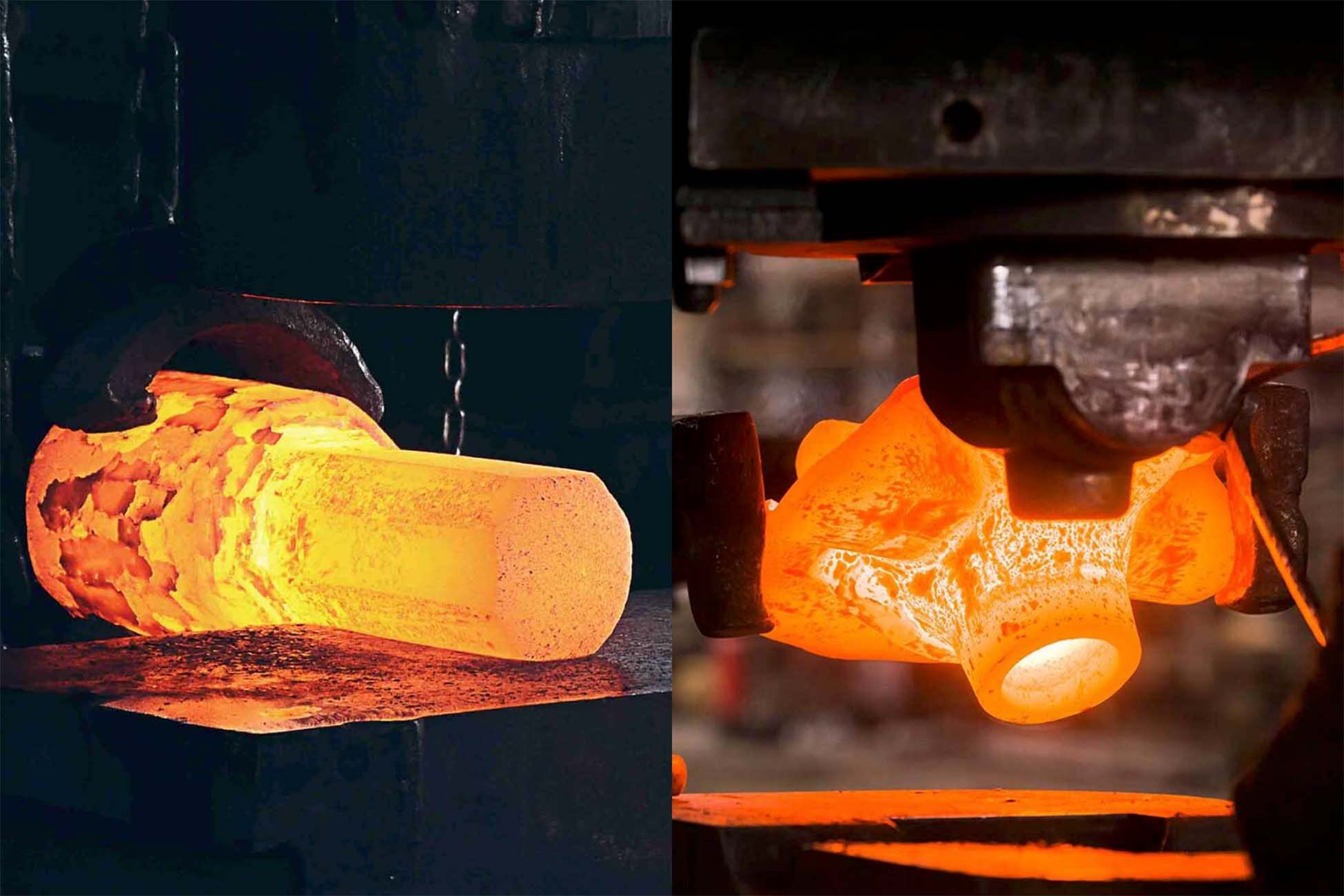
Open die forging is a forging method where heated metal is pressed between flat dies or simple contoured dies that don’t fully enclose the material. The starting piece, often called a billet, changes shape through repeated compression while the metal remains free to flow outward.
This process is also called free forging or smith forging because the dies guide the material without trapping it inside a finished cavity. With that said, we should note that this article focuses on die type and not on whether the part is made through hot forging or cold forging.
Here are the main selling points of die forging in a nutshell:
- Free flow: Metal moves outward under pressure, which gives the process flexibility for broad shaping rather than detailed features.
- Large parts: Open die forging is well suited for very large shafts, cylinders, rings, bars, and other heavy components.
- Simple shapes: The process works best when the final part can be machined from a forged blank with limited formed detail.
- Grain flow: Forging refines the metal’s internal structure, which can support mechanical properties in load-bearing components.
What Is Closed Die Forging?
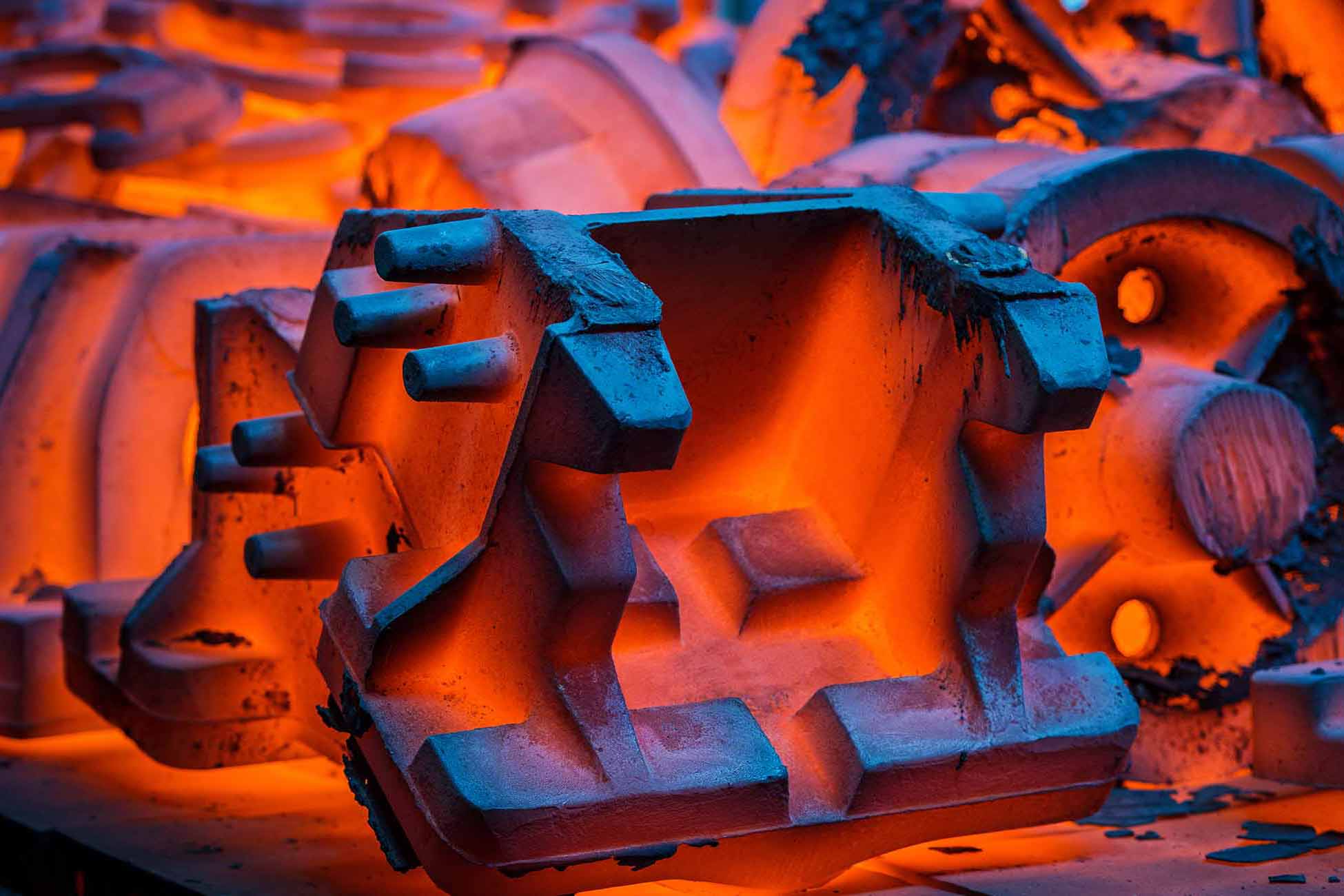
Closed die forging, also called impression die forging, forces heated metal into a closed set of precision-machined die cavities under high pressure. Those cavities shape the metal closer to the finished part, which is why the process can produce a near-net shape, meaning the forging comes out close to final dimensions and needs less machining afterward.
As the dies close, excess metal may squeeze out where they meet, forming a thin ridge around the forged part called flash. This excess material helps build pressure inside the die cavity, encouraging the metal to fill its shape. The flash is then trimmed away after forging.
Below, we’ve listed the main characteristics of the closed die forging method:
- Defined shape: Machined cavities control the outside form of the part more tightly than open die tooling.
- Near-net output: Closed die forging can reduce secondary operations by producing parts closer to final dimensions.
- Complex parts: The process supports detailed forged components, including gears, custom fasteners, flanges, and fittings.
- Material control: Better cavity filling can support scrap reduction compared with machining a finished part from a larger forged blank.
Note: Some closed die forging processes use a preform, which means shaping the metal before the final forging step. This helps the metal fill the die cavity more evenly and produce finer details, but it also requires more careful planning of the dies, equipment, and tooling.
Open Die vs. Closed Die Forging: Main Differences Explained
The main difference between open die and closed die forging is how much control the dies have over the metal’s final shape. Open die forging uses simpler tools and allows more flexibility, while closed die forging uses shaped cavities to produce more detailed and consistent parts.
Choosing the right method therefore depends on several factors, including part size, shape complexity, dimensional accuracy, machining requirements, tooling costs, and production volume.
For your convenience, the table below compares both methods to help you understand their advantages, limitations, and suitability for different manufacturing needs.
| Comparison Criteria | Open Die Forging | Closed Die Forging |
| Part size and weight | Best for large, heavy parts such as shafts, rings, and cylinders. | Best for smaller parts that fit within the die cavities. Very large parts can be costly to produce. |
| Shape complexity | Best for simple shapes. More complex features usually require additional machining. | Can produce detailed shapes, including gears, fasteners, flanges, and fittings. |
| Dimensional precision | Less precise, often requiring additional machining to meet exact dimensions. | More precise, producing parts closer to their final dimensions. |
| Secondary machining | Usually requires more machining to achieve the final shape and dimensions. | Requires less machining, although some finishing may still be necessary. |
| Production volumes | Best for custom parts and smaller production runs. | Best for larger production runs where tooling costs can be spread across many parts. |
A Few Trade-Offs to Consider
The main trade-off between open die and closed die forging is how much control each process offers over the final shape. Open die forging allows the metal to move more freely, making it suitable for larger parts and simpler shapes. In contrast, closed die forging uses specially shaped dies to control how the metal forms, allowing manufacturers to produce more detailed parts with consistent dimensions across production runs.
However, greater precision comes with higher tooling costs. This way, open die forging typically requires less investment upfront, but the forged parts often need additional CNC machining work to achieve their final shape and dimensions. Closed die forging, on the other hand, typically requires more expensive tooling, but it can reduce the amount of machining needed afterward.
When to Choose Each Forging Method

Choosing between open die and closed die forging depends on the size and complexity of your part, how many units you need, and how much additional machining you’re willing to pay for.
Open die forging is generally the better choice for large, heavy, or custom components. It works well for parts such as shafts, rings, bars, and cylinders that have relatively simple shapes. Since the metal isn’t confined to a fully enclosed cavity, manufacturers can produce larger components without investing in expensive custom dies.
Closed die forging is better suited for smaller, more detailed parts that need to be produced consistently. Examples include custom fasteners, agricultural gears, construction equipment components, and flanges used in the energy industry. Because the dies shape the metal closer to its final dimensions, this method is particularly useful for larger production runs where consistency and reduced machining costs matter.
Beyond the size and shape of your component, there are several other factors worth considering:
- Additional machining: Open die forging usually requires more CNC machining to create holes, threads, and other precise features. Closed die forging produces parts closer to their final shape, reducing the amount of finishing work needed.
- Production lead times: Open die forging generally requires less tooling preparation, making it a practical option for custom orders and smaller runs. Closed die forging takes longer to set up because the custom dies must be designed and manufactured. However, once the tooling is ready, it can support consistent, repeatable production.
- Part size limitations: Very large or heavy components may be impractical to produce using closed die forging because of the size and cost of the required dies and equipment. In these cases, open die forging is often the more suitable option.
- Supplier capabilities: Before choosing a manufacturer, confirm their minimum order quantity (MOQ), machining capabilities, quality inspection procedures, and material certification requirements. These factors can affect both the final cost and the reliability of your supply chain.
It’s also worth having the manufacturer review your part drawings and specifications before committing to either method. This engineering feasibility review helps determine which process can achieve the required dimensions, material properties, and production volume at a reasonable cost.
Finalizing Your Forging Strategy
The right forging method ultimately depends on what matters most for your component. If you’re producing large, heavy parts or need flexibility for smaller custom orders, open die forging is often the more practical choice. If your project requires detailed shapes, consistent dimensions, and higher production volumes, closed die forging may offer better long-term value.
Before making a final decision, review your part specifications with the manufacturer. This includes the required dimensions, acceptable tolerances, machining needs, and quality inspection requirements. For projects with strict quality standards, working with a manufacturer that follows ISO 9001:2015-certified quality management processes and uses coordinate measuring machine inspection can help ensure the finished components meet your exact specifications.
Need Help Sourcing Custom Forged Components?
The Federal Group USA provides custom metal forging services for businesses requiring durable, high-volume components.
- ▸9001:2015 Certified Quality Management System.
- ▸Manufacturing Facilities in the U.S., India & Taiwan.
- ▸Custom Metal Components for Medium- to High-Volume Production Since 1980.
Richard Jegla
Sales Engineer
Richard has been on The Federal Group team for 24 years and his knowledge spans a variety of mechanical engineering topics. When he isn't assisting his clients, he is routinely working on his motorcycles and off-road vehicle projects.
Up Next