September 09, 2026
Metal Casting Shrinkage: Causes, Types, and Defect Prevention
Metal casting shrinkage is the natural volume reduction that occurs as molten metal cools and solidifies inside a mold. This...
Read More

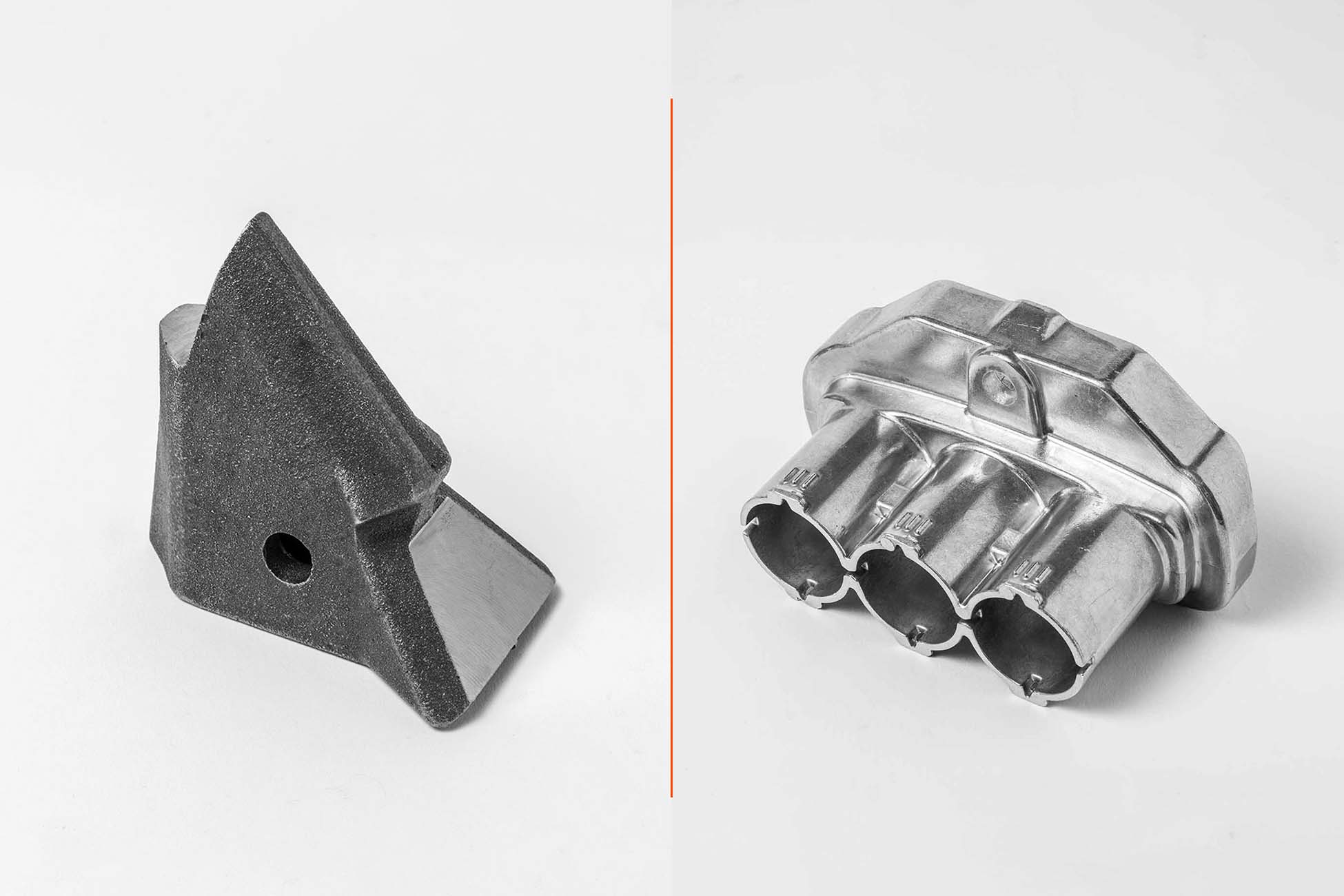
Investment casting and die casting both produce custom metal components, but they form those parts in fundamentally different ways: one pours molten metal into a single-use ceramic shell, the other injects it under high pressure into reusable steel dies. That difference in method is what determines which metals each process can handle, how intricate a part it can produce, and how it behaves at volume.
This guide compares both methods to help you determine the most cost-effective approach for your specific production volume, part complexity, and metal alloy requirements.
Table of Contents

Investment casting forms parts by pouring molten metal into a single-use ceramic shell, built around a wax pattern that is melted out before the pour.

Die casting forms parts by injecting molten metal under high pressure into a reusable two-part steel die, which opens to eject each finished part. Cold chamber and hot chamber machines are used depending on the metal.
Evaluating differences between investment casting and die casting comes down to matching your production volume and material needs with the correct cost structure. The table below outlines how each method performs across critical manufacturing criteria.
Feature | Investment Casting | Die Casting |
Material Compatibility | High-temperature ferrous metals (carbon & stainless steel) and non-ferrous alloys. | Non-ferrous metals only (aluminum, zinc, magnesium). |
Geometry & Complexity | Extremely high; handles intricate internal cavities with no parting line limits. | High; requires draft angles and design adjustments for die separation. |
Dimensional Tolerances | Tight tolerances with minimal secondary machining (near-net-shape). | Precise tolerances with high run-to-run consistency. |
Tooling Requirements | Low upfront cost (creates disposable wax pattern molds). | High upfront cost (machining durable, reusable steel dies). |
Cost Structure | Low initial setup cost, higher per-unit labor/material cost. | High initial setup cost, exceptionally low per-unit cost at volume. |
Production Speed | Slower (multi-step process of building and destroying ceramic shells). | Fast (automated injection and rapid cooling cycles). |
The primary trade-off centers on upfront investment versus long-term efficiency. If your project demands high-temperature alloys or intricate internal channels, the slower cycle time of a ceramic mold is a necessary reality. If you need to produce a high volume of aluminum parts, the speed of automated injection quickly offsets the heavy cost of machining permanent steel molds.

Four criteria decide which process fits a given part. Any one of them can be decisive on its own.
Investment casting handles high-temperature ferrous metals like stainless steel and carbon steel. The ceramic shell withstands extreme heat without degrading, so it accommodates alloys that would melt or damage a permanent steel mold. Die casting is restricted to non-ferrous metals with lower melting points, such as aluminum alloys A380 and A383, brass, bronze, zinc, and magnesium.
This is the one criterion with no middle ground: a ferrous part rules out die casting outright.
Investment casting suits components with complex internal cavities that a standard two-part mold cannot form, and it produces near-net-shape parts with tight dimensional tolerances, reducing secondary machining. Die casting trades some of that geometric freedom for repeatability: parts need draft angles and design adjustments so the die can separate, but run-to-run consistency across a long production run is excellent.
For a real-world example of how tolerances and part design can affect an aluminum die-cast component, see our Aluminum Die-Cast Housing Case Study.
Die casting is the practical choice when a non-ferrous component needs to scale into medium- or high-volume production, because high-pressure injection and rapid cooling give it short, automated cycles. Investment casting is slower by design, because a new wax pattern and ceramic shell are built and destroyed for every part, which suits smaller runs and specialized applications.
Investment casting has the lower entry cost. The master dies that form its wax patterns never meet molten metal, so they are cheaper to build. Its per-unit cost stays high, because the process is labor-intensive and every component needs a new mold.
Die casting inverts this: hardened steel dies are a substantial upfront investment, but the automated cycle drives per-unit cost down sharply as volume rises. Weigh total expected volume against tooling cost before committing. A highly complex geometry can still make investment casting the right answer at a volume that would otherwise favor die casting.
Choosing between investment casting and die casting starts with the metal alloy. If your part requires a ferrous metal such as stainless steel or carbon steel, investment casting is the appropriate option because die casting is limited to non-ferrous metals.
If the material works with either process, then factors such as part complexity, production volume, tolerances, and tooling costs become more important.
Before selecting a casting process, determine three things: the material you need, the tolerances the part requires, and how many parts you expect to produce each year. These factors will help narrow down the right process and prevent costly tooling decisions later.
The Federal Group USA provides custom metal casting services for businesses requiring durable, high-volume components for heavy machinery, agricultural equipment, and medical devices. Because we offer both investment casting and aluminum die casting, our team provides objective guidance on which method is most cost-effective for your specific production run.
Our QMS 9001:2015 Certified facilities maintain strict dimensional stability across every order, ensuring your custom metal parts meet exact built-to-print specifications. Contact us today to request an engineering feasibility review and determine the most efficient manufacturing strategy for your next project.